10,143 Little Proofs of Passage: Wedding Man’s U-Bahn Ticket Archive Outgrows His Living Room
Neighbors on Gerichtstraße report “paper drift” as a 52-year-old former ticket inspector insists the collection is “history, not hoarding.” BVG calls it “emotionally understandable, operationally confusing.”.
Street Policy & Architectural Embarrassment Reporter
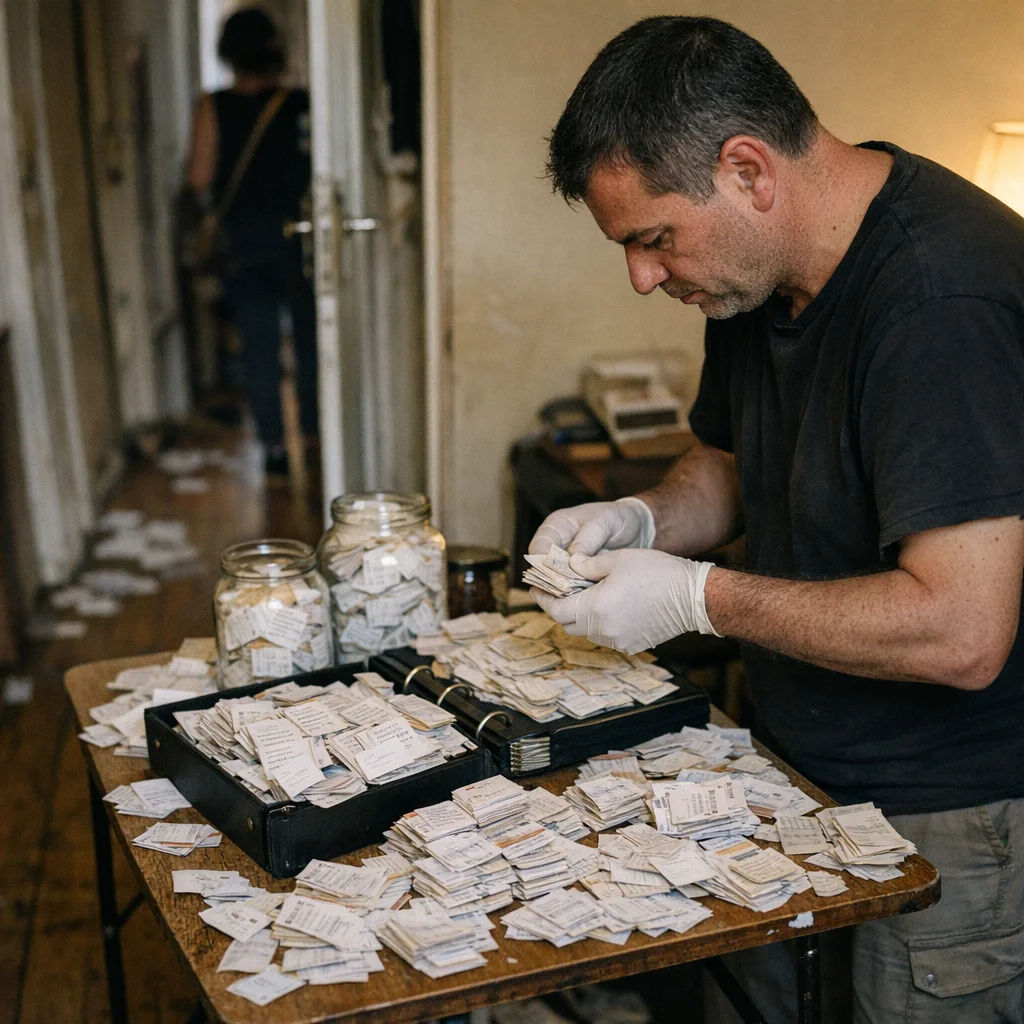
WEDDING — On Tuesday, sometime before noon, residents of Gerichtstraße 14 noticed a thin ribbon of yellowing paper inching out from under the door of apartment 3B, like the building itself was trying to file a complaint.
Inside, Mehmet Kaya, 52, stood over a folding table with the calm concentration of a museum conservator and the eyes of a man who has seen too much validation in perforated corners. Kaya says he has amassed 10,143 U-Bahn tickets since 1998, each one dated in pencil and sorted by line, station, and “mood of the day.”
“People keep saying it’s trash,” Kaya said, using latex gloves he described as “necessary for oils and memories.” He held up a faded single-ride ticket from Seestraße, purchased around 7:30 in the morning on a rainy day in 2004. “This one? This one is a whole chapter. You can’t just throw out a chapter because it’s small and a little dirty.”
Kaya, a former BVG ticket inspector, began collecting after the introduction of more digital validations left him feeling, in his words, “unneeded, like a guy with a firm grip on nothing.” The habit intensified during long commutes and longer personal silences. Tickets now fill six lever-arch binders, three glass jars, and a suitcase marked “winter clothes” that contains neither winter nor clothes.
His neighbor, Derya Arslan, 39, who runs a hair salon on Reinickendorfer Straße, said the archive has started to affect the building’s daily life. “The hallway smells like old paper and male stubbornness,” she said. “Also, people come by asking to ‘see the rare ones’ like it’s some underground gallery. It’s not a gallery. It’s a man refusing to let go.”
Last weekend, a pair of newcomers from a renovated top-floor unit reportedly offered Kaya €200 for “a curated selection of authentic pre-contactless artifacts,” according to Kaya. He declined. “They wanted to mount them in a frame,” he said. “Like Duchamp but with fewer consequences.”
A BVG spokesperson, Annika Voß, confirmed the agency has received emails about the collection after a visitor uploaded photos to social media. “We do not authenticate private ticket archives,” Voß said. “Also, please stop asking if we can ‘verify the climax of the collection’ by issuing a commemorative stamp.”
Kaya’s next goal is 11,000 tickets, which he plans to display in what he calls “a Proustian timeline of missed connections”—a phrase that, like the tickets themselves, is both touching and hard to swallow.
For now, the building’s Hausverwaltung has issued a polite notice reminding residents that “paper must not obstruct common areas,” a statement that locals interpreted as an attempt to regulate nostalgia using the same deadpan authority Berlin applies to everything it doesn’t want to understand.