18 Wedding Residents Launch Side Hustles So They Can Afford “Austerity,” Celebrate With GHB at Kitkat Anyway
A new local doctrine says rest is for people with generational wealth and lower heart rates.
Gentrification Field Miser & Side-Hustle Pathologist
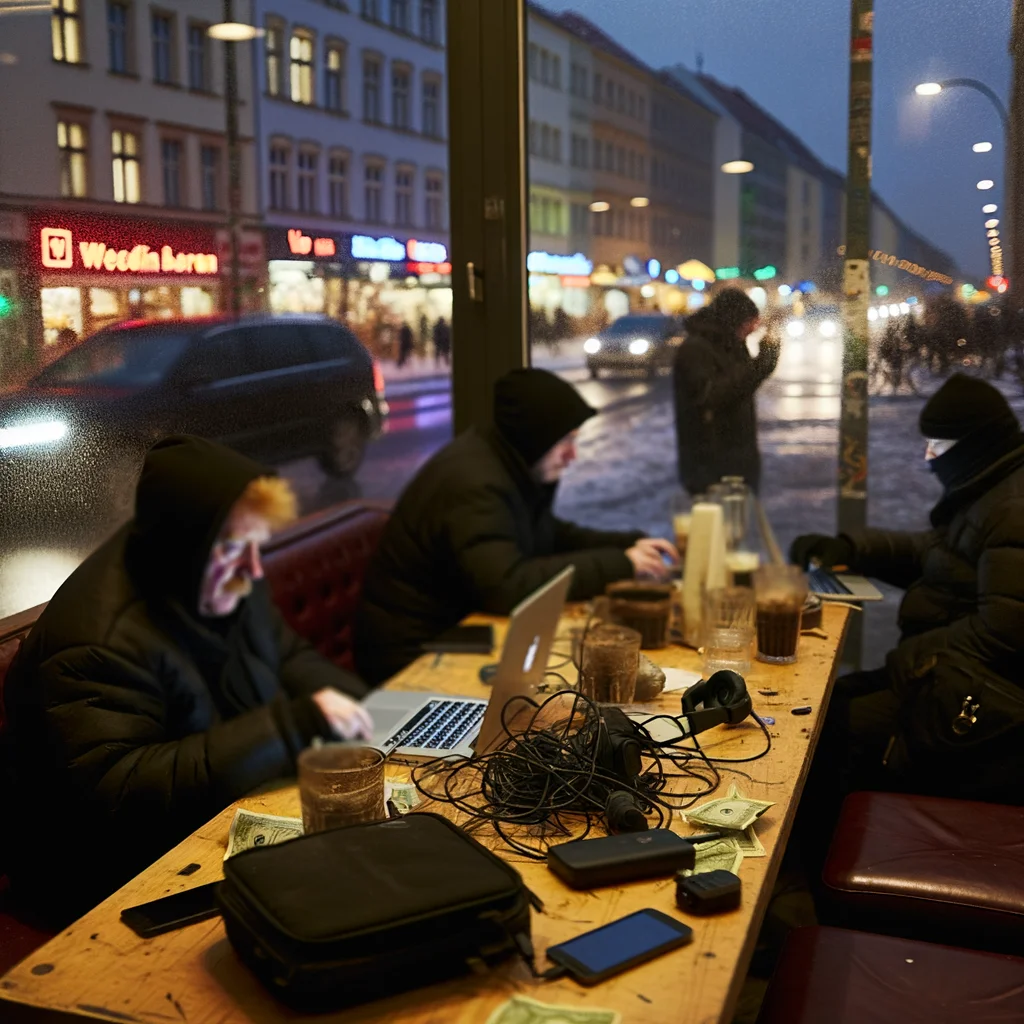
The second job is the main personality now
Wedding used to have bakeries, barbers, and the kind of corner shops that sold real stuff like bread and cigarettes. Now it has “multi-hyphenate ecosystems,” which is a polite way of saying: people with no savings doing administrative origami to keep their rent paid and their dignity lightly salted.
On a normal Tuesday (which in Berlin is ethically indistinguishable from Sunday night), you can watch a local stand-up poet deliver oat-milk manifestos at 9 a.m., repair iPhones at noon, “consult” on branding at 3 p.m., and then evaporate into a darkness-coded outfit by midnight, spiritually budgeted to end up at Kitkat like a rejected Dostoevsky protagonist.
Case studies from the kiez’s workforce cosplay
Wedding’s side-hustle boom has achieved what the Berlin Senate never could: turning exhaustion into a communal identity.
- The "ethical” apartment-flipper: Not a landlord, they insist—more of a “spatial dramaturg.” Their LinkedIn says “placemaking,” their eyes say “12 hours of screen glow,” and their soul says nothing because it’s on airplane mode.
- The Turkish family-run grocery’s new “concept corner”: Between the olives and the paper towels, there’s suddenly a minimalist shelf of imported olive-oil-as-perfume, priced like an insult. The uncle who ran the register for 20 years now nods at you like he’s doing a TED Talk.
- The micro-influencer DJ (day) / copywriter (night): He tells brands he creates “sonic narratives” and tells friends he’s broke. When confronted with a real salary, he flinches like you offered him responsibility without prior consent.
Everyone is working on something “on the side,” but the side has expanded so much it’s now the whole building. Karl Marx called it alienation. Wedding calls it “a season of growth.”
A productivity cult with a dance pill chaser
It’s not just that people are broke. It’s that they’re ideologically committed to being broke professionally. Here, burnout isn’t an emergency—it’s a credential. Nobody wants a boring job that pays reliably, because how would you romanticize your suffering in a WhatsApp voice note?
So they grind all week—branding decks, ceramics drop-ships, coaching “confidence”—then declare themselves minimalists to justify eating lentils with existential trembling. Afterward, they treat abstinence like foreplay and ruin it anyway:
By Friday, the same resident preaching “discipline” will do GHB at Kitkat and call it “intentional surrender.” You know, like Foucault, if he’d been forced to monetize himself with an online course titled Freedom, But Make It Invoiceable.
A new class system: the time-rich and the performatively busy
In Wedding, there are now two tribes:
- The truly time-rich: quietly supported by family money, silently suspicious of anybody who works weekends.
- The performatively busy: not actually richer, just louder, more dehydrated, and allergic to silence.
They speak in productivity slogans the way previous generations spoke in prayers. Their devotion is strict. Their resistance is stiff. Their boundaries are “in progress.” If Kafka wrote a modern sequel, it wouldn’t be about law courts. It’d be about a man trapped inside a Notion template, begging for permission to log off.
Neighborhood economists propose one radical solution: shame
Several Wedding regulars suggested the district could lower costs by reinstating the traditional Berlin welfare system: judging people until they stop trying.
At a local café table littered with receipts, half-charged phones, and an energy that felt like Adorno after four emails, one resident proposed a municipal slogan:
“Work less, talk less, desire less. But do it loudly on Instagram.”
This idea was briefly praised as “a bold intervention” before everyone pivoted into a conversation about how to turn shame into a subscription model.
Closing argument: hustle culture is Berlin’s longest bad trip
Wedding doesn’t have a productivity problem. It has a meaning problem. When rent is the only spiritual certainty, you start looking at overtime like it’s a love language—penetrating your calendar with commitments you’ll pretend were opportunities.
Still, the hustle continues, because it’s hard to swallow the alternative: that you could just exist, unbranded, unoptimized, and unmysterious, buying tomatoes from the same Turkish shop you’ve always had, then sleeping like a person with no personal “project.”
Which is obviously the least realistic thing ever written in this paper.