2026 Traffic Forecast Promises Berlin Gridlock Will Mature Like a Fine Cheese: Smell Included
City planners say the streets won’t improve. Wedding residents say: finally, a long-term relationship Berlin won’t ghost.
Traffic Fatalism & Sidewalk Theory Reporter
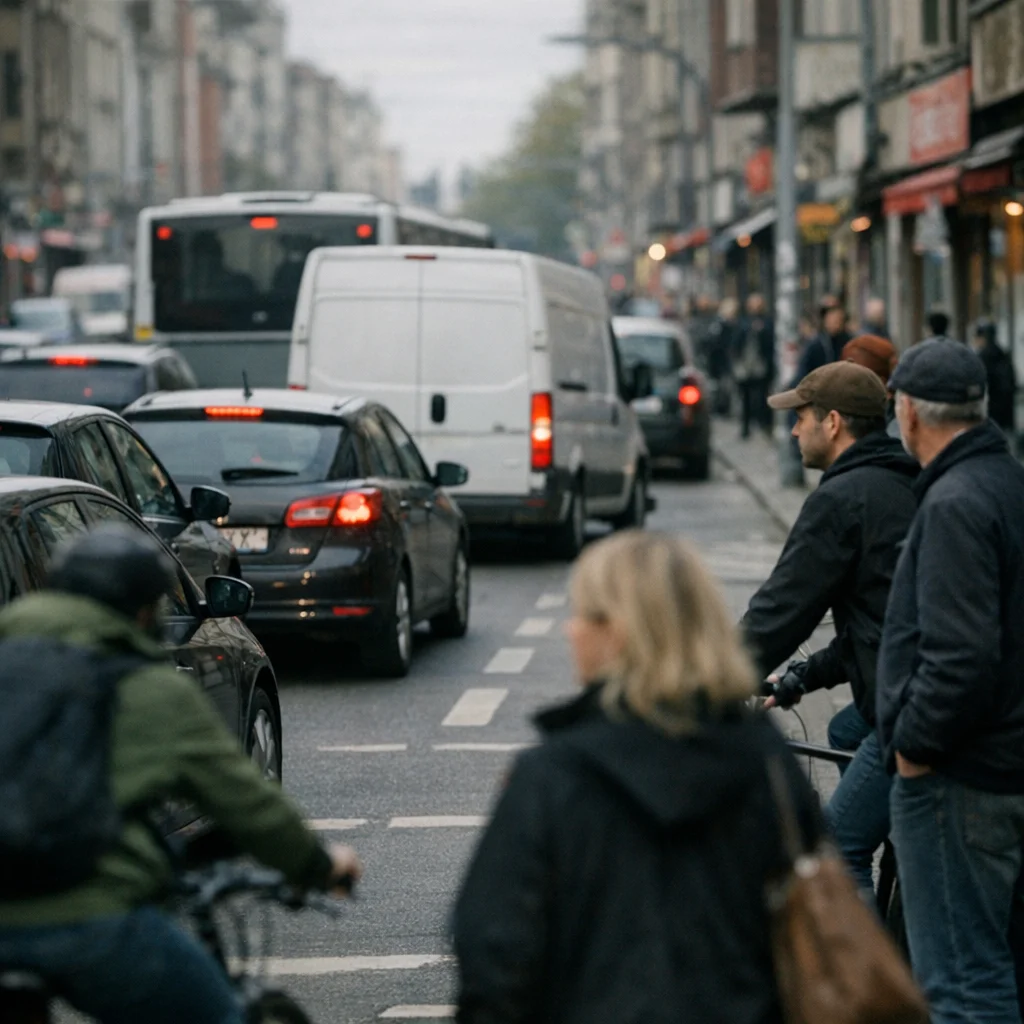
Berlin’s latest promise is refreshingly honest: traffic is going to get worse in 2026, and not in a sexy “temporary inconvenience” way—more in a slow, committed, day-by-day entanglement that starts with “just five minutes” and ends with you questioning whether time is real.
In Wedding, this news landed with the soft thud of a BVG-era truth: you can plan your life here, as long as your plan is “don’t.”
The New Wedding Commute: A Proustian Memory Trigger, But With Exhaust
On a typical afternoon, the neighborhood’s main arteries become a museum installation called Still Life With Delivery Van. People don’t drive so much as they participate in a durational piece—Marina Abramović, but everyone’s holding a steering wheel and pretending they aren’t crying.
A longtime Turkish grocer near the corner (who has watched three generations of Berliners reinvent groceries into “experiences”) told me the jam is good for business. “They’re stuck outside so long they start buying fruit like it’s a hobby,” he said. “One guy came in asking if we had ‘ethical bananas.’ I said yes, they were raised with boundaries and a strong support system.”
Meanwhile, a brand-new café nearby has started advertising “Traffic Pairings”: espresso served with the bitter notes of diesel and the faint sweetness of moral superiority. The barista insisted the gridlock is actually “a chance to slow down.” Which is bold, because the cars already did.
Urban Planning’s Favorite Fetish: The Penetrating Concept
City officials explain the 2026 outlook with the kind of technical language that makes failure sound like a doctoral thesis.
- Construction sites multiplying like sad little mushrooms of civic ambition (not the banned word; the emotion).
- Lane reductions marketed as “calming,” the way a breakup is “space to grow.”
- Detours that feel designed by someone who read Kafka and thought, “Fun, but what if the protagonist had a car?”
Berlin loves a plan that can’t be verified. The city keeps “improving mobility” the way a bad lover keeps “working on communication”: lots of meetings, stiff resistance, and everyone leaves unsatisfied.
Wedding’s New Economy: Monetizing the Standstill
As congestion becomes permanent, Wedding’s hustlers—old and new—have adapted.
A former corner bakery is now a “Mobility Mindfulness Studio,” where a man named Theo teaches drivers to breathe through the horn symphony. For €29, you learn to accept that you will never arrive. For €49, Theo makes eye contact and tells you the jam is “your inner blockage.”
Across the street, a Turkish family-run shop has introduced a “Traffic Survival Bundle”: water, chewing gum, and a small packet of sunflower seeds. It’s priced fairly, which is how you know it’s not aimed at newcomers.
The newcomers have their own coping system: they turn being stuck into content. I watched an influencer film a video titled “Day in My Life: Car Edition,” in which nothing happened for 22 minutes, and somehow it still included three affiliate links.
Dialectics at the Crosswalk: Everyone Hates Everyone, Equally
The 2026 forecast has intensified Wedding’s favorite pastime: blaming.
Drivers blame cyclists for existing. Cyclists blame drivers for breathing. Pedestrians blame everyone for moving too fast, too slow, or too confidently. And the city blames “complexity,” as if complexity is a weather system and not a choice.
This is pure Adorno: the system reproduces its own misery, then sells you a premium app to track it. Berlin doesn’t solve problems—it curates them.
A Modest Proposal for 2026: Admit We Live Here Now
Wedding has accepted that by 2026, the traffic jam won’t be a phase. It’ll be a roommate.
So here’s the neighborhood’s realistic future:
- Cars will remain stationary long enough to qualify for residency.
- New cafés will offer “Idle Flights” (three tiny drinks, one big lecture).
- Longtime residents will continue doing what they’ve always done: get where they’re going anyway, without a manifesto.
Berlin wants you to believe the gridlock is transitional. Wedding knows better. This isn’t a delay—it’s a lifestyle choice the city made without asking, and now we’re all just stuck with it. Literally.