47 Berlin 'Inquiry Panels' Confirmed Missing After Promising to Clarify Post-Reunification Scandals
Inspired by reporting on why major reunification-era scandals stayed murky, Berlin unveils a fresh solution: professionally managed confusion, now with artisanal transparency.
Civic Amnesia & Lifestyle Compliance Correspondent
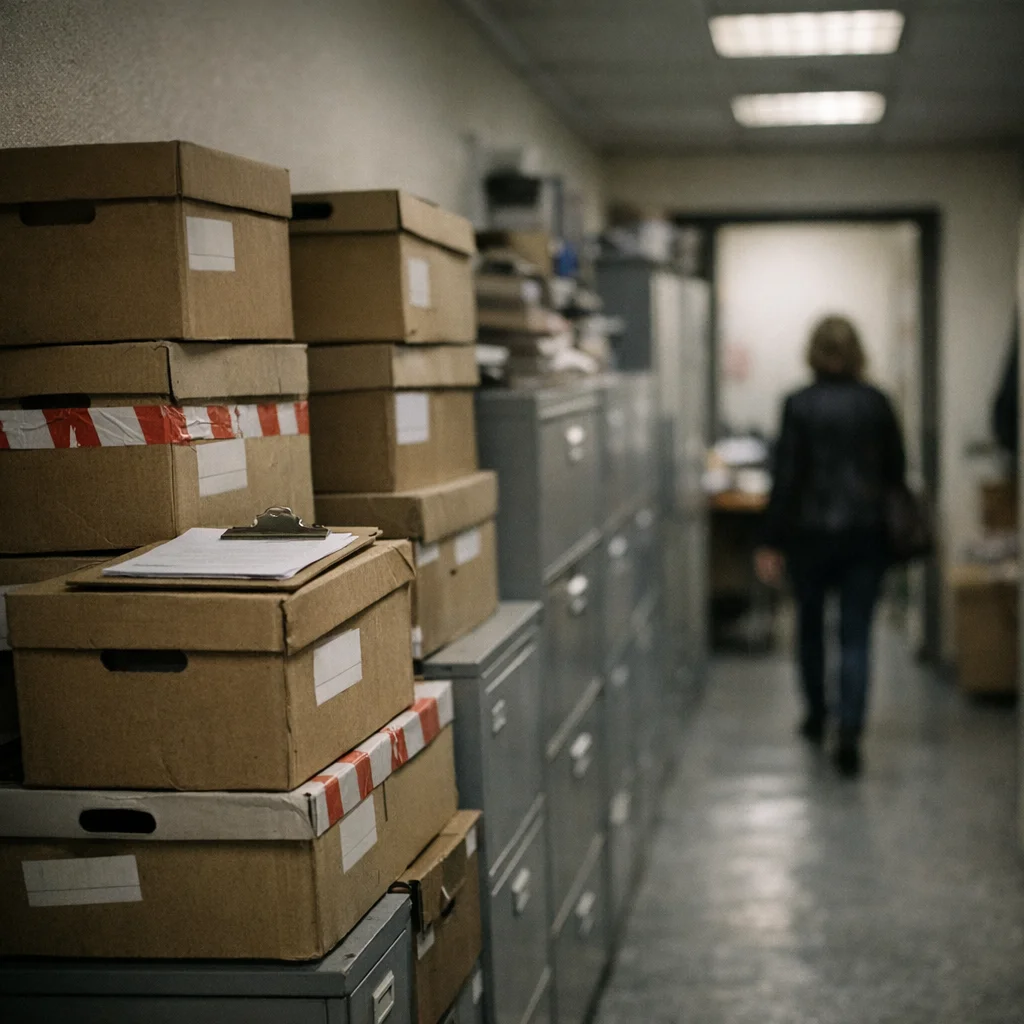
BERLIN — Following renewed public hand-wringing over why the biggest post-reunification scandals were never fully cleared up—and why that rot still matters—Berlin officials confirmed this week that at least 47 “inquiry panels,” “working groups,” and “truth formats” have vanished into what one spokesperson described as “a documentation situation.”
The vanishing, they stressed, is not a failure. It’s a governance aesthetic.
In Wedding, the phenomenon has matured into a neighborhood craft. Longtime Turkish shop owners have perfected the old model—remembering everything, saying nothing, and getting on with the day—while newer arrivals from the global moral economy insist on “processing” history in English, preferably somewhere with exposed brick and a pour-over that tastes like regret.
At a newly opened “civic clarity studio” near the edge of Wedding, patrons were invited to experience accountability as a multisensory installation. Guests sat in silence while a facilitator read excerpts from heavily blacked-out files, pausing occasionally to ask the room to “hold uncertainty in the body.”
“Berlin is finally taking a firm grip on truth,” said one attendee, 29, who described himself as an “impact strategist” and wore the kind of neutral clothing that screams, don’t sexualize me, I’m billable. “It’s about going deeper—without forcing closure. Closure is violence.”
Across the street, a Turkish butcher watched the crowd with the weary calm of a man who has seen three currency systems, five mayors, and one thousand promises of oversight. “In my shop, if the numbers don’t add up, you fix the numbers,” he said. “Here, you fix the story.”
One Small Miracle of Berlin Administration
Officials insist there is a practical reason the inquiries can’t conclude: the city’s archive boxes have begun arriving pre-sealed, as if the past itself has learned Berlin’s favorite skill—never fully committing.
A Senate staffer described the boxes as “Schrödinger’s accountability,” adding that every attempt to open them creates “procedural sensitivities” and “budget feelings.”
The result is a civic condition straight out of Hannah Arendt: a banality not of evil, but of paperwork—history not denied, just indefinitely postponed until it quietly dies in a shared folder.
Citizens, meanwhile, have adapted. Newcomers host salons about “memory culture,” then pull out of the hard questions right at the moment things might get satisfying. Longtime locals roll their eyes and keep sweeping their storefronts, because sweeping is at least honest: it moves something.
Berlin promised one final commission to locate the missing commissions, but insiders say it’s already grinding up against “stakeholder fatigue” and “calendar scarcity”—the two most powerful forces in modern democracy.