47 Bikes Vanish From Müllerstraße Overnight, Leaving 47 Identical Scooters Parked With Suspicious Care
Residents woke to an eerily coordinated swap near Leopoldplatz. Police say they are treating it as theft; locals say it feels like a mobility upgrade they didn’t consent to.
Public Order & Petty Enforcement Reporter
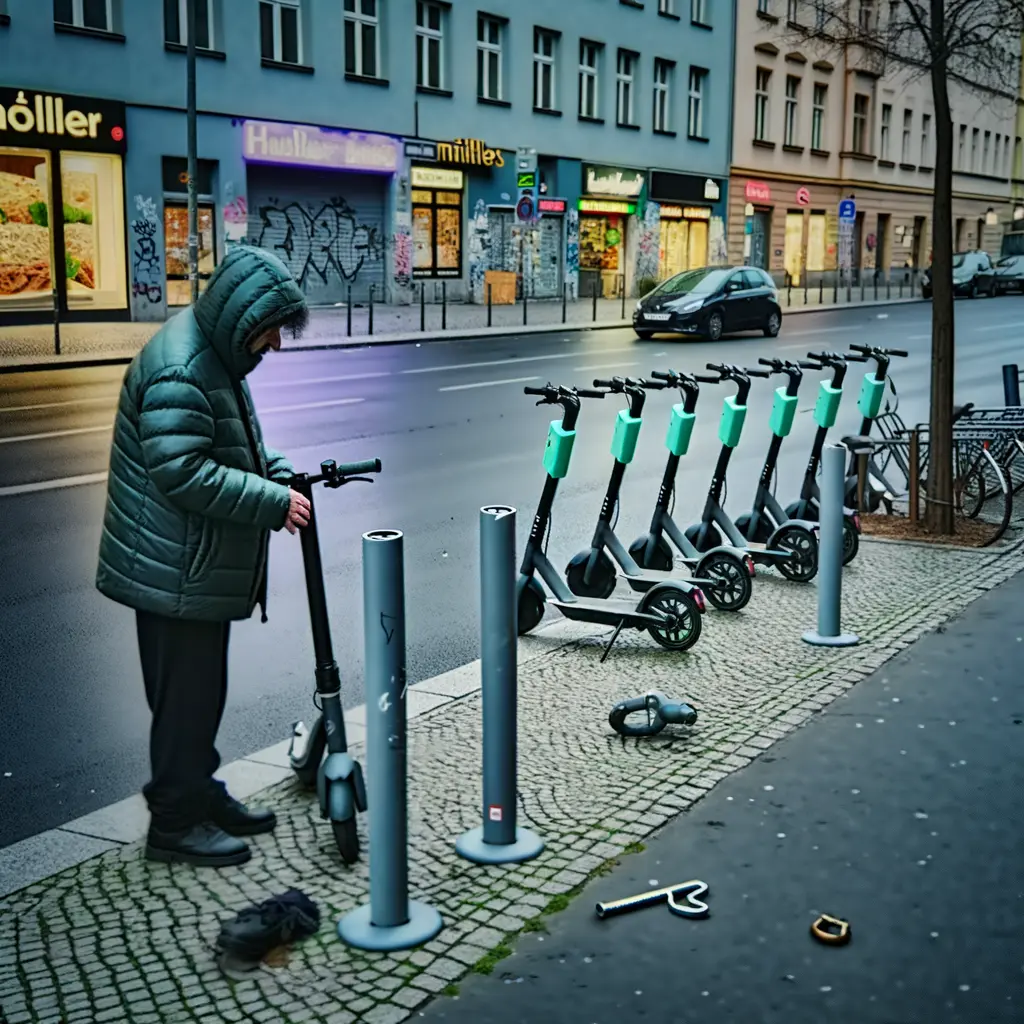
On Monday at 6:42 a.m., Sabine Krolik (38), a geriatric nurse finishing a night shift, stepped out of Müllerstraße 84 to find the street performing a miracle of modern logistics: her matte-black Gazelle commuter bike—secured with what she described as a “financially humiliating” Abus U-lock—was gone. In its place sat a standing e-scooter, mint-green, perfectly centered between two bollards, handlebar squared as if awaiting a photo shoot.
“I thought I was still coming down from Sisyphos and my eyes were doing that Berlin thing where reality softens at the edges,” Krolik said, holding the empty U-lock like a bracelet no one asked for. “But then I saw they’d done it to the whole block. It was… considerate. That’s what scares me.”
By 8:47 a.m., police counted 47 missing bicycles between Müllerstraße 60 and the corner of Seestraße, according to an incident summary confirmed by a spokesperson for Police Section 36, which handles the area around Leopoldplatz. Each missing bike—ranging from battered Dutch frames to one carbon road bike “with the confidence of a podcast,” as one neighbor put it—was replaced with the same scooter model, each parked parallel to the curb at nearly identical angles.
A crime scene with curb appeal
Outside City Döner & Grill at Müllerstraße 78, owner Orhan Demir (52) described the new scooter line as “too tidy for Müllerstraße,” adding that his regulars usually park bicycles “like they’re making a point about freedom.”
“These scooters? Same height, same brand sticker, same little bell,” Demir said, nodding toward a row so symmetrical it looked drafted by an architect who had once taken a serious seminar on the Bauhaus and never emotionally recovered. “I swept the sidewalk. I watched them all day. Nobody even pretended they were theirs. They just… touched the handlebars. Everyone’s hands were on it. You can interpret that how you want.”
One resident, Yusuf Aydin (27), a delivery rider who lost a bright-blue Peugeot city bike, called the replacement “hard to swallow” and noted a practical issue: “Scooters are great if you like stiff resistance and surprise potholes. But I can’t strap three sacks of groceries onto a mint-green moral dilemma.”
Police said there were no clear surveillance hits, despite multiple nearby cameras facing the sidewalk. “In at least two instances, camera feeds were either blocked or replaced by several hours of an unbroken, static image of a single parked shopping trolley,” the police spokesperson said, declining to speculate on whether this indicated technical failure or “deliberate curatorial intent.”
A mobility ‘statement’ with fingerprints of art school
Witnesses reported hearing a low van engine around 3:10 a.m. near the U6 platform at Seestraße, plus what several described as “a soft techno pulse—like a heartbeat wearing earplugs.” Späti employee Marta Lewandowska (41), who works nights at Kiez Ecke Getränke on Müllerstraße 92, recalled a group of four people in black clothing buying water and rolling papers at 3:18 a.m.
“They asked if we sell hex keys,” she said. “Not in a scary way. In a ‘we’re very prepared’ way. Like Method acting, but for petty crime.”
A note taped to one scooter at 11:02 a.m. Monday—later removed by an unknown person wearing a cycling helmet indoors—read, in neat handwriting: “LESS POSSESSION, MORE FLOW.” Residents said it felt like an undergrad reading of Deleuze that somehow acquired wheels.
By late afternoon, some neighbors admitted to using the scooters, mostly in the pragmatic spirit Berlin applies to everything, including philosophical contradictions. At 5:36 p.m., two people were seen testing acceleration outside Karstadt on Müllerstraße 34, then wobbling off toward Humboldthain, the kind of public journey that begins as a commute and ends as performance.
District officials urged residents to file theft reports “as normal,” while quietly advising them to document scooter serial numbers if they “intend to continue making personal contact with the handlebars.” In practice, the scooters remained in place Tuesday morning—aligned, spotless, and seemingly waiting for somebody to acknowledge the uncomfortable possibility that Müllerstraße may now be staging its own crime, with excellent lighting and an even better door policy.