72 Hours on GHB Later, Local Says His “Weekend” Has Been Promoted to Full-Time Identity
Wedding’s newest resident doesn’t party anymore—he maintains. Friends report his calendar now lists “Saturday” as a repeating event through next spring.
Daylight Recovery & Public Dignity Correspondent
WEDDING — Anthropologists have long searched for the moment a habit becomes a lifestyle. Wedding has found it: somewhere around hour 56, when you stop asking, “Where are we going next?” and start asking, “Where do I keep my toothbrush in this building?”
Local resident and part-time graphic designer, full-time circular organism, “Mads” (he asked we only use the name he introduced himself as at 9:40 a.m. on what we believe was Monday), confirmed that his original plan—“a quick pop-in, a couple hugs, an early night”—has now been elevated into a permanent operating system.
“I wasn’t on a bender,” Mads insisted, staring with monk-like seriousness at a cappuccino he had no intention of finishing. “I was doing long-form research on joy. Like Proust, but with less madeleine and more… social lubrication.”
When the Weekend Stops Ending
It started innocently: a Friday night warm-up, a bag check, a sticker placed over a phone camera lens with the solemnity of a sacrament, and that familiar hope that this time—this time—you’ll behave.
By Sunday morning, behavior was a rumor. By Monday afternoon, it was a vintage concept from a museum nobody can afford tickets to.
Witnesses say the original three-day marathon expanded into what nightlife experts are calling a “soft indefinite extension”—a structureless sprawl of dancing, cigarette diplomacy, and philosophical monologues delivered from bathroom lines where everyone pretends they’re just waiting to wash their hands.
One attendee described it as “Hegelian”: thesis (going out), antithesis (coming down), synthesis (deciding you actually live here now).
Household Economics, Now Featuring Sweat
As the bender achieved tenure, the economics of survival in Wedding adapted.
Longtime Turkish businesses—who used to sell the essentials like bread, tea, and human warmth—are increasingly expected to subsidize a parallel economy of the emotionally dehydrated.
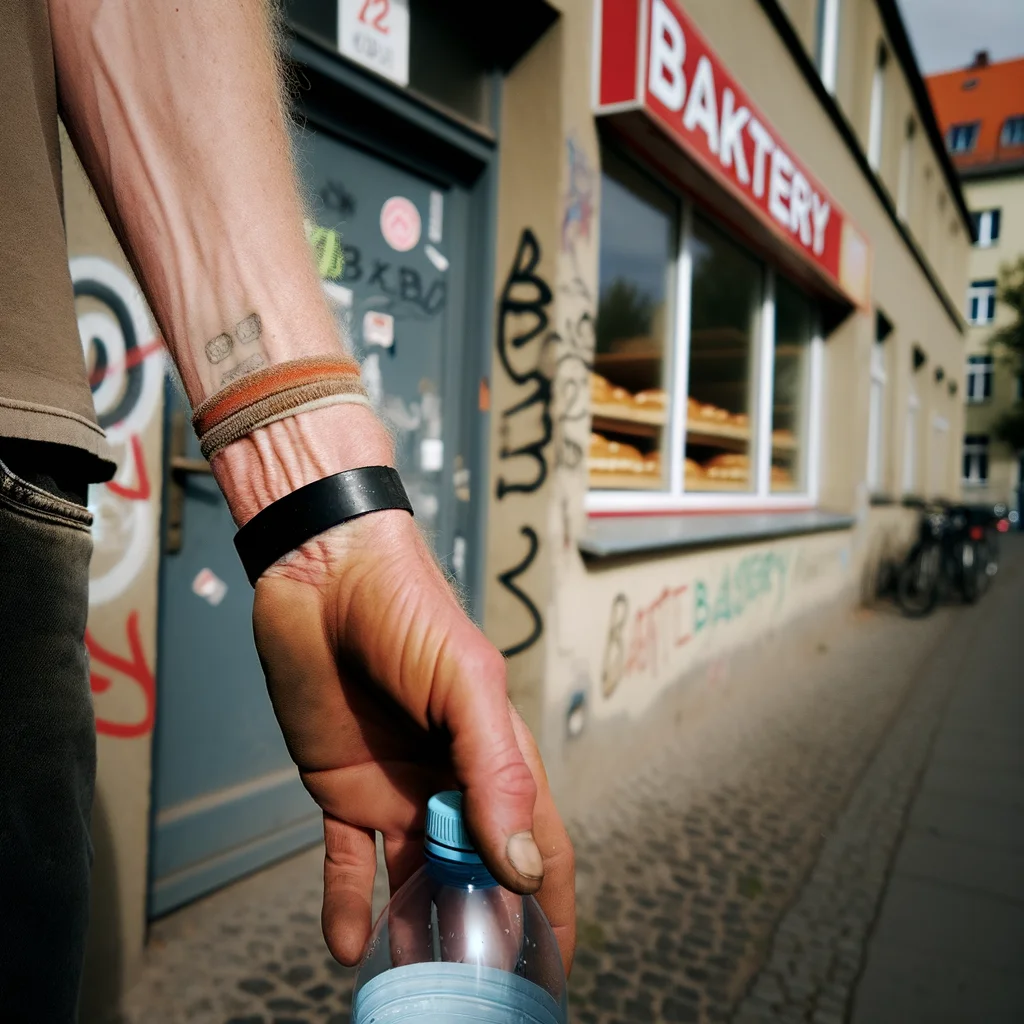
At a family-run bakery near the station, the owner confirmed a new recurring purchase pattern:
- Simit for the body
- Ayran for the soul
- Two bottles of water for the conscience
- A whispered apology for existing like a person with goals
“Some of them come in wearing club stamps like they’re war medals,” the baker said. “They buy one pastry and ask if it’s ‘ethically sourced.’ I tell them yes—it’s sourced from my uncle’s insomnia.”
Meanwhile, newer businesses catering to gentrifying arrivals have leaned in hard. One minimalist café now sells a €9 “Integration Plate”: a single olive, a QR code, and a cold towel—advertised as “ideal for re-entering daylight with minimal commitment.”
The New Career Path: Recovery Management
The lifestyle model has developed internal organization. Friends report group chats are now divided into operational teams:
- Supply: hydration, electrolytes, emergency bananas
- Sanctuary: whose apartment is “quiet” (meaning the neighbors only threatened legal action once)
- Compliance: making sure everyone has clean socks and a story that’s hard to swallow but technically plausible
“It’s basically a startup,” said a roommate who requested anonymity due to still having feelings. “But instead of equity, you get a place to sit, and instead of a CEO you get a person on a couch who won’t stop saying ‘we’re all one organism.’”
This lifestyle also creates surprising forms of intimacy. It’s not sexual—Berlin insists it’s “community”—but people are still doing a lot of deep sharing in confined spaces, bumping into each other while searching for the same mirror, negotiating boundaries with the soft authority of someone who has not slept since a previous government.
“We had stiff resistance at first,” Mads said of a friend attempting to go home Sunday. “Then we held hands in the courtyard and processed it. Hard work, but necessary.”
Door Policy as Life Philosophy
Over time, the trio of nights becomes self-perpetuating because the neighborhood’s spiritual leadership is outsourced to bouncers.
At About Blank, a door staff member explained the unspoken logic: “If you’re still here, you’re obviously meant to be here. The line isn’t outside. It’s inside you.”
Attendees describe a transformation: people stop tracking hours and start measuring existence in micro-eras: pre-stamp, post-stamp, first daylight, second daylight, and that strange morning where your sunglasses feel like therapy.
A cultural critic near Gesundbrunnen compared it to Foucault’s panopticon: “Except instead of guards watching prisoners, it’s your own reflection in a bathroom mirror judging your hydration choices.”
Public Services Report an Outbreak of Personal Philosophy
Neighborhood residents not participating in the lifestyle report ongoing side effects.
Parents dragging kids to playgrounds must navigate clusters of adults moving at the speed of remorse. Dog owners describe their pets becoming unofficial harm-reduction workers, repeatedly approaching shaky strangers and receiving what one witness called “overly sincere gratitude.”
In one stairwell, a man was seen solemnly carrying a tote bag labeled “BOUNDARIES,” which neighbors confirm contained:
- A fan
- Four limes
- A lone sock
- One existential book he did not read
Exit Interview With Time Itself
Asked when he plans to end his lifestyle residency in the weekend, Mads appeared confused.
“End?” he repeated, as if we’d asked him to stop believing in gravity. “No, I’ve matured. I’m stable now. I have routines. I go to Golden Gate when I want something intimate. Kitkat when I want something educational. Tresor when I need to be humbled by architecture.”
He then paused, gazed into the middle distance like a philosopher peering into the abyss (or a person trying to remember the abyss’s Wi‑Fi password), and concluded:
“Besides, rent is expensive. If I’m going to be broke, I might as well be broadly available.”