87% of Wedding DJs at Kater Blau 'Just Press Play,' Study Finds
A study says phone-checking has replaced beat-matching; bouncers, bakers, and promoters weigh in on the after-hours economy.
Techno Malfunction & DJ Ego Correspondent
Who, What, Where
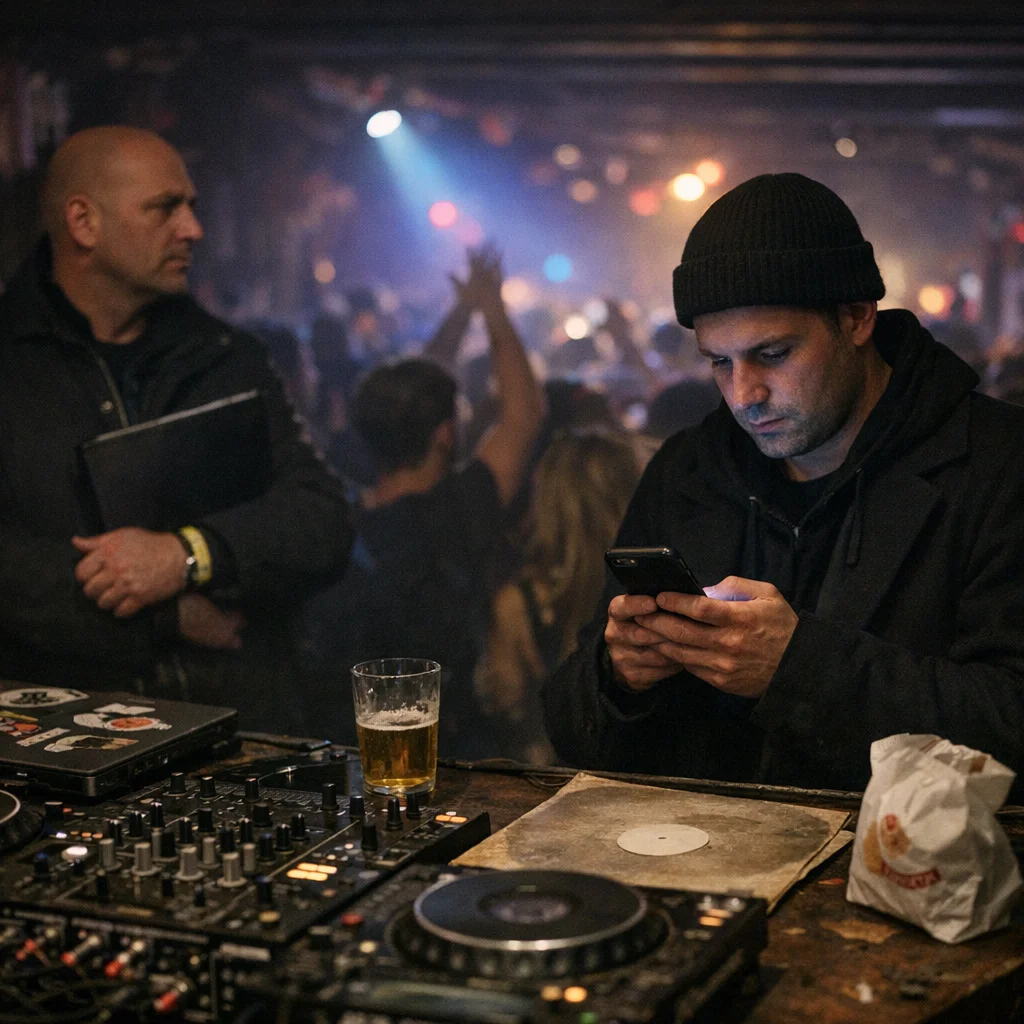
On February 2, 2026, researchers from the Institute for Auditory Labor Studies published a paper claiming 87% of Berlin nightclub DJs — including many at Kater Blau — do not mix live. Instead, they cue prearranged playlists and check phones.
The Study
The 54-page report, titled "Automated Presence: Labor Practices in Late‑Night Audio," was released at the institute's office and circulated to clubs, promoters, and four confused interns. Lead author Dr. Malin Kovac presented findings: of 312 observed sets, 271 featured DJs who pressed play, checked notifications, and adjusted an occasional EQ knob.
"We tried to quantify the showmanship economy," Kovac told The Wedding Times. "What we found is not laziness but a reallocation of attention: DJs curate their careers on Instagram while their playlists curate the dancefloor. It's a sort of simulation — the DJ as a simulacrum."
Eyewitness Accounts
At 2:13am on February 6, at Kater Blau, bouncer Sven Richter watched a set and counted phone checks. "He pressed play at 2:01, then read messages from his manager, liked stories, and responded to a label email," Richter said. "At 2:18, he closed his laptop and pretended to adjust the decks. I'm bemused."
Promoter Lena Wittstock, who books nights at Golden Gate, said the discovery is disruptive and lucrative: "If the DJ isn't mixing, the crowd blames the DJ. So we sell nostalgia — 'classic live sets' — at premium prices."
Fatma Aydin, owner of a Turkish bakery, noticed a side effect: more clubgoers arriving earlier, complaining about long bar lines and fewer conversations. "They used to talk, but now they show each other screenshots," Aydin said. "They still buy my simit, but they eat it alone."
Consequences and Responses
Some DJs defended the practice. Timur Kaya, who plays as TKY at Wilde Renate, said, "If the set feels right, who cares? I do a deep dive when necessary — track selection is intimate work." Critics call it risky: high ticket prices for a pre‑assembled playlist, and a strain on bar staff forced to entertain while the artist is offline.
Booking agencies are adjusting contracts to demand "performance clause" language requiring visible hands on decks for at least 40% of a set. Others see the phenomenon as inevitable adaptation: a ready-made DJ set for the dancefloor, where curation is the new virtuosity.
The Bigger Picture
The study has inflamed conversations about authenticity in Wedding's night economy. It raises questions about labor, spectacle, and who profits when presence is more performative than practical — a problem in a city that treats anonymity as cultural capital.
Whether the industry patches contracts or audiences demand real mixing, one outcome is certain: bar lines will remain long, vinyl sales for therapy mixes will spike, and bouncers will keep counting. As Richter put it at 4:02am, "There's a stiff resistance to change — until the playlist gets better than you."