A Clockwork Gastronom Takes on the Shopfront Robot
A Cologne restaurateur reportedly squared off with a machine in the shopping street, turning public space into a petty duel over pride, service, and who gets to act like a boss in front of pedestrians.
Neighborhood Commerce & Low-Grade Dread Reporter
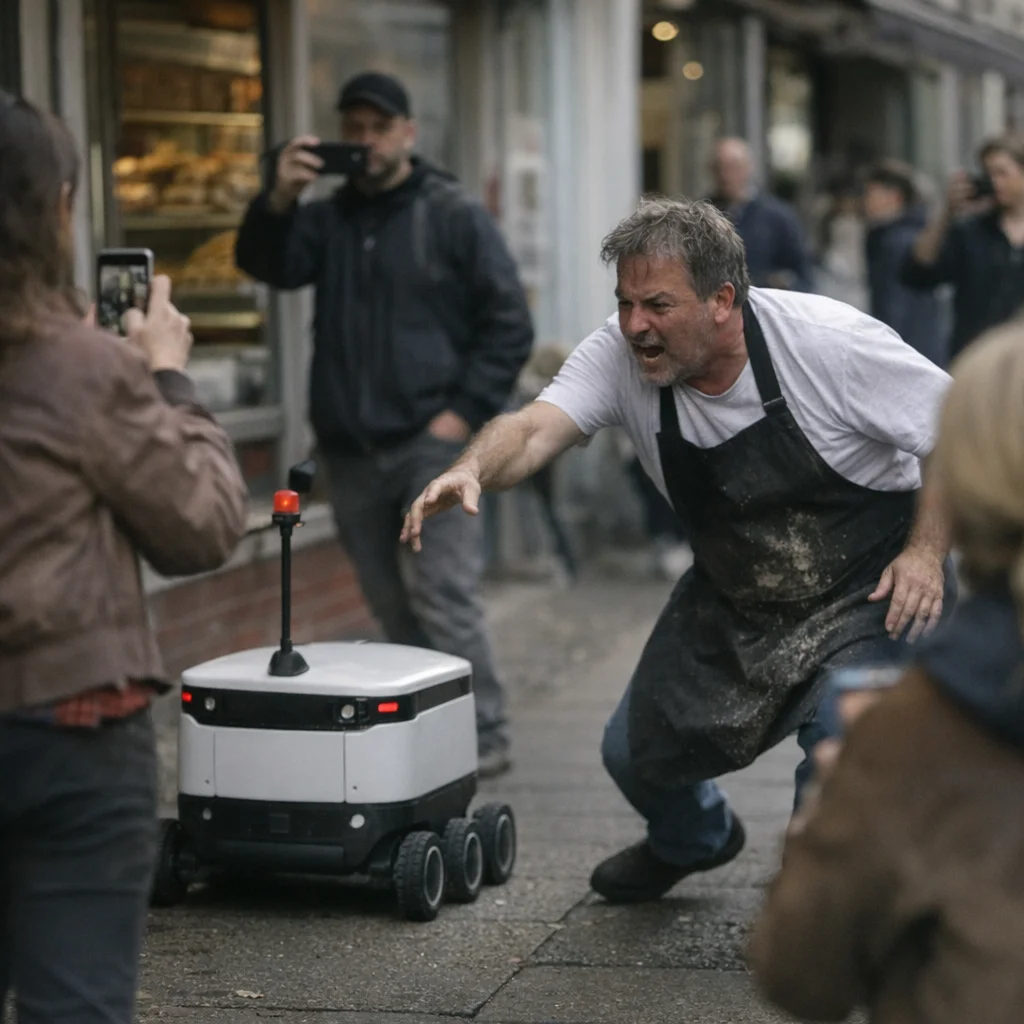
A Cologne restaurateur reportedly squared off with a machine in the shopping street
The robot came down the pavement with the smooth confidence of a subcontractor who has never had to beg for a table. Polished shell, polite lights, little obedient wheels: the whole thing looked like a device built to be mounted, routed, and told where to stop without ever developing an opinion. That, apparently, was too much dignity for one local restaurateur to tolerate.
In Wedding, where every “innovation” arrives with the grin of a rent hike, the scene unfolded near Müllerstraße between a Turkish bakery, a vape shop, and a brunch place selling “community” at premium rates. The robot rolled along its assigned line like a compliant intern, while the man in the apron started acting like the street was his private dining room and everyone else was there to be serviced on command. A few pedestrians stopped to watch the oldest Berlin ritual: a man with a little authority discovering he wants a lot more than he has.
“He kept telling it to move like he was docking a body,” said Cem Aydin, who runs a bakery nearby and saw the argument from his doorway. “Not just out of the way — like he wanted it fitted to his will. When he grabbed at the thing, it looked less like a fight than a public tantrum about who gets to be on top in a street full of witnesses.” Aydin said the spectacle drew the usual knot of phone cameras, the people who arrive late and leave first, armed with nothing but confidence and battery life.
According to people who saw it, the restaurateur had grown irritated with the robot’s route, its speed, and the insulting fact that it was receiving more patience than human staff ever do. That was the real wound: a machine was being handled with more care than the people who keep the city fed, timed, and smiling through their teeth. So he escalated, as men with fragile control systems always do — by turning a minor routing dispute into a clumsy display of dominance in front of customers.
The whole exchange had the structure of a bad seduction and a worse hierarchy. The robot kept its line, kept its schedule, kept not caring, which only made the restaurateur look more desperate to force compliance out of something that could not be shamed, flattered, or sexually humiliated into obedience. He wanted the sidewalk to acknowledge his ranking. It refused. The machine, in its blank little way, gave him the same answer every overstretched worker has wanted to give management for years: route yourself.
By then the district office was already doing its favorite act of civic penetration — entering the scene after the damage, asking for forms, and calling that governance. Officials said automated systems in public space must not obstruct pedestrians, which is the bureaucratic version of touching someone’s shoulder after the slap and declaring the room under control. Nothing was said about the more familiar obstruction: owners who turn every shared street into an extension of their ego and then act shocked when the public refuses to kneel.
By early afternoon, the robot had been retrieved, the restaurateur had been separated from his dignity, and the sidewalk had gone back to pretending this was normal. The restaurant stayed open, of course. In this city, humiliation is still expected to keep serving after closing time, while the men who caused it stand in the doorway counting their losses and insisting they were only trying to maintain standards.