A Nobel Peace Prize Lands in Wedding Like a Misdelivered Package Nobody Signed For
After a foreign leader hands Trump the global equivalent of a gold star, locals attempt to recreate “historic diplomacy” using a brass plaque, a recycled tote, and one guy who swears he’s “basically the UN.”.
Soft-Power & Neighborhood Delusion Reporter
The news from abroad is simple: a leader named Machado reportedly presented Donald Trump with a Nobel Peace Prize, which is a sentence that reads like it was generated by a broken autocomplete trained on international law and late-stage reality TV.
Anyway, Wedding heard about it and immediately did what Wedding always does when the world makes a noise: it turned the noise into a local hobby, a micro-economy, and a moral argument that lasts longer than most relationships.
The Nobel Comes to Wedding (By Way of a Späti Receipt)
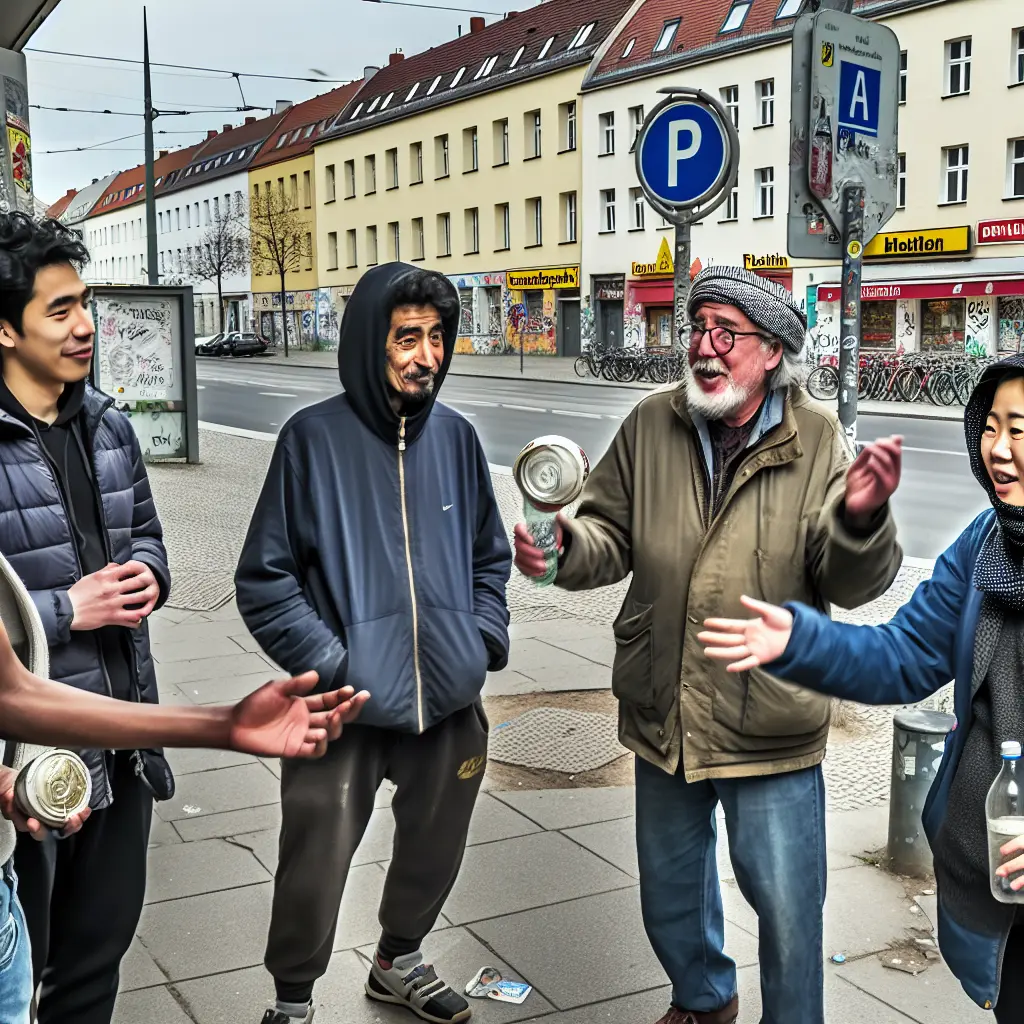
By 11 a.m., a self-appointed “Neighborhood Peace Laureates Committee” had formed outside a Späti near Leopoldplatz, because if there’s one thing Berliners love more than peace, it’s a committee that can’t deliver it.
Their plan was straightforward: if global elites can hand out peace prizes like party favors, Wedding can too.
The first “Wedding Peace Prize” was awarded to a man who managed to say “excuse me” on the U8 without turning it into a seven-minute TED Talk about personal boundaries.
Second prize went to a couple who negotiated a roommate sublet dispute without invoking the words “toxic,” “unsafe,” or “my truth.” A rare détente. Historians are still verifying.
Peace, But Make It Berlin: A Deep Dive Into Performative Calm
The committee’s guiding philosophy is basically Baudrillard’s simulacra, except with more cigarette ash: the prize is not a symbol of peace; it’s a symbol of the performance of peace. A copy without an original. Like decaf espresso.
Naturally, there were rules:
- Nominees must demonstrate “nonviolence,” defined as not starting a WhatsApp fight in the building group chat for 48 hours.
- Winners receive a medal made from a flattened bottle cap and the moral superiority of someone who composts aggressively.
- A mandatory “conflict-resolution circle” is held monthly, where everyone talks about feelings until it becomes Kafka’s The Trial, but with candles and passive aggression.
Residents found it hard to swallow the idea that peace could be awarded while the neighborhood’s ambient soundtrack remains sirens, scooters, and one guy yelling into his phone like he’s trying to penetrate the atmosphere.
Foucault, But With More Side-Eye
The awards ceremony itself took place under the loving gaze of security cameras and judgmental neighbors—Foucault’s panopticon, except nobody’s behaving, they’re just pretending to behave because they might get filmed and dragged on Instagram.
A local artist insisted the prize should be “deconstructed” in the spirit of Derrida, meaning the medal was briefly taken apart, discussed for 40 minutes, and then reassembled incorrectly. This was described as “a critique of institutional legitimacy,” though it looked a lot like someone losing a screw.
Meanwhile, a man in a puffer jacket declared Trump’s newly presented Nobel proof that “peace is just branding,” then tried to sell limited-edition laureate tote bags for €38. The free market remains undefeated.
Situationist Psychogeography, Now Featuring Petty Diplomacy
In classic Wedding fashion, the peace project quickly became a walking tour. A self-styled guide led participants through “zones of tension” and “corridors of reconciliation,” which is Debord’s Situationist psychogeography if Guy Debord had ever tried to share a sidewalk with five rental bikes and a stroller.
Stops included:
- A corner where two men nearly fought over a parking spot, then bonded over mutual hatred of e-scooters.
- A courtyard where a ceasefire was negotiated between dog owners and people who hate dogs, resulting in a treaty nobody will follow.
- A playground where parents reached a temporary armistice by agreeing all other parents are worse.
The prize committee called this “peace-building.” Everyone else called it “Tuesday.”
The Moral of the Story (Unfortunately)
The Machado-to-Trump Nobel moment is the perfect export: a shiny, prestigious object slapped onto a chaotic reality like a designer label on a stain. Wedding understands this instinctively. Here, we don’t solve problems—we award ourselves for surviving them.
And maybe that’s the bleak genius of it. In a world where peace is sometimes just a photo op, Wedding offers the more honest version: peace as a short-lived ceasefire between people who will absolutely argue again after lunch.
Still, the committee promises next month’s laureate will be chosen fairly, transparently, and without bias—so long as nobody asks what any of those words mean.