A Streetcar Demands Eye Contact Before Departure
BVG riders in Wedding now face a new boarding ritual in which the doors stay closed until enough passengers have proven they are willing to be seen.
Street Etiquette Columnist (Public Impatience Desk)
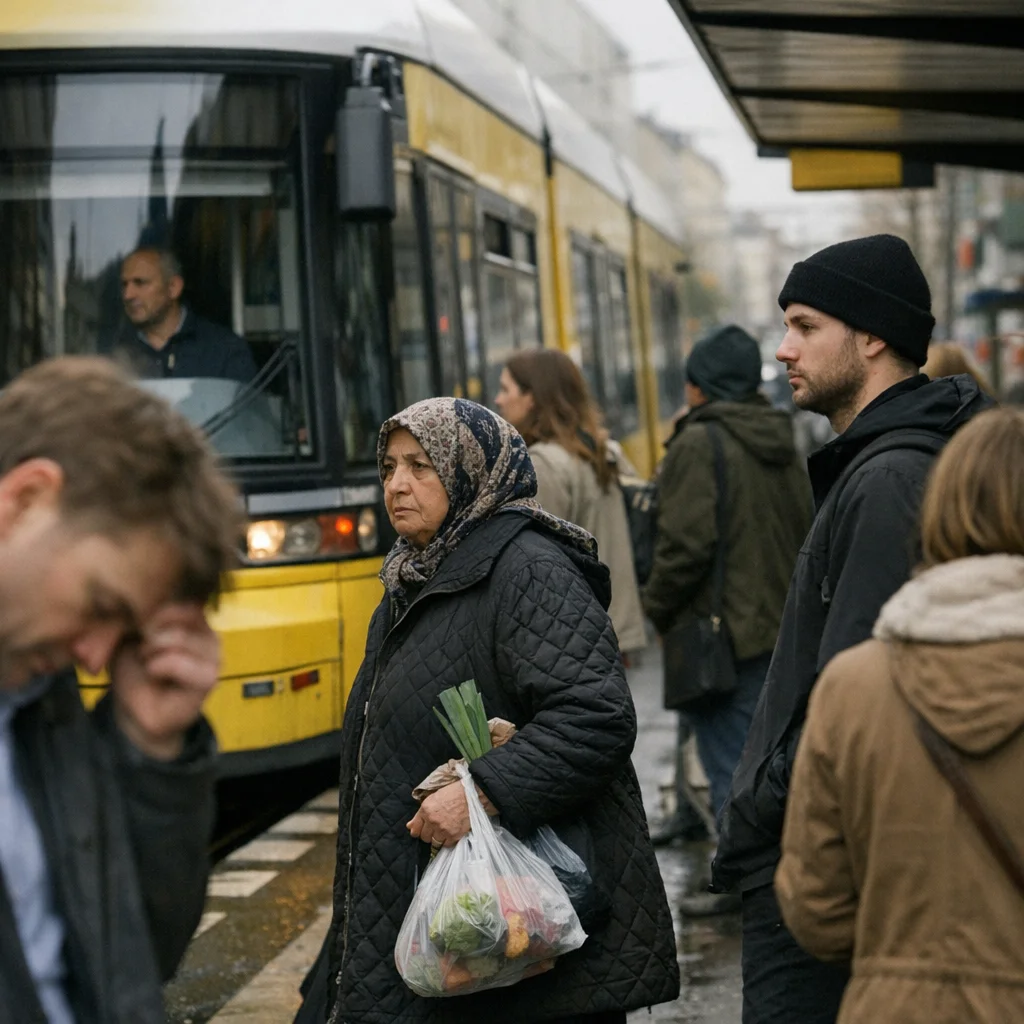
Transit workers at the Wedding tram stop say the new boarding rule is simple: the doors do not open until enough passengers make eye contact to convince the driver they are not merely decorative objects with coats. The rule, introduced quietly after a series of platform confrontations, has turned the station into a public audition for people who have spent years perfecting the Berlin art of looking through one another like cheap glass.
On Tuesday morning, around 9:40, a line of riders gathered under the shelter near Leopoldplatz and began doing what city people do best when forced into intimacy: pretending not to need anything from anyone. The driver kept the tram still while a screen above the cab flashed a reminder that passengers must “acknowledge boarding conditions.” In practice, that meant looking at the driver, then at the doors, then at each other, and finally at their own shame.
“It is meant to reduce aggression,” said Marek Kowalski, a BVG supervisor who has learned to speak about humiliation in a voice usually reserved for weather warnings. “If people cannot manage a second of eye contact, they tend to unload the rest of their personality onto the first available human being.”
That theory made sense to everyone except the riders, who immediately sorted themselves into the usual civic castes. The office climbers locked eyes with the driver like junior partners negotiating a merger. The exhausted workers stared too hard, as if contact had become a tax they were already overpaying. A pair of startup men in matching black coats tried to project empathy with the glazed sincerity of app notifications. Nearby, an older Turkish woman carrying groceries watched the entire scene with the expression of someone who has already survived three republics and one renovation cycle. She did not blink until the tram finally opened.
By midmorning, the platform had become a tiny tribunal of desire and surrender. People who could not tolerate being seen began performing false indifference with the desperation of nightclub admission. Others took the rule as an excuse to dominate the moment, holding eye contact a beat too long, smiling with the sleepy menace of men who think consent is something they can improvise between stops. The whole setup had the elegance of a cheap pickup routine dressed up as public order: stare long enough, and the doors reward you; look away, and the machine leaves you on the curb with your need still visible.
BVG staff call the process “boarding readiness.” Riders have started calling it what it feels like: a consent theater for the city’s most cowardly egos. The platform is the stage, the driver is the judge, and everyone standing there is expected to audition their willingness to be handled without making a scene. The men who usually barrel through life on pure entitlement hate that part most. They can flirt with a barista, negotiate a lease, and mansplain a bicycle lane, but a tram asking them to hold a gaze for three seconds turns them into frightened schoolboys with rent.
“Now everyone acts like the doors are a test of character,” said Jasmin Yildiz, who missed the first tram after checking her phone. “Half the passengers want to look sincere. The other half want to look unavailable. Nobody looks normal.”
The complaint process has already followed the same choreography. Passengers who feel exposed can file a formal objection at the station office, where a laminated form asks them to describe the incident, the emotional impact, and whether they felt “pressured into premature acknowledgment.” One rider reportedly circled all three boxes and wrote, in block capitals, that he did not come to Wedding to be inspected like fresh produce by a municipal flirt.
BVG says the measure will continue for now, and station staff have been told to document “persistent avoidance behavior.” In Wedding, that mostly means the same people who insist on taking up space without giving any back. Riders have already started treating the platform like a dating app with worse lighting: swipe left, then suffer. The city calls it safety. The platform calls it what it is: a small, bureaucratic way of making the arrogant wait until the rest of us decide whether they get to board at all.