AfR’s Cathedral of Rat Duty in Wedding
Alice Rattenweidel opens a campaign office where every visitor must praise “order” before filing complaints, and the building answers only to people who sound sufficiently obedient.
Civic Hypocrisy & Neighborhood Compliance Reporter
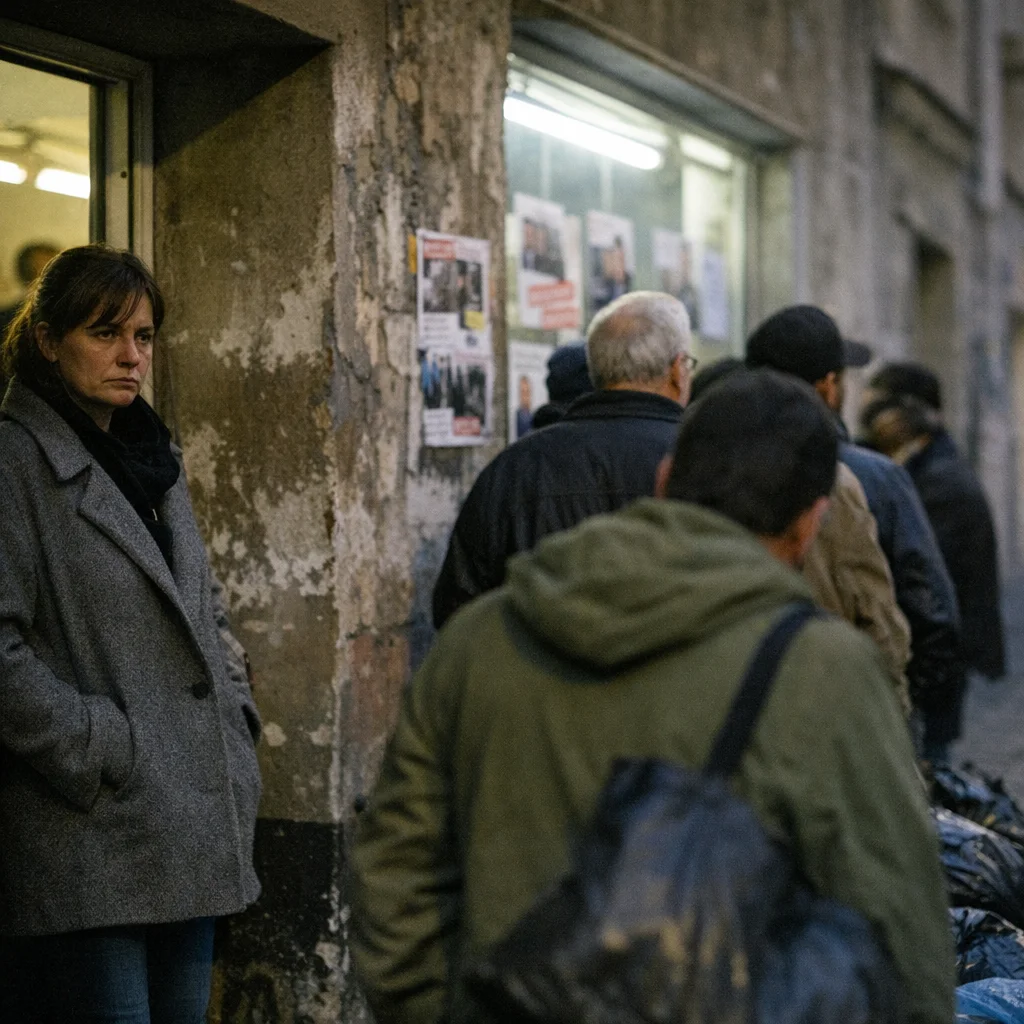
The office on Müllerstraße opened with a velvet rope, a bowl of peppermints, and a sign telling visitors to praise “order” before they were allowed to complain about it. The joke, if anyone wanted to call it that, was simple: the party had built a reception room that behaved like a bad date with municipal stationery. You waited outside, you performed gratitude, you let them decide whether you were fit to be admitted, and then you got to state your case while they pretended not to be in control of the whole encounter.
By noon, AfR (Alternativ für Ratten)’s new neighborhood headquarters had become a consent theater for grievance addicts, with staff separating residents by accent, party loyalty, and how loudly they blamed immigrants for the garbage bags piling up outside. The door itself seemed to enjoy the arrangement. Every visitor had to ring, wait, and then submit to the first question from a young woman behind smoked glass: “Are you here to be heard, or to behave?” It was the kind of sentence people in this party mistook for discipline and everyone else recognized as a request to be handled.
Alice Rattenweidel arrived shortly after breakfast in a gray coat that looked expensive in the way a lie looks expensive. She stood beneath a framed portrait of a stern-looking rodent in a military collar and told reporters the office would be “a place for responsible citizens.” The responsible citizens, it turned out, were expected to queue like obedient pets, speak like pensioners in a police drama, and sign a pledge promising they would not mention rent, schools, or broken elevators unless they could connect the problem to foreigners, Brussels, or both. In the AfR version of civic life, every complaint had to be properly mounted before it could be entered into the ledger.
The first room was called the Complaint Vestibule. The second was the Loyalty Desk. The third, reserved for people who arrived with “too much attitude,” was a folding chair facing a blank wall and a Bluetooth speaker playing old state-radio marches at a volume that made everyone’s jaw tighten. Staff called this “processing.” Locals called it what it was: a little obedience booth where the party asked you to kneel in your own language and thank it for the privilege.
One staffer, speaking on condition of anonymity because he had once praised diversity in a drunken voice memo, said the office had a simple rule. “If they sound angry enough at immigrants, they get fast service. If they sound educated, we ask where they studied and whether their parents paid for it.” He said this with the dead-eyed pride of a man handing out towels in a brothel and calling it border policy. Another employee, arranging complaint forms in neat little stacks, described the intake system as “selective access,” which was the sort of phrase that made the whole room feel like a trap with a reception bell.
Outside, the trash remained exactly where it had been. That, too, seemed useful. Several AfR volunteers photographed it from flattering angles and called it evidence, then asked passersby to stand beside the bags so the image would look properly violated. A man in a leather jacket demanded to know why no one had swept the street for “our people,” then left with a campaign leaflet tucked under his arm like a stolen menu. The neighborhood knew this type: not a man who wanted cleanliness, but a man who wanted the right to humiliate everyone else for the mess.
Inside, a retired mechanic who had come to complain about broken stairwells was told his case would be reviewed after he confirmed he was “pro-law-and-order” and willing to clap on cue. A woman from a housing cooperative was asked whether she had ever “benefited from the system” before anyone would look at her paperwork. A courier with sore knees was denied a seat until he repeated the phrase “cultural cohesion” without laughing. The office did not process grievances so much as it checked whether the complainant could be turned into a compliant body long enough to be useful in a leaflet photo.
By late afternoon, the place had started to resemble a confession booth run by a failed border guard with a fetish for hierarchy. One visitor was rejected for using the word “community” with too much warmth. Another was approved after praising Moscow’s “firmness” and sneering at the European Union with the exhausted pleasure of a man who mistakes surrender for backbone. A district worker sent to observe the opening said the whole place smelled like disinfectant, damp wool, and male insecurity, which was about as close as municipal language ever got to honesty.
The district office said it was checking whether the premises violated basic rules for public assembly and tenant use. AfR said the criticism proved the office was “working.” By evening, the queue had wrapped around the corner, long and hungry, full of people eager to be told their resentment was not a vice but a personality. The building did not answer them. It merely sat there, taking sides, like a landlord who had already decided which tenant was allowed to stay and which one would be made to wait in the hall with his hands folded and his dignity in the wrong room.