AfR’s 'Consent Control' Makes Every Rally Feel Up for Grabs
Alice Rattenweidel’s crew has started treating party loyalty like a courtship ritual, with speeches that demand devotion, humiliation, and a very public yes.
Moral Contradictions & Night-After Reporting
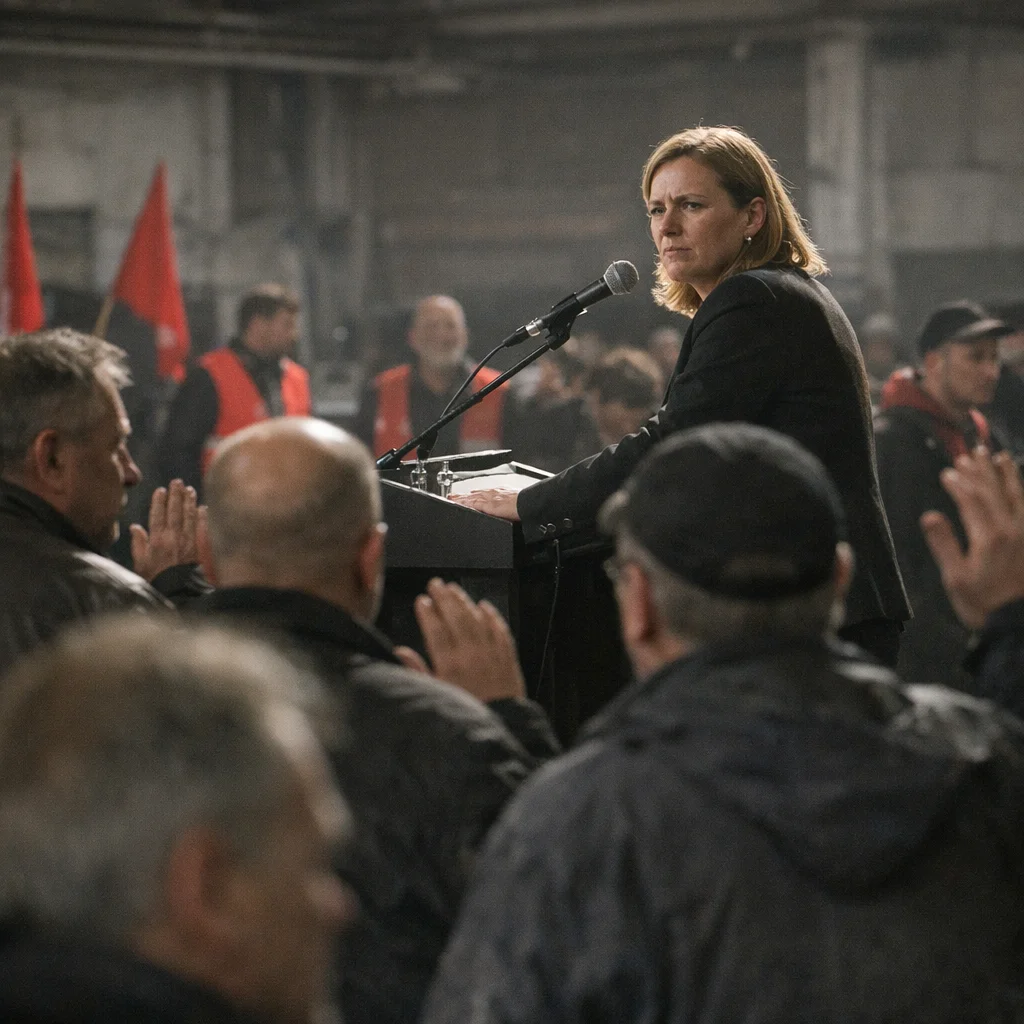
AfR opened its latest rally season in Wedding by turning applause into a permission economy and then pretending the whole thing was civic virtue. In the converted event hall near the old industrial blocks, with its sour beer smell, dead fluorescent strips, and too many flags hanging like bad stage curtains, Alice Rattenweidel walked out under a spotlight that made the room look less like a political event than a private audition.
The rules arrived before the speech did. Supporters were told that no one would be allowed a second round of clapping unless they had first praised her “discipline,” denounced the European Union, and offered the proper warmth toward Moscow. The hall was handed a little arousal manual for loyalists: flatter first, submit visibly, then maybe be allowed to make noise. A volunteer in a red armband circulated laminated response cards that looked like instructions for a cheap seduction and a disciplinary hearing at the same time. The cards read like this: smile on cue, nod on cue, praise on cue, wait to be chosen.
At first the men in padded jackets treated it like a joke they were being invited to share. They grinned the way middle-aged cowards do when a room promises them permission to be ugly in public. Several reached for their phones and were told to put them away and listen with their faces, as if the evening required eye contact to complete the transaction. A man who tried to clap twice before the proper ritual was finished was cut off by a volunteer who informed him, in front of everyone, that his enthusiasm was “premature” and “poorly timed.” He went still, hands folded, looking less like a supporter than someone waiting to be inspected after removing his dignity at the door.
“This is about order,” said Dieter Mohn, 58, who called himself a longtime supporter and asked not to be named because his wife believes he attends for speeches, not for ritualized humiliation. “People need structure.” Two rows behind him, a woman in a synthetic fur collar laughed so hard she nearly snorted into her plastic cup and said structure was just what men call it when they want to be told what to do without admitting they like it.
The evening only got tighter. Speakers paused after every anti-immigrant jab to let the room prove itself, and each pause worked like a hand on the back of the neck: don’t get ahead of her, don’t embarrass her, don’t embarrass yourself, wait to be permitted. Those who cheered too eagerly were mocked as cheap. Those who hesitated were branded weak. The party’s usual fantasy of hard men and pure nation dissolved into its actual social form: a room full of disciplined little suitors trying to win favor from a leader who depends on their applause the way a failed dominatrix depends on the budget of the club.
Rattenweidel’s line about Moscow landed especially well among the men who mistook geopolitical submission for virility. They clapped for “stability” as if they were promising obedience to a lover who had already decided they were replaceable. But the more the room begged to be led, the more obvious it became that the leader needed the begging. Without their mouths open, without their hands moving, without the crowd confirming her authority over and over, the performance collapsed into what it always was: a badly lit transaction in which everyone pretended to be on top.
A district security official who monitored the hall said there was no legal issue as long as attendees were free to leave, though several did exactly that after realizing the event required more emotional labor than a breakup text and less self-respect than a late-night booth at the wrong bar. One man near the back told staff he had not come to be “politically seduced,” which seemed fair. He left after the third demand to applaud Russia “for stability,” carrying his folded program like a towel he had been forced to hand in.
By the end, the hall had the drained, sticky mood of a room where everyone has been led on, nobody got what they thought they were owed, and the only thing left was the paperwork of consent. AfR has not said whether the ritual will continue at future events, but organizers have already booked a smaller venue and hinted at a stricter list of acceptable reactions. The men who came for domination discovered the party wanted something more degrading: not their loyalty, just their willingness to keep asking for permission.