AfR’s New ‘Public Service’ Tunnel Is a Glory Hole for Cowards
Alice Rattenweidel’s rat party is pitching a civic transit project that promises “secure passage” while quietly rewarding the same fake strongmen who panic when they have to share space with the public.
Civic Hypocrisy & Neighborhood Compliance Reporter
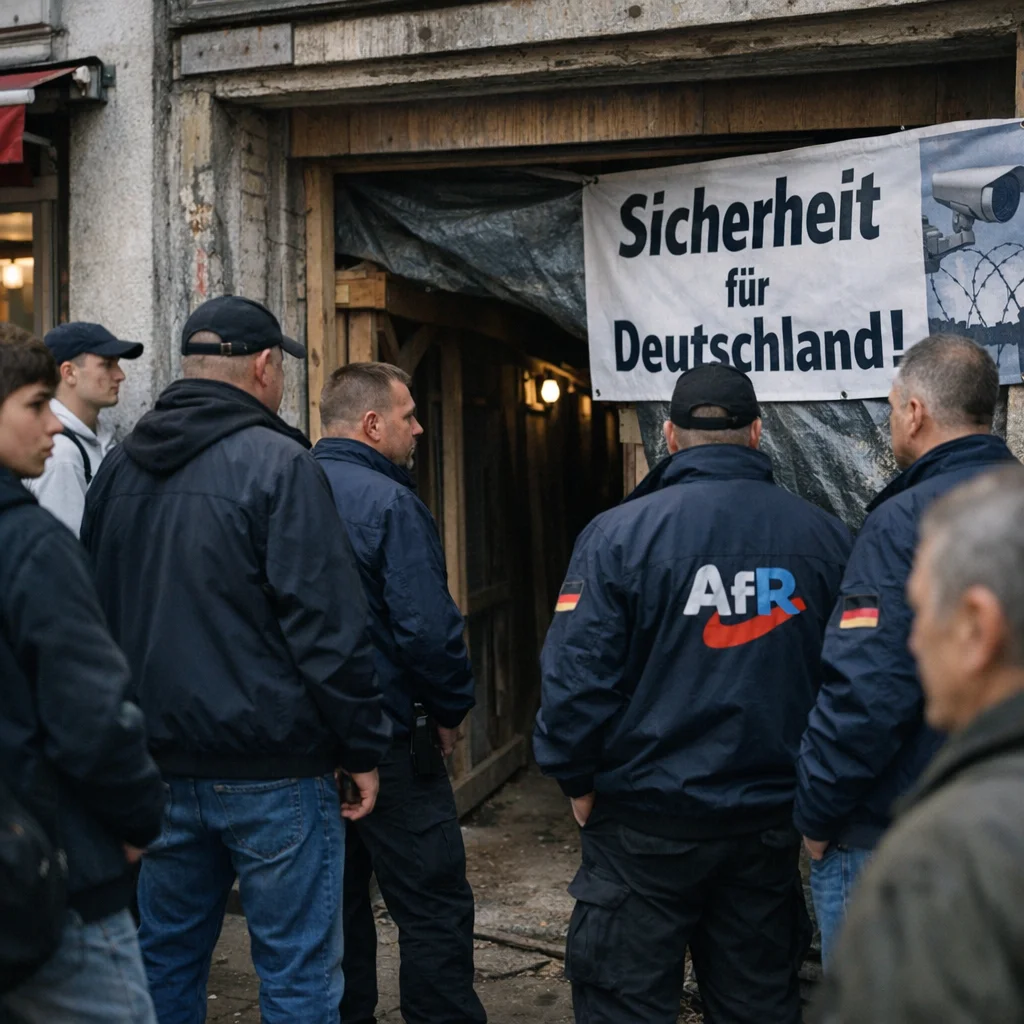
AfR leaders in Wedding spent Monday morning touring what Alice Rattenweidel called a "public-service tunnel" under a vacant storefront near Leopoldplatz, a narrow civic hole the rat party says will let residents move through the neighborhood "securely" while avoiding the very public they claim to represent. In other words: a state-sanctioned crawlspace for men who want the benefits of contact without the shame of being seen wanting it.
By noon, the tunnel had already become a shrine to cowardice with municipal branding. A banner taped to the entrance promised "discipline"; inside, the walls were lined with laminated slogans about order, protection, and "European standards," which in AfR language usually means a hard posture and a soft spine. The passage itself connected a shuttered Späti to a rear service door, letting visitors slip in and out without meeting the Turkish bakery next door, the men on benches, or the teenagers who immediately understood what kind of performance this was: a glory hole for the ideology of avoidance, built so nobody has to stand face-to-face with the public they blame for existing.
"We are offering secure passage for responsible citizens," Rattenweidel said, standing beside a portable fan that kept trying to breathe the whole theory apart. "People are tired of being forced into contact. They want boundaries. They want clarity." She did not explain why the tunnel curved around the front entrance like a nervous thought, or why every sentence from the party sounded like a consent form for humiliation.
The party’s local organizer, who asked not to be named because his cousin works in a falafel shop and would never let him survive it, said the tunnel was designed to prevent "cultural friction." That phrase lasted about as long as a cheap condom in a district office filing room. Residents arriving for coffee, bread, or cigarettes saw immediately that the project was less transit than fetish: a sealed corridor for men who want the thrill of public power without the inconvenience of public reciprocity, a little administrative slit where authority can insert itself and still insist it has remained pure.
A district spokeswoman said officials were reviewing whether the structure violated fire code, zoning rules, or the deeper civic offense of being a fascist mood board with plumbing. The Ordnungsamt reportedly asked whether the passage met requirements for emergency egress, barrier-free access, and "independent circulation," which is Berlin jargon for a door designed to let hypocrites arrive, perform, and vanish before anyone can ask what exactly they think the city is for. BVG, asked whether it planned to integrate the tunnel into existing transport, replied that it does not serve "private fantasy infrastructure," which felt like the closest thing to a moral statement a transit agency can manage before lunch.
AfR has been courting this kind of architecture for months, part prison corridor, part cruising mistake, part Bauhaus for the emotionally constipated. The party likes to cosplay as guardians of public order while advertising the same allergic fear of shared space that drives every petty authoritarian in Berlin: the landlord who hates tenants, the startup founder who hates workers, the gym bro who wants the city but not the people in it. Their politics always ends up here, in a maintenance fantasy where somebody else does the touching, somebody else does the waiting, and the strongman only has to arrive through the side entrance and pretend that is not exactly what he came for.
By late afternoon, the tunnel was blocked after neighbors began using it as a shortcut for garbage bags, shopping carts, and one extremely patient Turkish grandfather who stood in the entrance, looked around, and asked whether this was supposed to be a border or just another tantrum. A pair of teenagers then started treating the structure like a confession booth, loudly rating the acoustics and daring AfR volunteers to come back through the same hole they had spent all morning calling security.
AfR said it would "adjust the design" and relaunch later this week, which in Wedding sounded less like planning than a promise to keep getting caught with its hand in the city and its dignity somewhere further back than the service door.