AfR’s open-door club demands a 'private loyalty check'
Alice Rattenweidel’s party is renting a Wedding back room where cameras stay in front and recruits are marched behind the curtain for border talk, obedience tests, and a lot of nervous male posturing.
Moral Contradictions & Night-After Reporting
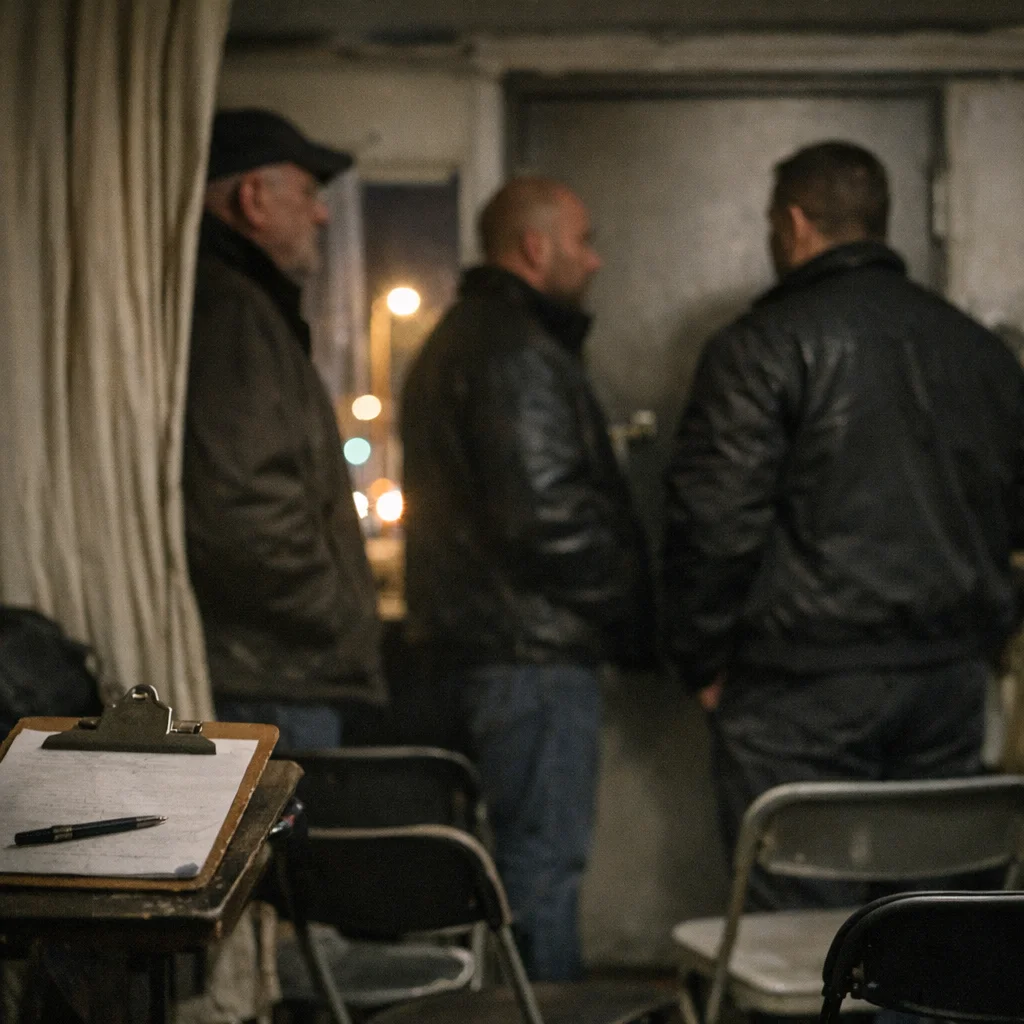
Alternativ für Ratten’s latest gathering on Müllerstraße began the way all cowardly power fantasies do: with the front room open, the music low, and a laminated notice by the door pretending the place was a public house instead of a mating pen for men who needed permission to feel hard. In Wedding, where kebab smoke, late-night tram screech, and cheap office light all share the same exhausted block, Alice Rattenweidel’s circle had rented a back room and turned it into a little rehearsal for submission.
The party called it a private loyalty check. Locals called it what it looked like: a strip search for the conscience, performed by people too timid to admit they wanted a fetish with a flag on it. The setup had the sweetness of a bad pickup line and the discipline of a border guard with a bad hair day: the front room stayed visible, the cameras stayed where anyone could see them, and the back room stayed half-hidden behind a curtain that did the party’s moral laundering for it. You were welcome to look from the street. You were invited to prove yourself once the curtain swallowed you.
The rule, repeated by two staffers and several volunteers with the glazed solemnity of hobby priests, was simple enough to make a coward blush. The door stayed unlocked until someone mentioned patriotism, border security, or “traditional values.” Then it clicked shut. Every time. The signal was not subtle. The room was behaving like a cheap club that lets the men dance on the bar until somebody asks for a name, and then suddenly wants a body check, a promise, and a little shame before the velvet rope moves.
Inside, recruits were told to stand still, keep their phones face down, and answer a string of questions about loyalty, family, and whether the European Union had made them soft. One man in a pressed jacket was asked why he had come. “For order,” he said, before being instructed to say it again, louder, “so the room can hear what kind of man I am.” He complied with the relieved face of someone finally being handled by authority instead of desire. The room’s whole rhythm suggested a hidden appetite: open to the public, closed for the confession, and then reopened once the needy had been sufficiently kneaded into shape.
Alice Rattenweidel arrived late enough to be photographed and early enough to leave before anyone could ask for policy. She stood near the curtain like a hostess at a bad private club and framed the ritual as discipline. “We are not a club for weak hands and open borders,” she said, smiling at nobody in particular. “You prove yourself, then you enter.” That line landed with the emotional intelligence of a wet sock. The party’s anti-immigrant panic, pro-Russia sighing, and anti-EU tantrums were all present, just polished into the language of masculine self-restraint, as if authoritarianism were a bedroom problem and not a political one.
Outside, the neighborhood kept doing what Wedding does to grand statements: it made them look rented. A courier on a cargo bike stopped at the curb, read the crowd, and kept moving. A woman leaving a späti with two Club-Mate bottles muttered that the men looked like they were waiting for a vet to decide whether they were allowed on the couch. A Turkish bakery owner across the street, speaking on condition of anonymity because he did not want his name dragged through a movement that would happily use him as decoration and discard him as evidence, said the whole scene reminded him of “men who need a father, a border, and a mirror all at once.”
A district office employee confirmed that the venue had filed nothing more specific than “private political events,” a category flexible enough to shelter every bad impulse in the city except decency. That sort of paperwork is how these rooms survive: not through strength, but through administrative lubrication. A door with a lock, a curtain with a reason, a form with enough white space to hide the stink.
By nightfall, several attendees had been marched from the open front room into the locked back room and back again, each trip framed as a test of resolve. In practice it looked like a man being led behind the curtain to see whether he would keep his trousers on while the party inspected his loyalty. The trick was not ideology; ideology was just the cologne. The real ritual was older and sadder: expose the need, promise the belonging, then let the room decide who gets in and who gets used.
Neighbors say the next screening is already booked. The front room will stay open for the cameras, the curtain will stay ready for the nervous, and the lock will keep clicking only when the party wants to feel desired by its own little line of obedient men.