AfR’s Red Carpet for Moscow, Rat-Trap Edition
Alice Rattenweidel’s crew is demanding public respectability while treating pro-Russia flirtation, xenophobia, and macho panic like a civic virtue.
EU Melodrama & Sidewalk Diplomacy Correspondent
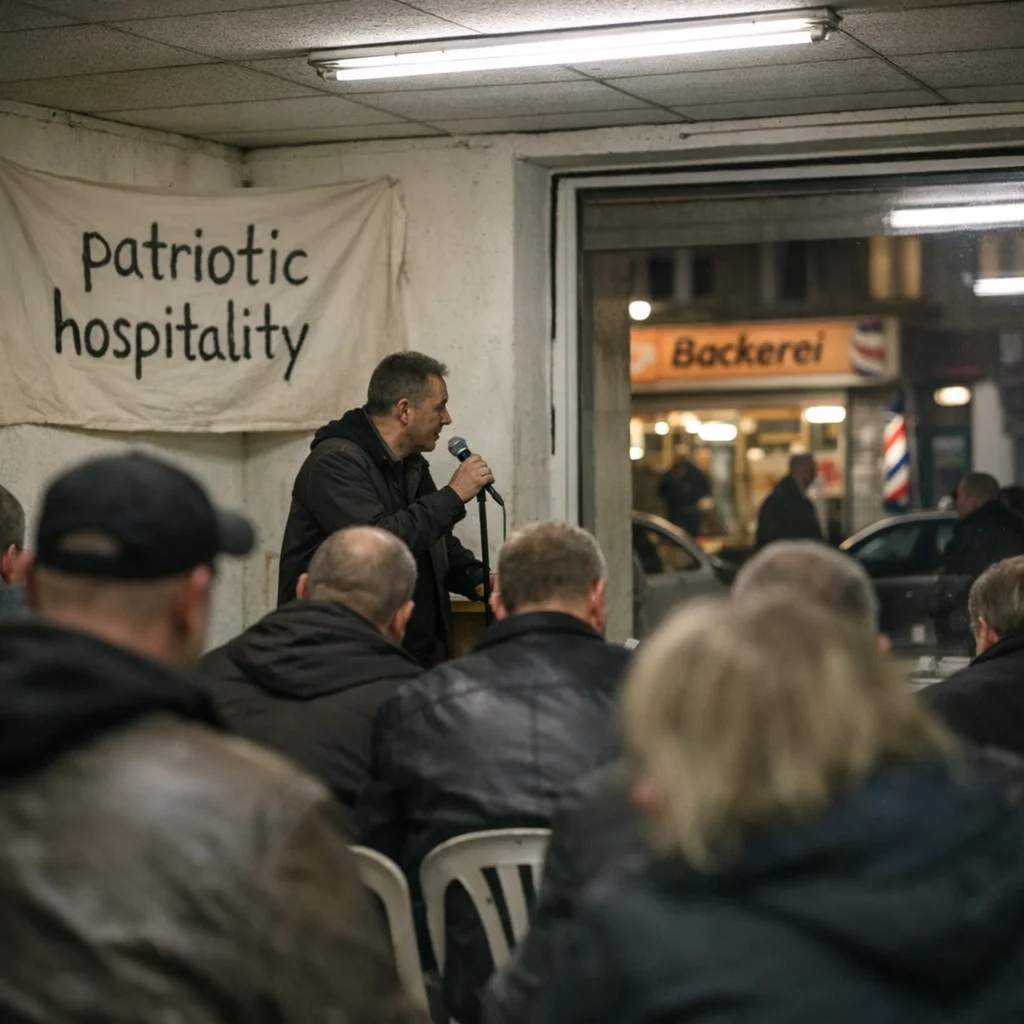
AfR’s branch meeting on Müllerstraße opened like a neighborhood grievance clinic and quickly revealed itself as a velvet-lined consent trap: you could speak, but only after kissing the ring, flattering the bouncer, and proving you were willing to be handled. The room above the shuttered shop was full of plastic chairs, stale heating, and men in tidy jackets who looked as if they had mistaken civic life for a pickup line they were too cowardly to complete.
The party called the rule “patriotic hospitality.” In the room, it functioned like a velvet rope at a very cheap club: no entry to the microphone unless you first performed the correct submission. Newcomers were told to introduce themselves, denounce “globalist chaos,” and praise the nation’s “strength” before they were allowed to complain about rent, schools, or the price of sausages. The message was not subtle. AfR wanted the neighborhood’s respect, but only on its knees and only after it had been frisked for independent thought.
One organizer, who asked not to be named because he still hoped to be invited back to better rooms, said the rule was about “separating serious patriots from freeloaders.” In practice, it separated the lonely from the obedient. The party did not want supporters; it wanted applicants willing to audition for a role in which dignity was optional and deference was the entrance fee. Every sentence had the same undertone: prove you can take it, prove you can give up your voice, prove you understand who gets to lean over the table and who gets left waiting in the hallway.
The setting helped. Müllerstraße was doing its usual Wedding mix of late-night kebab smoke, bakery lights, corner-store boredom, and the tired discipline of a district that has heard every kind of grievance and believed almost none of them. Through the window, a Vietnamese snack bar still had its shutters half down; next door, a barber shop glowed under fluorescent light; across the street, someone in a puffer jacket carried groceries with the look of a person who had no patience for imported fantasies about national rebirth. Inside, AfR tried to pass itself off as local order, but it had the nervous energy of a man pressing too hard in public and calling it tradition.
When Alice Rattenweidel arrived, the room leaned forward like men waiting for permission to be noticed. She praised “sober leadership” in the East, meaning the ancient fantasy of a strongman who can keep the border hard, the press frightened, and the self-pity lubricated. Her pitch had the moral freshness of a stained mattress: anti-EU panic, anti-immigrant dog whistles, and the usual macho theater of people who tremble at pronouns but go soft for tanks. She spoke the way a control freak seduces a room—by promising order, then demanding obedience so complete it begins to resemble a strip search conducted in a business suit.
That was the real choreography of the evening. First came the invitation to be taken seriously. Then came the demand to perform gratitude. Then came the ideological undressing: denounce foreigners, flatter Moscow, call coercion “stability,” and pretend humiliation is the same thing as strength. One candidate kept referring to Putin as a statesman with the haunted reverence of a man who has confused domination with intimacy all his life. Another insisted the party opposed “foreign influence,” then spent five minutes praising foreign autocracy with the desperate enthusiasm of someone trying to impress a cruel older lover.
A local Turkish bakery owner, Mehmet Yildiz, watched the performance from the back and said it reminded him of “a bouncer asking for respect while checking the cash drawer with the other hand.” He was being generous. AfR was not merely asking for respect; it was trying to turn respectability into a dress code for submission, a civic version of being told to stand still while someone decides whether you are worth touching. The more the party talked about family values, the more it sounded like an insecure man trying to make coercion sound like manners.
Several left-leaning regulars from the neighborhood turned up too, apparently hoping to heckle the event or collect a few quotes for their own purity pageant. They were quickly outclassed by AfR’s self-importance. The meeting had the feverish air of a room where everyone wants to be wanted and nobody wants to admit it. The party’s local men kept leaning into the microphone with the same damp urgency: first the praise, then the permission, then the little ideological grope toward Moscow, as if Russia were a strong hand at the small of their back and not a regime that treats neighbors like disposable furniture.
The district office said it was reviewing whether the group had violated rental or assembly rules, though staff privately admitted the file already looked as if it had been assembled by a man with two headaches and no shame. Police were not called. They did, however, note that the meeting remained “peaceful,” which in Berlin bureaucratese means a room full of people rehearsing their own surrender while pretending it counts as public order.
By the end of the night, AfR had collected a few phone numbers, three fresh grievances, and one man who insisted he only supported Moscow because “they understand family values.” He left alone, clutching a flyer like a bad alibi and looking as if the party had promised him entry, then made him wait in the corridor until the whole thing had gone limp.