After-Hours Barista Calls It “GHB-Grade Disruption,” Quietly Sells Filter Coffee With a Pitch Deck
A new wave of Wedding startups insists caffeine isn’t a drink—it’s a platform, a community, and a morally superior way to stay awake for nothing.
Gentrification Symptoms & Pretend-Creative Economy Reporter
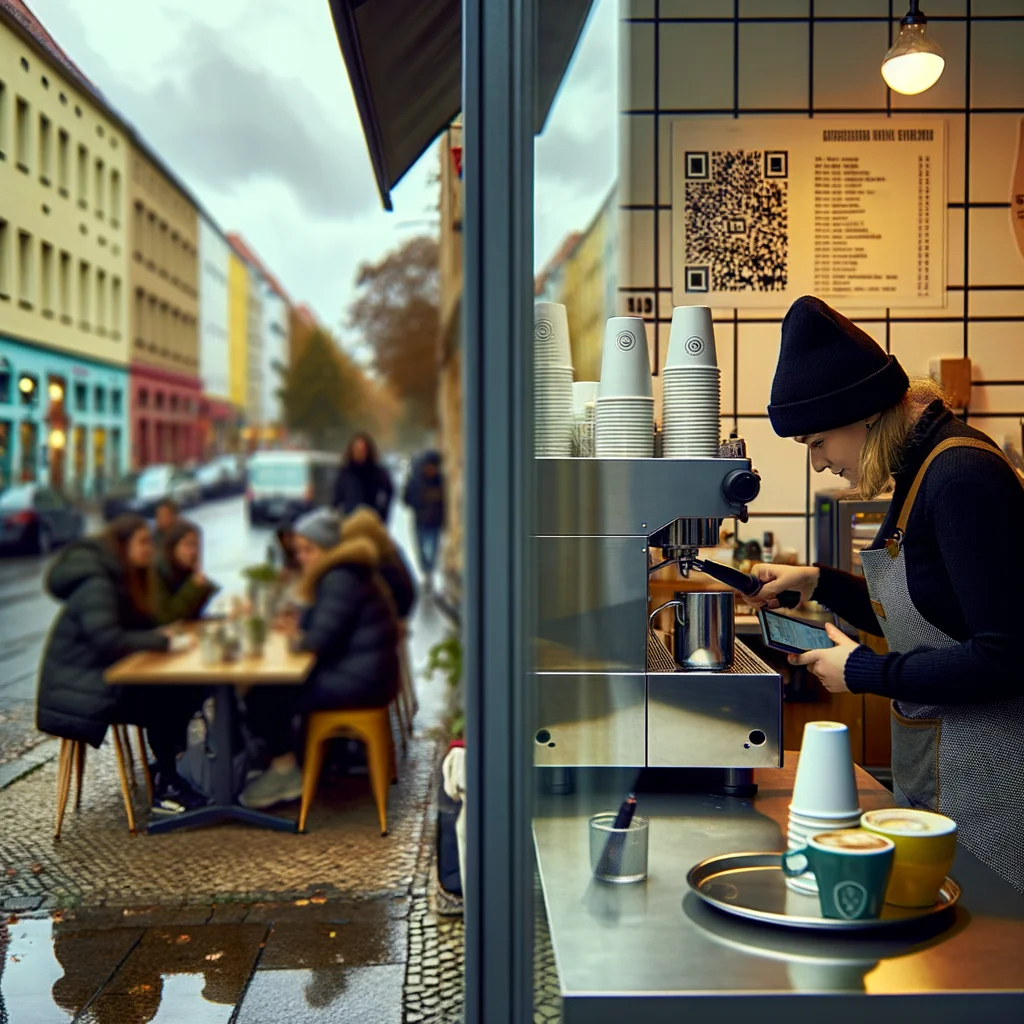
WEDDING — Where the Future Smells Like Steamed Oat
A former warehouse-party “operations lead” named Linus has unveiled his latest act of urban bravery: a disruptive coffee company in Wedding that, in an innovation many consider bordering on witchcraft, sells coffee.
The brand—Quäntum Dripworks—doesn’t call itself a café. It calls itself a “hospitality interface for human performance.” This is also how my doctor described burnout, right before prescribing water and shame.
In its investor one-pager (printed, which already feels like violence), Quäntum claims it is “to caffeine what About Blank was to nightlife: an ecosystem.” They back this up by charging €5.80 for filter coffee while playing the kind of playlist that makes you apologize to a plant.
The Product: Coffee, But With Consent Language
Quäntum’s core offering is a cup of coffee with a name like a discontinued airport lounge: ‘The Baseline’. The menu reads like a seminar on contemporary suffering.
- The Baseline: coffee, but marketed as “structured clarity”
- The Pivot: the same coffee, rotated 12 degrees and priced higher
- The Deep Dive: a double that “penetrates your afternoon slump” (their words, unfortunately)
A barista wearing a beanie with the gravitas of a judge explained the concept to me: “We’re not selling beverages. We’re selling a permission structure.”
This is what Karl Marx warned us about, if you replace “means of production” with “small ceramic cups” and add an English-only menu as the final boss of alienation.
Wedding Locals Confront the New Caffeine Regime
Across the street, longtime Turkish residents have perfected the ancient art of drinking tea without claiming it will “scale.” In response to Quäntum’s arrival, nearby shop owners reported a sharp increase in customers entering, scanning the room, and asking—quietly, like they’re buying a second personality—whether they can “work from here.”
One local baker said the area used to be full of neighbors who bought food because they were hungry. “Now they buy coffee to audition for jobs they don’t have,” he observed, correctly diagnosing the economic model known as hope cosplay.
A Turkish grandma, speaking from the deep bench of lived experience, asked why the new coffee place has “no chairs that look like they’ve ever survived a conversation.” Her grandson clarified: “It’s intentional. It discourages loitering. Like a design version of a stiff arm.”
‘Disruption’ Means: Replacing the Human With a Checkout Flow
Quäntum uses an ordering system that involves a QR code, an email address, a two-step verification, and—if you blink—an invitation to join a “circle.”
Paying felt less like a transaction and more like signing away visitation rights.
Employees say this is for “efficiency.” Critics claim it’s simply therapy for founders who fear eye contact.
One patron, fresh from a three-day weekend and looking emotionally unlicensed, attempted to order out loud. The barista gently corrected him: “We try not to verbalize demand here.”
Investor Logic, Served Hot
Quäntum’s founder described the expansion plan as “aggressive.” Three more locations are scheduled for Wedding “pending runway.” This is what people call rent money when they want to pretend they’re an airplane.
According to internal projections taped to the wall like a deranged Edvard Munch exhibit:
- 2026: become “the neighborhood’s third place”
- 2027: remove the neighborhood
- 2028: “vertical integration” (we all flinched)
Their most cherished metric is not taste, community, or sustainability. It’s “minutes spent lingering.” Which makes sense, because in Berlin, loitering is the only thing still free—until a founder notices.
A Caffeine Baudrillard Scenario
There was a time coffee helped you wake up. Now it helps you perform waking up in front of other people also performing. Jean Baudrillard would have called this a simulacrum; in Wedding it’s just a Monday-without-saying-the-word.
Quäntum isn’t selling coffee so much as it’s selling the fantasy that your life is a startup, and that if you buy one more cup you’ll finally become investable.
Which is sweet, in a dark way. Like watching a guy in a black turtleneck explain “community” while taking your money with both hands.
When I asked Linus whether Quäntum’s disruption was aimed at the coffee industry or at Wedding itself, he smiled and said, “Yes.” Then he handed me a loyalty card they don’t call a loyalty card. They call it a “relationship layer.”
Hard to swallow, but somehow still less bitter than the coffee.