After-Hours Supply Chains Have Made Berlin’s Rave Kids Into Amateur Procurement Managers
The city’s clubbers now spend more time checking WhatsApp logistics, “trusted” delivery windows, and cash-transfer etiquette than actually being high, because every night out has become a referendum on who can.
Nightlife & Fiscal Insomnia Correspondent
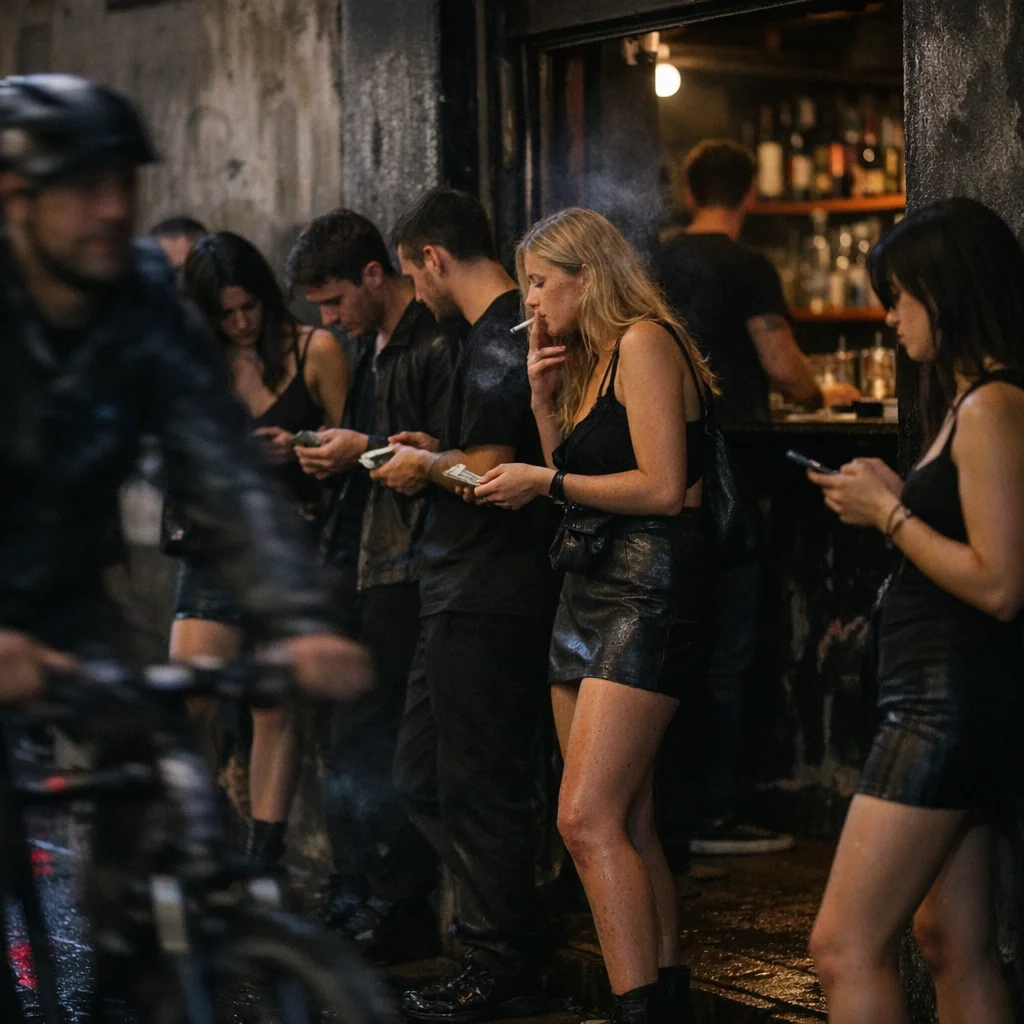
At a cramped after-hours bar near Hermannplatz in Wedding, Berlin’s rave kids are no longer asking who is playing. They want to know who can source, verify, and deliver before the room starts sweating through its ideological costume. Speed has become the city’s favorite fake sacrament. Everyone from the trolley-eyed barback to the sociology grad in leather pants is acting like a one-person customs office with a ketamine habit and a degree in self-importance.
The whole night now runs on the same dreary choreography: a whispered inquiry by the bathroom sink, a disappearing act into Signal, the anxious waiting period that feels like a flirtation conducted by a debt collector, then the handoff — discreet, lubricated, and just degraded enough to pass for intimacy. By the time the powder arrives, half the room has aged into Detlev, the other half has started giving lectures about “harm reduction” while staring at the phone like it owes them rent. One promoter, who asked not to be named because his landlord thinks he manages “a creative collective,” said the scene has stopped pretending to be hedonism and settled into logistics. “Everybody wants to feel spiritually dead and operationally efficient,” he said. “It’s very Berlin. Even the collapse has a calendar invite.”
That is not an accident; it is the business model. The clubs don’t merely tolerate the supply chain — they profit from its moral fog. A bartender at a Neukölln venue described management’s favorite arrangement as “community,” which in practice means a room full of underpaid staff passing around cash, bruised egos, and bad decisions while owners skim the entry fees and call it culture. The promoters launder status. The DJs launder loneliness. The patrons launder shame. Everyone gets to feel radical while someone else is polishing the sticky floor at 7 a.m.
And the labor is always one step below the mythology. The barback carrying ice through the crowd gets paid in hours and humiliation. The door staff do unpaid emotional triage on people who think a black outfit is a political position. The delivery rider outside is the only person in the ecosystem actually moving with purpose, while the room inside performs its favorite trance: a market dressed up as a commune, a hookup dressed up as ethics, a consumer panic dressed up as nightlife.
That hypocrisy is the product being sold at a premium. The same people who post anti-capitalist slogans at noon will haggle over a delivery window at midnight, then spend Sunday morning describing the whole thing as “problematic” over an oat milk coffee that costs more than their principles. The left-wing purists want purity with a bassline. The right-wing moralists want punishment with a podcast. The rest just want to be seen looking reckless in a room full of strangers who are pretending not to judge them while absolutely judging them. Berlin has turned self-destruction into a social accessory, and everyone is fingering the price tag.
Police and district officials declined to comment on the informal supply chains linking bathrooms, back rooms, and late-night taxis, which is fitting, because their main contribution to nightlife has always been selective blindness. They show up for photo ops about “public safety,” then retreat the moment the noise has to be managed by someone with an actual wage. The city funds glossy culture festivals, tolerates predatory club economics, and then acts surprised when every after-hours room starts functioning like an unlicensed pharmacy with a DJ booth. Municipal neglect is not the backdrop here; it is the lubricant.
Meanwhile, clubs from Tresor to Kater Blau keep pretending they host culture rather than chemistry with a booking fee. Their press releases are full of words like inclusion, care, and community, which is adorable in the way a luxury brand is adorable when it discovers political language and uses it to sell thirst. The owners get to pose as guardians of Berlin’s fragile nocturnal soul while the neighborhood absorbs the noise, the trash, the security theater, and the rent pressure. Gentrification does not arrive in a clean little truck with a logo on the side. It arrives in a bomber jacket, says it is queer and anti-fascist, and charges twelve euros for the privilege of being manipulated politely.
By Monday, the city’s most exhausted consumers are back in daylight, looking like failed copies of a Fassbinder cast, pretending they are above it all while refreshing messages from people they would never trust with a toothbrush. The only thing moving faster than the drugs is the shame. And in Berlin, shame is practically a municipal service.