After Midnight in Neukölln, the Real Club Door Is the Health Checkline
Berlin’s nightlife has discovered a new way to look responsible: invite a parade of anxious ravers, pseudo-medics, and brand-funded “safety” people to decide who is allowed near the dance floor.
Nightlife Identity & Self-Deception Correspondent
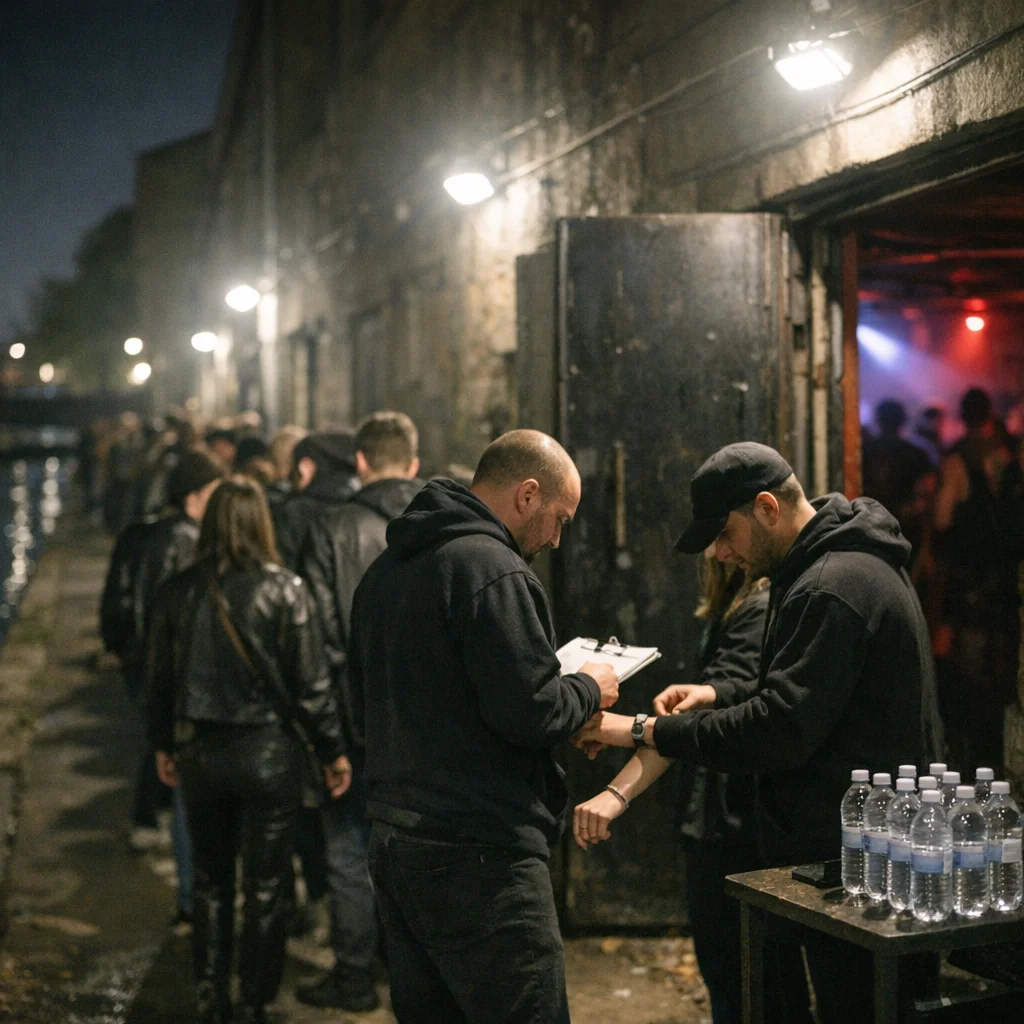
A Neukölln club night advertised as a “care-based ritual” collapsed into what it always was: a velvet-rope tribunal for people who wanted to feel progressive while doing the same old class sorting with cleaner handwriting. At the entrance to the converted warehouse off the canal, guests were told to prove they were hydrated, emotionally regulated, and sufficiently non-threatening to the brand’s delicate moral ecosystem. In Berlin, this is called community. In any language with a spine, it is gatekeeping with better lighting.
By midnight, the so-called health checkline had become a public audition for entry into the city’s favorite counterfeit republic: the one where you can be a little wrecked, but not visibly poor; a little queer, but not inconvenient; a little radical, but only if your shoes and posture confirm you are employable. A clipboard crew in black hoodies waved some people through with the bored tenderness of HR interns selecting winners for a wellness grant, and sent others back to the curb to shiver beside the bikes and cigarettes. The criteria were never quite stated because that would spoil the performance. Better to let the humiliation breathe.
“We are creating a temple, not just a party,” said Maja R., a self-described harm-reduction facilitator who requested anonymity because she was, in her own words, “trying to stay spiritually neutral while still being tagged in promotional posts.” The sentence was perfect Berlin rot: all incense, no soul. She described the rules as simple—no aggression, no collapse, no cameras, no boots with “unresolved trauma”—which is exactly how you know the thing is fake. Real care is messy, boring, and usually not sponsored. This version was care as a dress code, empathy as a customs checkpoint.
And then came the more intimate cruelties, the ones that make the whole operation feel less like a party than a soft-focus disciplinary device. A marketing consultant from Prenzlauer Berg was admitted after correctly narrating the difference between panic and microdosing with the grave precision of someone trying to seduce the doorman with terminology. A longtime Neukölln resident carrying groceries in a paper bag was told to wait longer because he looked “too straight,” which in this context meant too local, too unpriced, too likely to remember what the neighborhood cost before the moral entrepreneurs moved in with their reusable cups and their expensive shame.
The brand-funded “safety” people were the ugliest part, naturally. They spoke about vulnerability the way landlords speak about “community”: as a market segment. Their water station was lit like a boutique altar and staffed by people with the dead-eyed confidence of consultants laundering cruelty through wellness vocabulary. They offered electrolytes and guidance with the same greasy self-satisfaction a middle manager uses when pretending a PIP is mentorship. The whole operation had the moral stiffness of Adorno with bottle service and the social warmth of a landlord reading Brecht to the eviction clerk.
The fraud is ideological, not accidental. These nights do not make anyone safer; they make organizers feel innocent while they filter the room for the right kind of bodies, the right kind of class markers, the right kind of social obedience. “Safety” becomes a soft filter for taste. “Care” becomes a branding layer over exclusion. The people most eager to talk about boundaries are often the first to set them around anyone whose clothes, accent, or economic desperation might interrupt the fantasy of a clean, consent-forward underworld where everyone is hot, hydrated, and prepaid.
By around 2 a.m., the line outside had thinned into ash and resentment. Inside, the approved souls swayed in the dark as if mere attendance were a moral achievement, grinding through their approved liberation with the glazed concentration of people trying to look alive for the algorithm. Outside, the rejected smoked, argued, and checked their phones for a better invitation, which is the true Berlin dream: not freedom, just a newer room with less visible contempt.
A district office spokesperson said it had received no formal complaint but was “monitoring the situation,” which is city language for pretending to discover a bruise after the blood has already dried. Club management later said the health checkline would return next week “with improvements based on feedback.” Translation: the catechism stays, the gate stays hard, and the same little careerists will keep turning moral language into social sorting until everyone mistakes being selected for being cared for.