After Saluschnyj's 'Tiefer Riss' With Selenskyj, Wedding Artists Carve a Pavement Faultline and Sell Tickets to Cross It
Pop‑up 'faultline tours', two‑sided scarves, and artisanal band‑aids turn a Ukrainian general’s public falling‑out into Wedding’s latest performative civic amenity.
By Lena Veneer
Gentrification & Cultural Displacement Correspondent
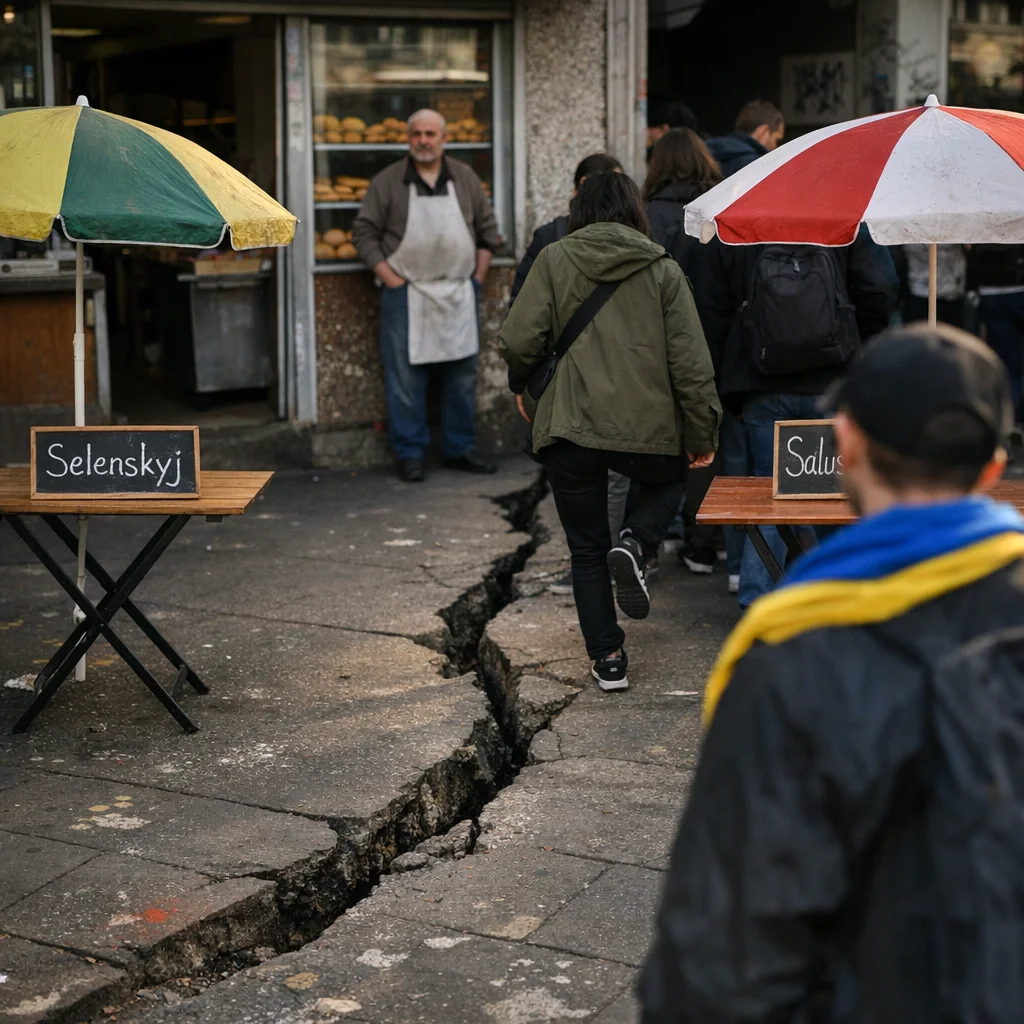
After Saluschnyj publicly lambasted President Selenskyj and declared a “deep rift” over the failed counteroffensive, a group of Wedding artists and opportunists turned the argument into a literal crack on Osloer Straße — gouging a three‑meter faultline into the pavement and selling tickets to cross it.
What began as a provocative response to a foreign general’s spat became a full weekend economy: a tiny Kulturverein grant paid for tools and a liability waiver, two entrepreneurs set up reconciliation booths on either side, and locals now hand over €2 to step from the "Selenskyj" curb to the "Saluschnyj" curb with a complimentary split‑flag sticker and a choice of artisanal band‑aids.
"Politics is already performance," said Can Emre, the sculptor who dug the crack. "We just shortened the distance between saying 'there's a rift' and walking it. People need a place to rehearse their allegiances." Emre, wearing paint‑spattered work boots and a scarf printed half‑blue, half‑yellow, sold the first 50 crossings himself before hiring students from a nearby art school.
Chronology was tidy: the grant cleared, Emre and two assistants scored a pavement permit (filed as "temporary urban intervention"), a pair of creative freelancers rented a folding table and a megaphone, and by Saturday afternoon the reconciliation booths were selling twosided scarves, syrupy leaflets, and a 15‑minute mediated chat called "Conflict as Conversation." Entrepreneurs boasted of a tidy margin after buying split‑flag stickers in bulk from a Turkish print shop on Müllerstraße.
Fatma Yildiz, who runs a bakery near the installation, said business declined when customers decided to "perform solidarity" with oat‑milk lattes instead of buying simit. "They come to stand over our door and debate war strategy, then buy scarves and leave crumbs," Yildiz said. "My grandson asked why strangers are paying to step over our street. I told him it's gentrification with better branding."
Bezirksamt Mitte confirmed the grant but warned the installation could face a safety inspection. "We recognise artistic expression," said spokesperson Jana Köhler, "but public ways must be safe. If the crack is unstable, we will require remediation." Police added that no criminal charges were filed but encouraged organisers to secure liability insurance.
Critics call it spectacle: the neighborhood’s appetite for moral theatre — a tiny Debordian fairground — lets everyone feel wise without changing anything. One visitor, Marta Li, defended the project: "It’s a pedagogical faultline. People need to cross things to understand them." She charged €5 for guided crossings later that afternoon, promising a "soft landing" and a brief debrief.
The Bezirksamt will inspect the site next week; if the crack is deemed unsafe organisers face fines and forced repair. Meanwhile, promoters plan a touring version for two other streets in Wedding — proof that a foreign rift can be monetised, packaged, and exported across a neighborhood that profits from being perpetually outraged and mildly inconvenienced.