Ahmet Demir’s Wedding Späti Introduces Loyalty Card You Can Only Fill With Confessions
At 22a Müllerstraße, stamps now require “a story with a beginning, middle, and consequences,” forcing customers to decide what’s cheaper: €2.10 or their dignity.
Neighborhood Commerce & Low-Grade Dread Reporter
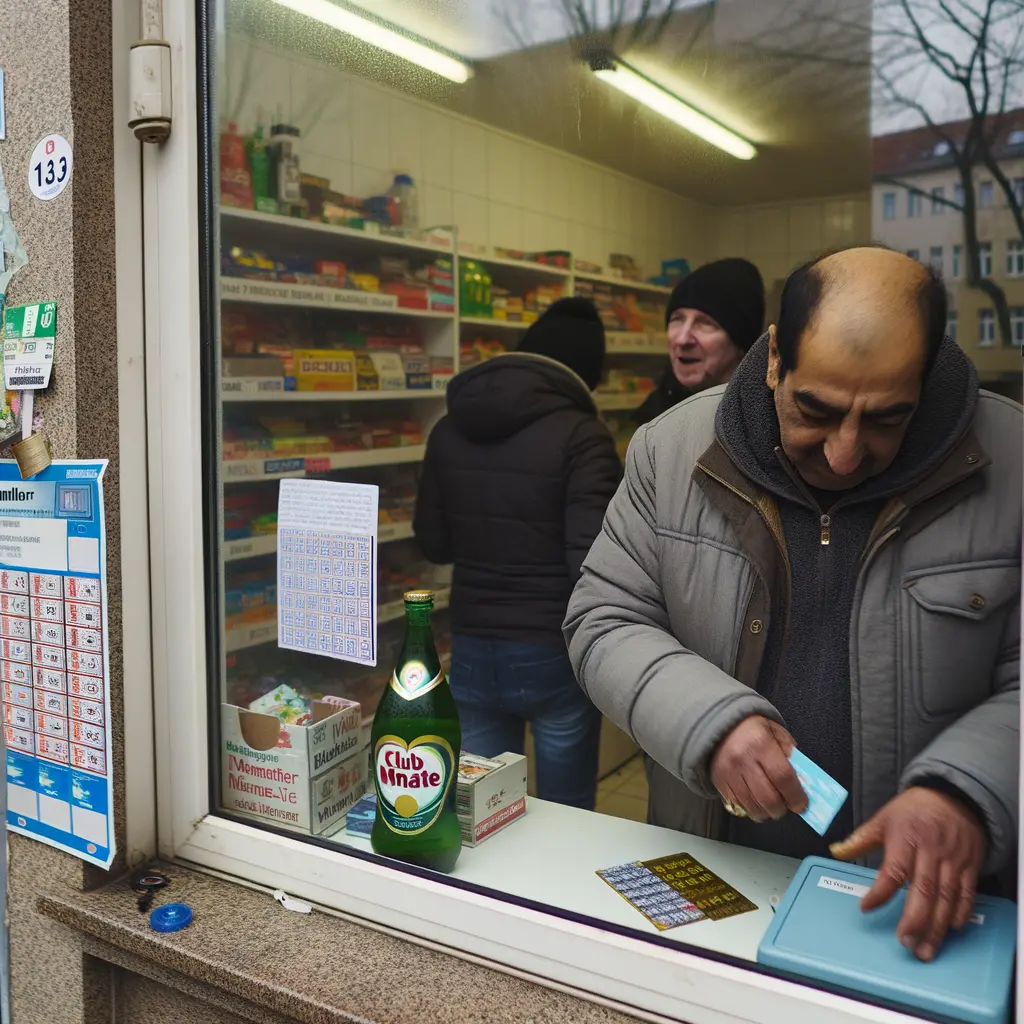
Wedding’s newest currency: your life, narrated
On Tuesday morning at 8:47 a.m., the line at Kiosk Orion, Müllerstraße 22a (corner of Exerzierstraße) slowed to the pace of a museum audio guide after owner Ahmet Demir, 41, began enforcing his new loyalty program: a pale-blue card labeled Orion Treue and a single payment rule.
“No money. No points. Only stories,” Demir said, standing behind the cigarette display and a bowl of mixed coins he now calls “the decorative euros.” “You tell me something real. I stamp. You buy. Everyone leaves… a little lighter.”
The system is blunt: one story earns one stamp. Ten stamps earn a free beverage “up to the value of €2.30,” a number Demir recited the way other people recite constitutional rights. Twenty stamps reportedly unlock “one small emergency toiletry item,” which has caused certain customers to become unexpectedly fluent.
The rules, according to the laminated sheet
Demir handed this reporter a laminated policy sheet taped to the slush-freezer with clear packing tape:
- Story must be told aloud, no reading from phone notes.
- Minimum length: 60 seconds.
- Must include a regret, an object, and one person you will not text again.
- “Creative fiction counts only if you cry.”
- “Please do not do slam poetry after 11 p.m. Neighbors complain.”
Residents found the rules hard to swallow, mostly because it became clear that “regret” is not a niche commodity in Wedding.
“I came for rolling papers and left having explained my situationship like it was a court case,” said Mina Hartwig, 29, a social worker who said she received a stamp only after admitting she once tried to microdose to “better understand the tenants’ association meeting.”
At 9:12 a.m., a BVG employee in uniform, Sebastian Kluge, 37, attempted to pay with coins and was refused. “He said, ‘Your cash is boring. Give me plot,’” Kluge said. “So I told him about my Sunday—Berghain rejection, U8 sadness, two cans of Sterni, a spiritually ambiguous kebab. He stamped me with a little planet like I’d earned a merit badge for being unwell.”
Wedding’s Turkish businesses, now also therapists
The neighborhood’s Turkish business owners have largely responded with a familiar combination of skepticism and opportunism. Fatma Aydin, 53, who runs a small tailoring shop two doors down, said the program is “insane,” then paused. “But if he can get these kids to talk instead of filming everything, maybe it’s better. Sometimes their lives are like an experimental film where nothing happens for three hours, then suddenly they have debt.”
Demir, whose kiosk is known for late-night energy drinks and daylight hangovers, insists the program is not therapy.
“Therapy costs €100. I cost €2.10 and a little honesty,” he said. “It’s efficient. Like Bauhaus, but with trauma.”
A frequent customer, Emre Kaya, 24, said the program hit the Turkish community differently. “My uncle can negotiate kebab meat prices with the confidence of a NATO diplomat,” he said. “But ask him to tell a story with consequences and suddenly he’s paying cash like a puritan.”
Authorities weigh in: nothing to regulate, plenty to worry about
Contacted by phone at 1:30 p.m., a spokesperson for the local public order office said the kiosk’s “story-only loyalty stamps” do not currently violate any ordinance. “As long as taxes are paid and no one is being coerced,” the spokesperson said, declining to answer whether shame counts as coercion in Berlin.
Cultural observers have compared Demir’s counter interviews to everything from reality television confessionals to “a Walter Benjamin arcade, except instead of flânerie you’re purchasing nicotine while emotionally exposed.” One customer described it as “a Debord-style spectacle where the only thing more staged than my nightlife is my vulnerability.”
The consequences are already concrete. According to customers, by Monday at 2:05 p.m., someone allegedly received two stamps for the same story after telling it again “with more feeling.” The kiosk has also become, informally, a neighborhood information hub. Demir now knows who is cheating, who is broke, and who bought ketamine “for a friend” and then lost the friend.
Asked why he started the program, Demir smiled, then met the question with stiff resistance. “Because people always say, ‘Do you have a loyalty card?’” he said. “Fine. Now you can be loyal to your own narrative. Put it on the counter. Put it in my hand. Don’t be shy.”
He stamped another customer without looking up. “Next,” he said. “Surprise me.”