Airport Energy Drinks Meet the Ketamine Economy
The real scandal is not that Berlin’s after-hours crowd is wired. It is that startup boys, sober-curious promoters, and freelance sinners now need pharmaceutical-looking products to fake being more functional than.
Harm Economy Correspondent
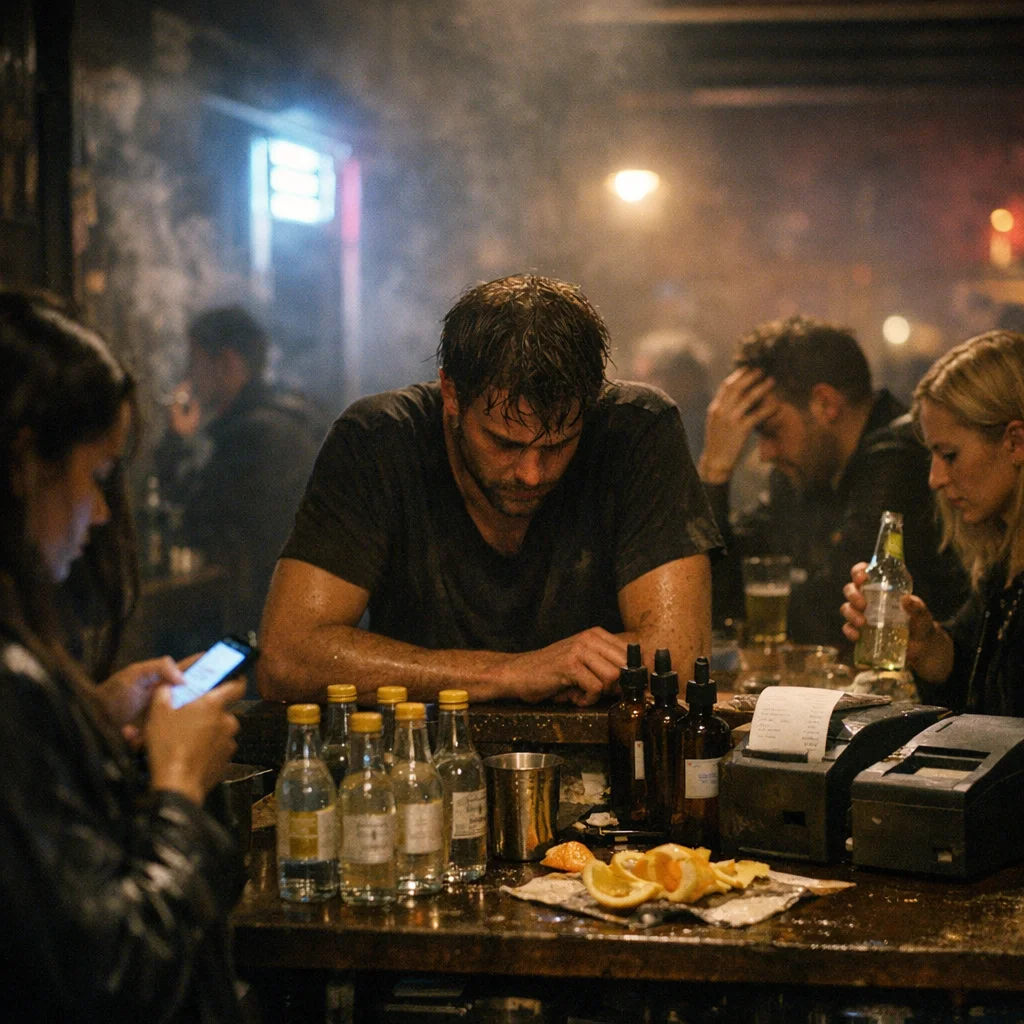
Berlin’s after-hours crowd has found a new accessory: the moral costume of productivity. In bars from Neukölln to Mitte, and in the damp little kingdoms where cocktails are assembled by exhausted hands, bartenders are now discussing “focus powders,” “clean energy,” and other pharmaceutical-sounding nonsense with the solemnity of clergy laundering a sin.
The effect is obvious. The old nightlife lie was that everyone was there for freedom, art, or danger. The new lie is cleaner and somehow filthier: people want to appear functional while being beautifully, aggressively unusable. Startup boys arrive smelling like oat milk, vape residue, and panic. Freelancers call it optimization, then spend forty minutes “just checking one thing” on a laptop that has the sexual confidence of a hospital tray. Sober-curious promoters call it boundaries, then spend the night sprinting through their own collapse like a man in a Fassbinder film who has mistaken self-destruction for branding. Nobody wants to look high anymore; they want to look efficiently unwell.
At Kater Blau, a woman in a blazer that probably cost more than a month of someone else’s rent asked for a “clean boost” and then apologized for the sugar in her tonic as if she were confessing infidelity. At a bar near Hermannstraße, bartender Lena Voss said customers now ask for “something that keeps me sharp but not obvious,” which is a sentence that should be engraved on the municipal shame wall. “They want the crash without the shame,” she said. “They want to stay standing, stay charming, and still feel morally superior to the idiot next to them.”
That is the whole arrangement in one sentence: the clientele wants stimulant labor without stimulant stigma, pleasure without visible appetite, the swagger of vice with the dental hygiene of a monastery. They want to feel naughty in a way that can still be explained in a group chat the next morning to six people with identical tote bags and dead eyes.
The menus reflect the fraud. One place now offers tinctures, electrolyte shots, and “airport-style wakefulness” beside small-print warnings that read like they were drafted by a hedge fund with a first-aid kit. Another has rebranded its pre-shift rituals as wellness because if you say “calming breathwork” loudly enough, nobody notices you are preparing to survive a twelve-hour commercial seduction event. In Mitte, a venue manager reportedly described the staff drink list as “responsible energy architecture,” which is the kind of sentence that should legally require a breathalyzer.
The hypocrisy is not personal; it is industrial. Hospitality branding, wellness language, and startup culture now work together like a little extraction machine with a candle on top. The bar sells “mindful” stimulation to the same people who built a career on pretending burnout is a leadership philosophy. The founder pays for a tonic, the promoter calls it a boundary, the venue calls it guest experience, and the bartender gets to be the unpaid priest of everyone else’s delusion. Exhaustion is no longer a condition; it is a curated identity, packaged, photographed, and swallowed with a lime wedge.
A spokesperson for the Berlin Hospitality Association said venues are “responding to changing guest expectations” and that staff safety remains a priority. Translation: if the clientele wants to feel virtuous while their dopamine gets mugged in the bathroom, somebody will laminate a flyer and call it progress. That is how the city survives its own vanity: by putting a wellness font on the invoice and letting the sickly little aristocrats of the night congratulate themselves for being “intentional.”
At Berghain Kantine, where the air already tastes like wet concrete and resignation, a bartender described the modern order as “one espresso, one mineral thing, and whatever keeps me emotionally available until sunrise.” That is not a drink; that is a labor contract with a splash of shame. And the customers love it, because the new nightlife fantasy is not seduction but maintenance: a controlled burn of desire, a chemically assisted flirtation with competence, a room full of people trying to appear both available and above it.
In practice, the stimulant economy is less about staying up than staying legible. People want their exhaustion curated, their desires disciplined, their vice wrapped in paper that looks medical enough to survive a LinkedIn post. It is not sobriety. It is theater for adults who cannot bear to admit they still want the room to pulse, and that they need the pulse to make them feel chosen, touched, and temporarily forgiven.
By Monday, the city will be full of those same faces: tied, hollow, and inexplicably proud, as if endurance itself were a moral achievement. In Berlin, even the crash wants a decent publicist.