Anwendung abgelehnt: Your Kid’s Playground Needs a Business Plan
Wedding’s playground renovation war is not about children. It is about who gets to speak in the language of safety while quietly demanding the park behave like a gated lifestyle product.
By Omar Felton
Kiez Features Reporter
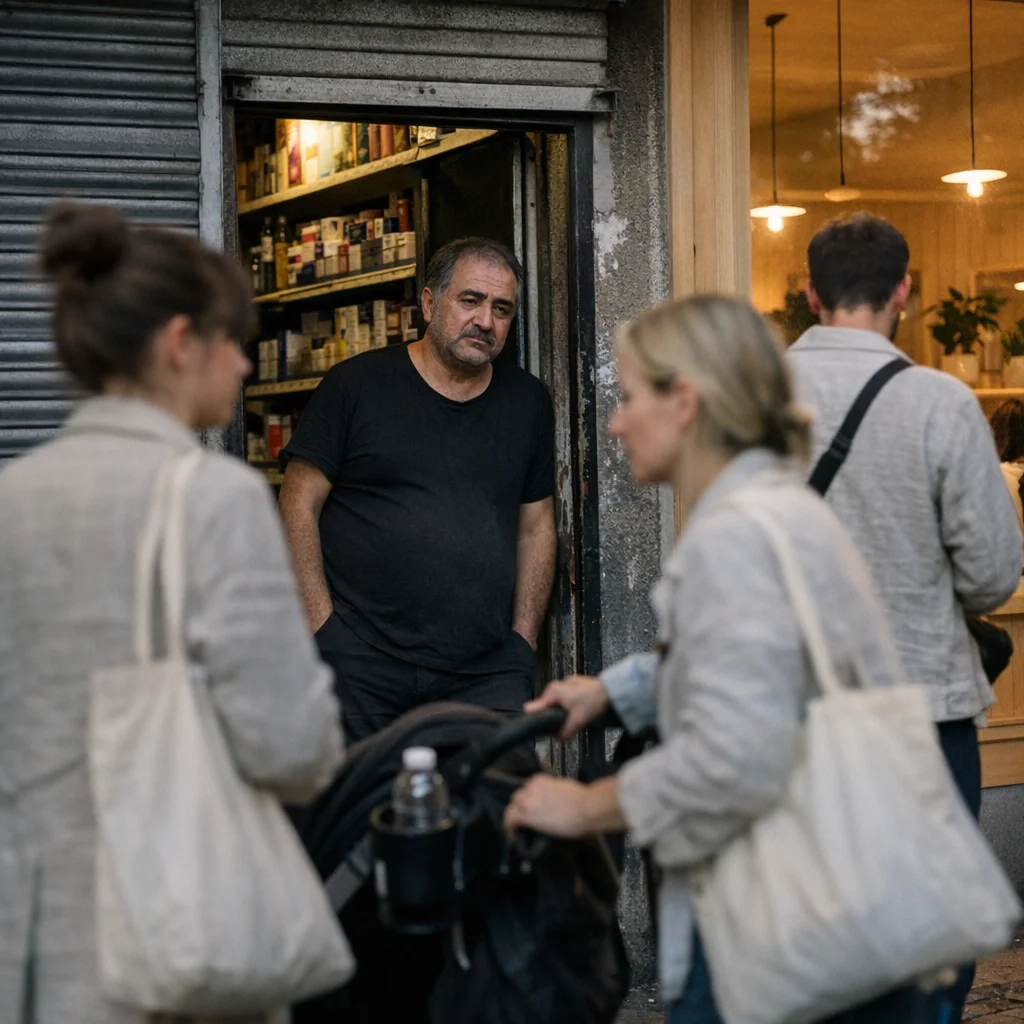
At the corner of Müllerstraße and Reinickendorfer Straße, the old Späti with the bulletproof cigarette glass is now being measured for a juice bar that promises 'cold-pressed clarity' and, if the pitch deck is to be believed, a future free of hangovers, cash, and lower-middle-class memory. The owner, Cem Yildiz, said the landlord gave him eight weeks to leave after 19 years behind the counter, because the new tenant had produced a 'health concept' and a brand palette that looked like a Proust chapter edited by a dentist with a ketamine habit.
Yildiz, who has sold batteries, sunflower seeds, frozen beer, and emotional support to three generations of Wedding, said the building’s new promise was not better service but better posture. 'They want a place where people can buy a drink and also feel superior to the people who used to live here,' he said, standing beside a refrigerator that still hummed like a dying witness. 'The juice people arrive with tote bags, linen trousers, and a vocabulary built from apology. They say 'community' the way bankers say 'liquidity'—to get something slippery past your face.'
The district office said it had received complaints about the conversion but could not intervene in a private lease dispute unless there was a formal zoning issue, which is Berlin’s way of saying you may be crushed slowly, politely, and with impeccable stationery. A spokesperson said the area remained 'diverse and attractive,' a phrase that in urban planning usually means the rich have not finished undressing the poor yet. Bureaucratic neutrality is the city’s favorite laundering machine: it washes displacement until it comes out sounding like a pilot project.
Outside, two women with strollers discussed the loss of the Späti the way art critics discuss the death of cinema: solemnly, while ordering flat whites from the café that arrived three doors later. One of them, a communications consultant named Alina who requested anonymity because she is 'emotionally committed to local business' but had already posted a story about the new açai place, said the neighborhood needed 'curation.' Her partner wore a rainproof trench, spotless sneakers, and the expression of someone who says he loves multiculturalism right before asking for the street to be reorganized around his nap schedule. They speak of diversity like it is a scented candle: lovely, expensive, and best kept away from actual smoke.
At the district meeting, the same people came armed with printed concern. They said they wanted 'inclusive design,' which in practice meant a playground with softer edges, fewer teenagers, and no evidence that hard lives ever existed. They talked about safety as if it were a baby they had personally birthed, though what they really wanted was control with a kinder font. Parents used their children as moral props, waving tiny jackets and reusable bottles while fighting over who gets to own the sidewalk emotionally. Consultants, meanwhile, translated this into slide decks and called it participation.
The new juice bar, set to open next month, will reportedly sell turmeric shots, celery blends, and a 'focus tonic' for people who consider attention a luxury product. Its owner declined to discuss the Späti closure, but an employee said the concept was meant to be 'community-minded.' That is charming. So was the guillotine, if you only looked at the craftsmanship. The staff uniforms, according to the brochure, are 'soft but structured,' which is also the whole political program: soft enough to seduce, structured enough to keep the old crowd outside the glass.
The larger insult is not that Spätis are disappearing. It is that they are being replaced by places where people pay more to receive less: less sugar, less smoke, less honesty, less life. In the old shop, you could buy a lighter at 2 a.m. and be judged in five languages. In the new one, you will pay 9 euros for green liquid and a lecture about wellness, then watch a woman in a cream coat explain that she 'actually values rough edges,' right before demanding the district smooth every rough edge off the block.
That is the local lie in its purest form: people who claim to love diversity while demanding the street be reorganized around their comfort, their digestion, and their idea of tasteful suffering. They want the neighborhood spicy enough for their self-image and clean enough for their children. They want the grit without the grime, the vibe without the neighbors, the body without the sweat.
Yildiz said he has found one possible new location farther north, though the rent there would require 'a miracle or a son with startup money.' Until then, the shutters will come down at the end of the month, and another corner of Wedding will be handed over to people who mistake being easy to digest for having taste. They will call it improvement. The district office will call it procedure. And the rest of us will be told, once again, to admire the cruelty because it arrived with good branding.