Apple’s ‘Free’ Emmy Stream Charges You in Shame
The 2026 Emmy Awards are being sold as an easy night in, but the real price is your willingness to let a prestige platform track how long you stay for acceptance speeches you already resent.
Culture Paper-Cut Correspondent
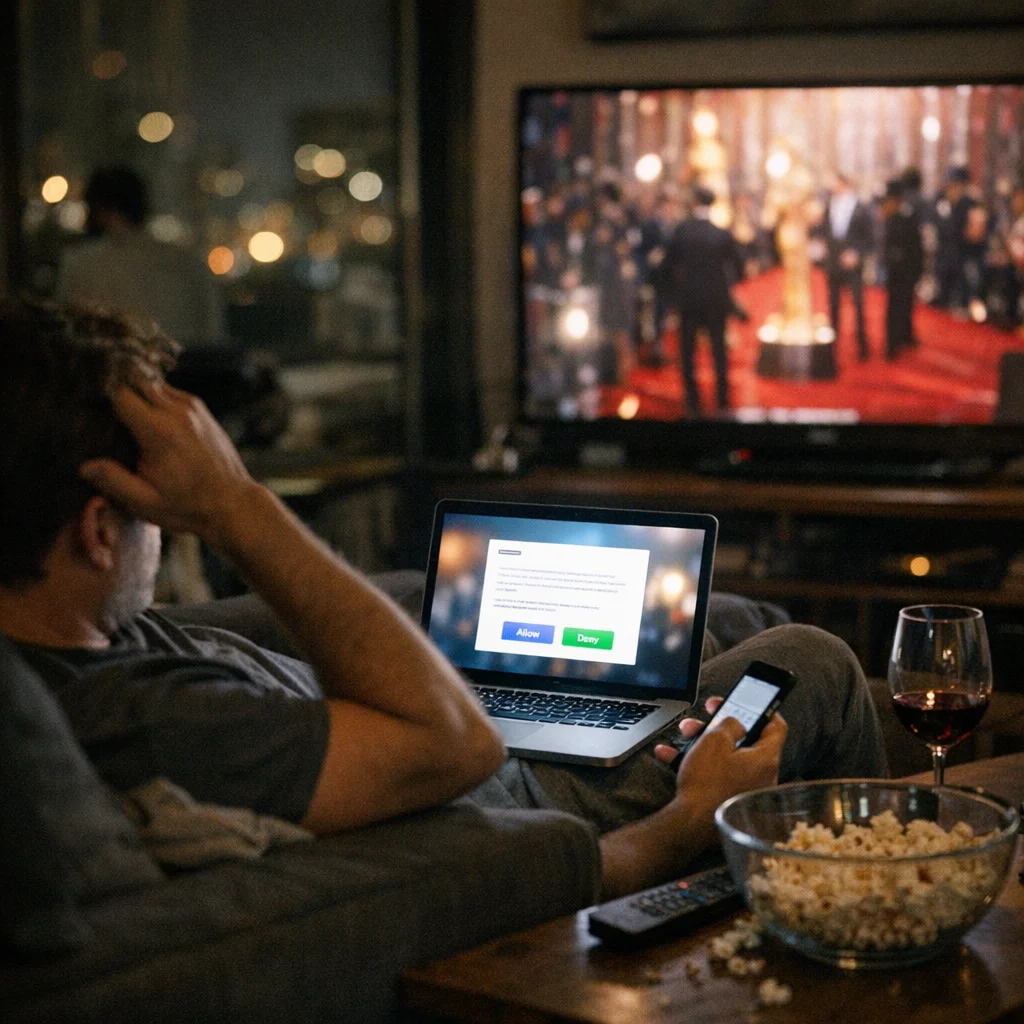
“Free” is just the bait with better lighting
The 2026 Emmy Awards will be sold as the easiest night in television: no tickets, no valet, no hemorrhoid-inducing ballroom politics, just an app, a couch, and the fantasy that prestige has finally been flattened into something you can consume while wearing sweatpants and contempt. But the transaction is dirtier than that. Apple does not merely stream the ceremony; it turns your viewing habits into a little surveillance kink, measuring how long you endure the self-congratulation before your soul starts sliding sideways toward the exit.
The platform’s pitch is convenience. That is the same word used by landlords, wellness grifters, and men who call stalking “checking in.” Open the app, sign in, accept cookies, tolerate the autoplay trailer, wave through the consent screens like a tired customs officer, and suddenly you are no longer a viewer. You are a compliant data point with a remote control. The ceremony gets to preen in your living room; the ad-tech machinery gets to watch you flinch.
This is not culture. It is a velvet-rope extraction scheme with better fonts.
A platform executive in a tailored jacket will call it reach. An awards producer with a dead smile will call it access. A prestige-media columnist somewhere in Manhattan will call it democratization, because the modern ruling class cannot stop dressing theft up as inclusivity. What it actually means is that a corporate host gets to convert your boredom into behavioral evidence. If you stay, they learn you’re malleable. If you leave after the first speech about “the importance of storytelling,” they learn you have a spine and a short attention span, both of which are increasingly unfashionable.
Mara Klein, a media analyst in Charlottenburg, said the stream rewards the platform for your weakness and the ceremony for its vanity. “The app wants your login, your location, your patience, and the little pulse of hope that maybe this year the speeches won’t be unbearable,” she said. “That hope is the product. Everything else is just expensive throat-clearing.” She requested anonymity because she once skipped a nominee reel and now suspects the algorithm marked her as a dissident.
The awards machine has always been a mausoleum of self-regard, but streaming gives it a new kind of intimacy: not the human kind, the invasive kind. Now the viewer is not merely watching famous people thank assistants, agents, stylists, therapists, and the invisible army that keeps their cheekbones moisturized. The viewer is also being watched back, logged, sorted, and monetized by a platform that would sell your left kidney as a premium subscription tier if the margins looked elegant enough.
The result is a ceremony that feels less like entertainment than like being gently strip-searched by public relations. The red carpet becomes a conveyor belt of manufactured longing; the speeches become proof of status so overcooked they could be eaten with a spoon; the audience sits there pretending not to be hungry for recognition while the whole operation paws through their attention like a drunk executive at a corporate retreat.
By the time the first acceptance speech has swollen into its third anecdote about gratitude, the deal is already complete. Apple gets its precious engagement data. The Emmy machine gets to admire itself in high definition. The audience gets the old civic humiliation: the chance to sit still and call it taste.
Debord would have loved the cruelty of it. Kafka would have at least asked for a better login flow.
The only question left is whether viewers will leave early enough to preserve a shred of dignity, or whether they will stay until the end like obedient little courtiers, letting the platform finish its meal and wipe its mouth with their metadata.