Ashtray Diplomacy at the Bürgeramt
The neighborhood’s paperwork office has become a temple of civilized humiliation, where residents arrive with missing forms, fake patience, and a desperate need to look unbothered while being publicly shamed.
Civic Rituals & Paperwork Features Reporter
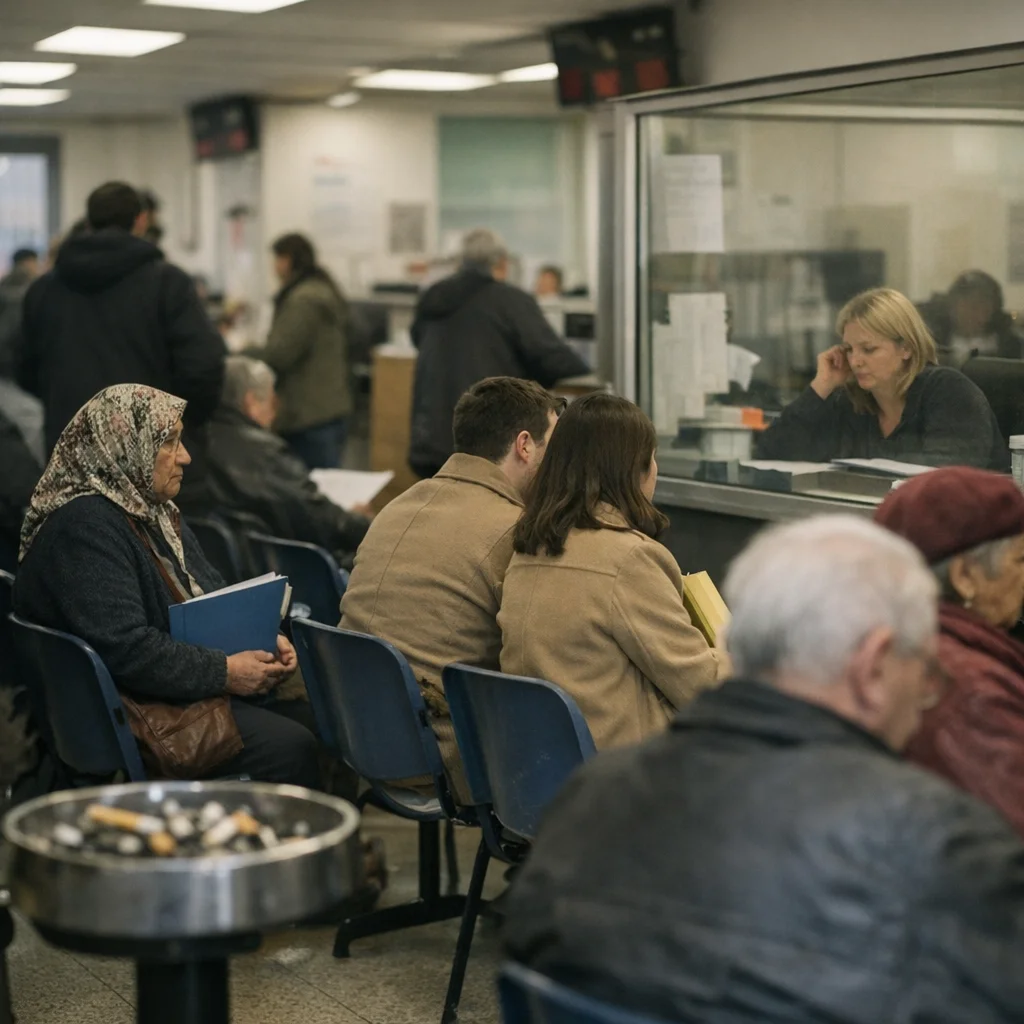
The queue as civic foreplay
The waiting room at the Wedding Bürgeramt on Tuesday morning looked like a hostage exchange run by accountants: plastic chairs, numbered slips, and a crowd of residents trying to look serene while being slowly hollowed out by procedure. By 9:40 a.m., the room had split into its usual cast of the doomed and the decorated — pensioners with lever-arch folders, freelancers with expensive tote bags, a Turkish grandmother with the moral authority of a magistrate, and a young couple in matching coats pretending their relationship could survive municipal humiliation.
Outside, on Müllerstraße, the neighborhood did its familiar little cosmopolitan dance: delivery bikes slicing past discount grocers, a kebab shop hissing grease, a vape cloud drifting out of a phone repair place like a failed prophecy. Inside, the state sat behind glass and made everyone wait for the privilege of being treated like an inconvenience with legs.
The clerks had the polished boredom of people working for a system that will never ask them to love anyone. One of them clicked through screens with the serenity of a person who knows that every applicant in the room is one missing photocopy away from moral collapse. Another kept her face arranged in that special public-service expression: not rude, exactly, just professionally unromantic. The whole office radiated the cold eroticism of power that has never had to apologize.
A man in artisanal boots — the kind that suggest both solidarity and a credit line — kept checking his watch with the stiff dignity of a violinist awaiting execution. A woman in a cream blazer whispered to her companion about “just needing to get this done,” as if the state were a spa and not a machine for grinding vanity into paper dust. A pensioner beside her muttered that she had brought every document since the fall of the Wall except the one they would ask for, which is how bureaucracies keep their old people obedient: not through force, but through the quiet pornography of almost-being-finished.
Someone had wedged an ashtray near the entrance, and it became the office’s unofficial parliament. People queued to crush cigarettes, crush hope, and then re-enter with their faces scrubbed into civic obedience. In Wedding, even the smoke break has to file a form.
"You learn quickly that panic is amateur behavior," said Mehmet Yilmaz, who had come to register a move and a vehicle change in the same afternoon, which is the administrative equivalent of asking a priest for a second confession after lunch. "If you look confused, they can smell it. Then you’re serving them for free."
That is the real class lesson on offer. The Bürgeramt does not merely process papers; it sorts the people who were raised to trust institutions from the people who were taught to survive them. The first group arrives with printouts, backups, and a soft confidence that the machine will eventually reward preparedness. The second group arrives with scars, copies of copies, and the deeply Berlin ability to look calm while being internally eviscerated. Then there are the self-deceiving middle classes — the Germanized radicals, the tote-bag moralists, the men who say “I’m very chill” in a voice that could subpoena a witness — who discover, the moment one stamp is missing, that their rebellion was always just a decorative hobby.
Even the left-wing types, with their handmade folders and anti-authoritarian eyebrows, start sounding like minor colonial governors once they realize they forgot one form. The right-wing punctuality fetishists are no better; they just call their fear “order” and hold it like a polished little blade. Everybody wants to feel principled until the clerk asks for page three.
A clerk, speaking on condition of anonymity because she has already been recognized by three men who said they “just wanted to ask something,” said the office prefers calm applicants because calm applicants are easier to finish. "People think they’re waiting for a permit," she said. "Mostly they’re waiting to see who breaks first. We just choose the least embarrassing version of that."
By early afternoon, two people had been sent home for missing signatures, one had been told to return with a newer passport photo, and the couple in matching coats had stopped speaking to each other entirely, which was probably the healthiest outcome in the room. Outside, the ashtray overflowed into the gutter like a tiny civic sinkhole. Inside, the queue moved on — one clipped correction, one bureaucratic flirtation with power, one public unzipping of dignity at a time — until the whole place felt less like an office than a room where the republic keeps its dirty hands clean by making everyone else hold the ash.