At Humboldthain, Undercover “Immigration Agents” Ordered to Stop Vibe-Checking Protesters Unless Absolutely Necessary
Inspired by a U.S. judge restricting agents around Minnesota demonstrators, Wedding debuts a gentler policy: “Observe, don’t lurk—unless the person looks too organized.”.
Street Policy & Performative Freedom Correspondent
A federal judge in the United States just restricted immigration agents’ actions toward protesters in Minnesota—basically telling the state, “Hey, maybe don’t do impromptu policing of people whose most violent act is chanting on rhythm.”
Naturally, Berlin read this as a trend forecast.
In Wedding, where political protest is less a civic act and more a recurring neighborhood hobby (like smoking, complaining, and meeting your ex by accident), authorities have introduced what they’re calling “Low-Impact Compliance Theater.” It’s enforcement, but with fewer jump scares.
The New Rule: Don’t Touch the Protesters (Unless They’re Overly In Possession of a Plan)
According to a “definitely real” internal memo obtained by us (by which I mean it fell out of a folder on the U8), undercover officers are now instructed to:
- Stop “proximity intimidation” (standing too close while pretending to read a phone they haven’t unlocked since 2018).
- Avoid “credential foreplay” (unbuttoning authority slowly, letting the lanyard swing, seeing if fear takes the bait).
- Refrain from asking for papers “as a vibe.” In a historic development, paperwork must now be requested for an actual reason, not merely because someone has cheekbones, an accent, or a tote bag with political opinions.
The key change is what they’re calling a “hands-off posture,” which is also how Berlin has been solving most problems for decades.
Wedding’s Protest Scene, Now With Less Suspense and More Low-Grade Absurdity
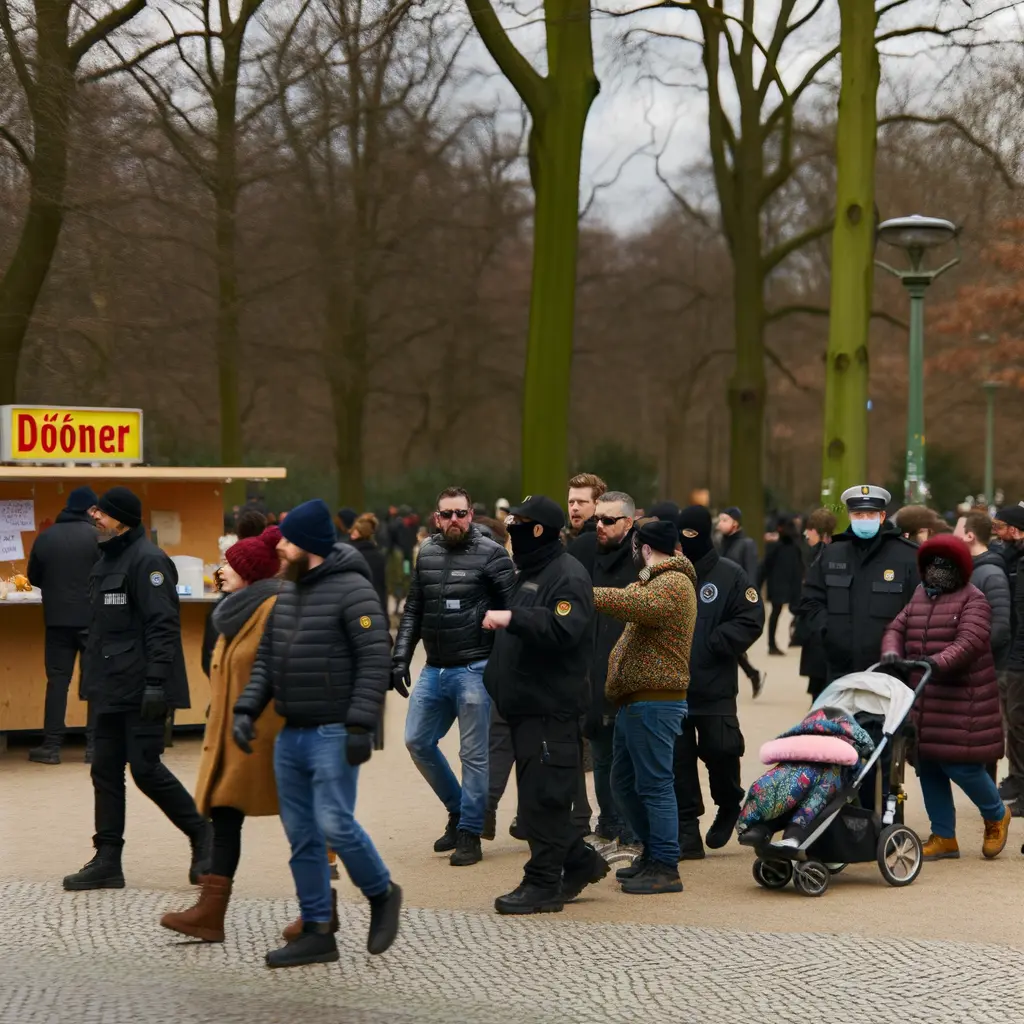
On Saturday at Humboldthain, a crowd gathered for what can only be described as Berlin’s most reliable art form: public moral certainty performed outdoors.
Half the demonstrators were longtime locals.
The other half were expats in hiking boots delivering chants with the theatrical urgency of a sophomore reading Foucault for the first time: Power! Structures! Stuff! One guy tried to cite Judith Butler mid-slogan like it was a karaoke night and he’d finally found his key.
Nearby, Turkish families pushed strollers past the scene the way Wedding residents treat civic drama: with the calm boredom of someone watching reruns. A döner shop did the real outreach work, distributing extra napkins—because if society collapses, at least your hands don’t have to.
Agents, But Make It Minimalist: Enforcement Enters Its Bauhaus Era
The authorities insist they’re modernizing. “We’re applying restraint,” one official said, which in Berlin is typically just a synonym for “our printer broke.”
Still, the city appears desperate to avoid the optics imported from abroad: shadowy agents hovering around protesters like a David Lynch side character who only communicates via zip-tie.
So now the undercover teams dress in a careful blend of:
- neutral coats
- neutral sneakers
- neutral facial expressions that say “I have no values”
It’s the Adorno of outerwear: nothing sincere, everything judged.
The “Do Not Engage” Protocol Meets Berlin’s Compulsion to Engage Anyway
Critics argue this whole thing is nonsense because Berlin protesters are famous for wanting conflict the way some people want brunch—insincerely, loudly, and every weekend.
When officials pulled back, protesters immediately panicked.
“What are they hiding?” demanded one activist, sweating through their ethical cotton. “If they’re not aggressively monitoring us, are we even relevant?”
A second demonstrator described the de-escalation as “hard to swallow,” which is impressive given the average Wedding resident can ingest an entire bureaucracy with no water.
Meanwhile, local conspiracy hobbyists complained that the absence of aggressive policing “proves” there is a larger plan—because nothing says Berlin logic like turning calm into evidence.
Kafka Would’ve Loved This, If He Had Earplugs
The Minnesota case is about limits—about judges drawing lines in messy, politically loaded situations.
Berlin saw that line and said, “Cute. What if we made it a circle and held a committee meeting inside it until time died?”
The result is classic Wedding: the state stepping lightly while the neighborhood fills the silence with its own theater.
Walter Benjamin wrote about history as wreckage piling up. In Wedding, it’s more like flyers piling up: protests advertised for causes everyone supports in principle, like justice, dignity, and not getting approached on the street by someone doing “a quick survey.”
As for the new policy, it’s already being hailed as a success.
No one knows what it changes.
But everyone feels like something was finally… handled.
In Berlin, that’s basically intimacy.