At Leopoldplatz, a DJ Summit Warns of Europe’s ‘Geopolitical Tear’ as Everyone Splits the Bill and the Bathroom Line
Macron and von der Leyen say the continent risks ripping itself apart. Wedding replied with a policy paper, a kebab napkin, and a single, long, damp sigh.
EU Melodrama & Sidewalk Diplomacy Correspondent
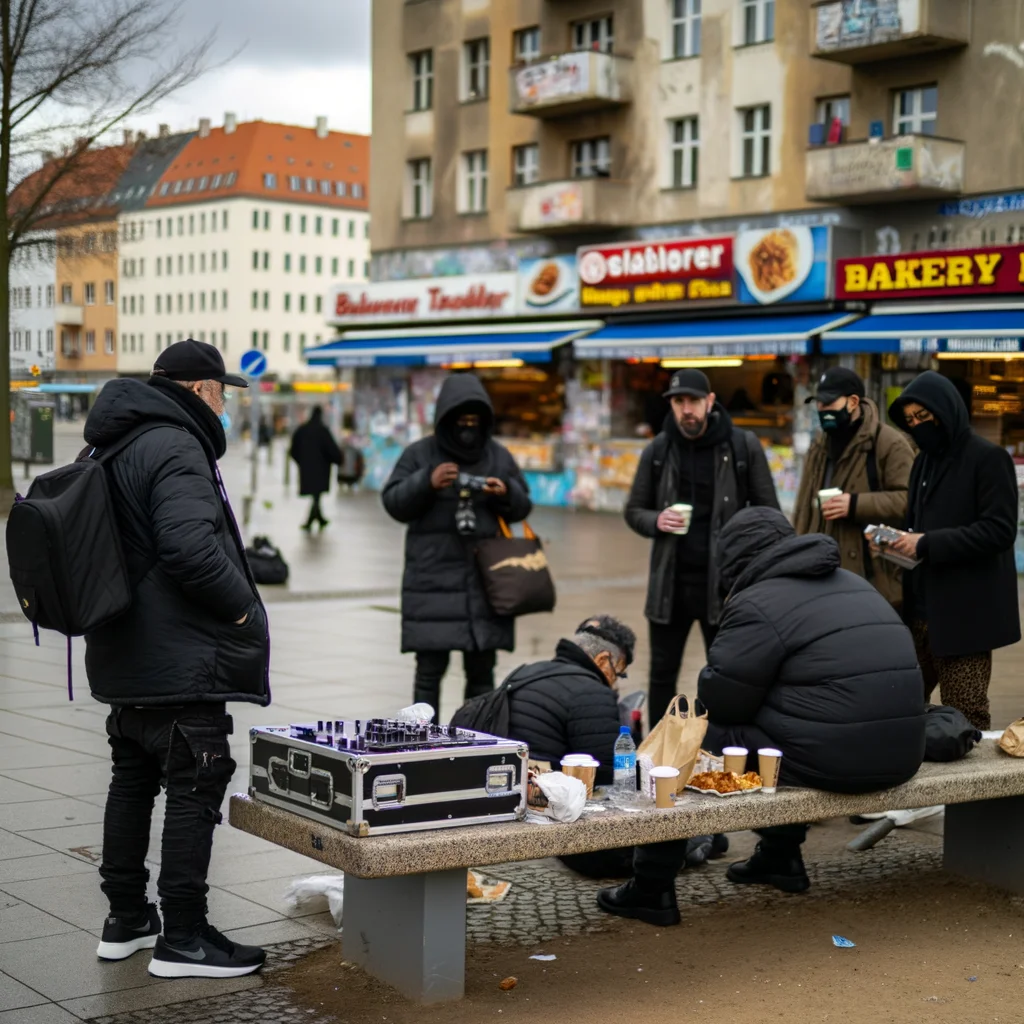
WEDDING—Europe, Now in Convenient Neighborhood Size
Macron and Ursula von der Leyen have issued a warning about a looming “economic and geopolitical stress test,” which is a polite way of saying: we might pull the continent in opposite directions until it makes a noise you can feel in your teeth.
Wedding took the headline as a community challenge. By mid-afternoon at Leopoldplatz, locals had already converted the big European anxiety into something Berlin can understand: a tense coexistence between people with three sources of income and zero liquidity, and people with one job and seventeen dependents on their patience.
The Split Is Real (And Yes, Someone Suggested a Telegram Poll)
The “Zerreißprobe” translated cleanly into the neighborhood’s favorite daily ritual: deciding whether anything—money, morals, public space, relationships, or nations—should be shared.
On one corner, a Turkish baker sold sesame rings and watched the debate like it was a long-running TV drama with terrible writing but dependable characters.
Across the street, two newly-arrived European strategists (they were wearing identical black puffer coats, meaning they could have been NATO or just allergic to color) explained to a man at a döner counter that Europe needs “strategic autonomy,” right before asking if the card reader works.
Spoiler: it didn’t.
Economic Convergence: The Panini Index of Doom
In Brussels they have graphs. In Wedding we have pricing cues.
- A basic coffee now costs the moral equivalent of three separate life choices.
- A half-decent sandwich comes with a side of guilt and an optional donation to a mutual-aid QR code.
- Rent conversations happen the way people describe exes: intimate, humiliating, and somehow still ongoing.
If Macron is worried about Europe’s economy snapping, he should tour the neighborhood’s informal fiscal union: people lending each other coins like it’s the Treaty of Maastricht but sweatier.
Geopolitics, But Make It Courtyard
“Geopolitical tensions” in the abstract look like global supply chains and defense strategy.
In Wedding it looks like:
- Someone blasting an air-raid-siren synth line from a passing bike, because art.
- A housemate summoning “ethical consumerism” to explain why they won’t buy non-organic dish soap.
- Another housemate doing a deep dive into “regional security” that turns out to be a 20-minute explanation of why they’re holding the one working key.
The neighborhood has perfected the EU’s founding principle: mutual dependency plus passive aggression. Habermas called it communicative action. Wedding calls it “the group chat.”
Nightlife Foreign Policy: Nonaligned, But Extremely Social
Later, a sound system somewhere near the U-Bahn began throbbing like Europe’s collective heartbeat: steady, worried, and pretending this is fine.
Sisyphos was name-dropped as a proposed “neutral ground,” like Switzerland if it charged you for the privilege of feeling excluded. A committee formed instantly—meaning four people argued while two pretended to listen.
Someone declared that the neighborhood needs unity. Someone else said unity feels “a little colonial.” Someone else requested “a hard line on freeloaders,” which in Berlin is foreplay for a nine-page manifesto.
Intimacy as Infrastructure
If the leaders of Europe want to know what a “stress test” really means, they can skip the summit and simply observe a Berlin friend group attempting:
- to share a taxi,
- to merge playlists,
- to agree on who is “safe to talk to,”
- to split the bill without rupturing the Union.
That’s when the rhetoric gets penetrating.
By midnight, a skinny consensus emerged: we all believe in solidarity, provided it doesn’t involve cash, commitment, or standing too close to someone who’s chewing.
Closing Statement From a Bench Parliament
At Leopoldplatz, a bench philosopher summed it up with the weary precision of a man who has read Marx and still can’t afford vegetables:
“Europe isn’t tearing. Europe is just doing what we do here—stretching itself until it feels meaningful. If it rips, at least we’ll have something to talk about while waiting for the late train that never arrives.”
It was, as ever, hard to swallow. But very on brand.