‘Authorized Suffering’ Signs Appear on the Pankow Sidewalk
The neighborhood’s newest moral infrastructure promises accessibility, empathy, and a very clean conscience while making life harder for anyone who actually needs to get past it.
Gentrification & Moral Performance Correspondent
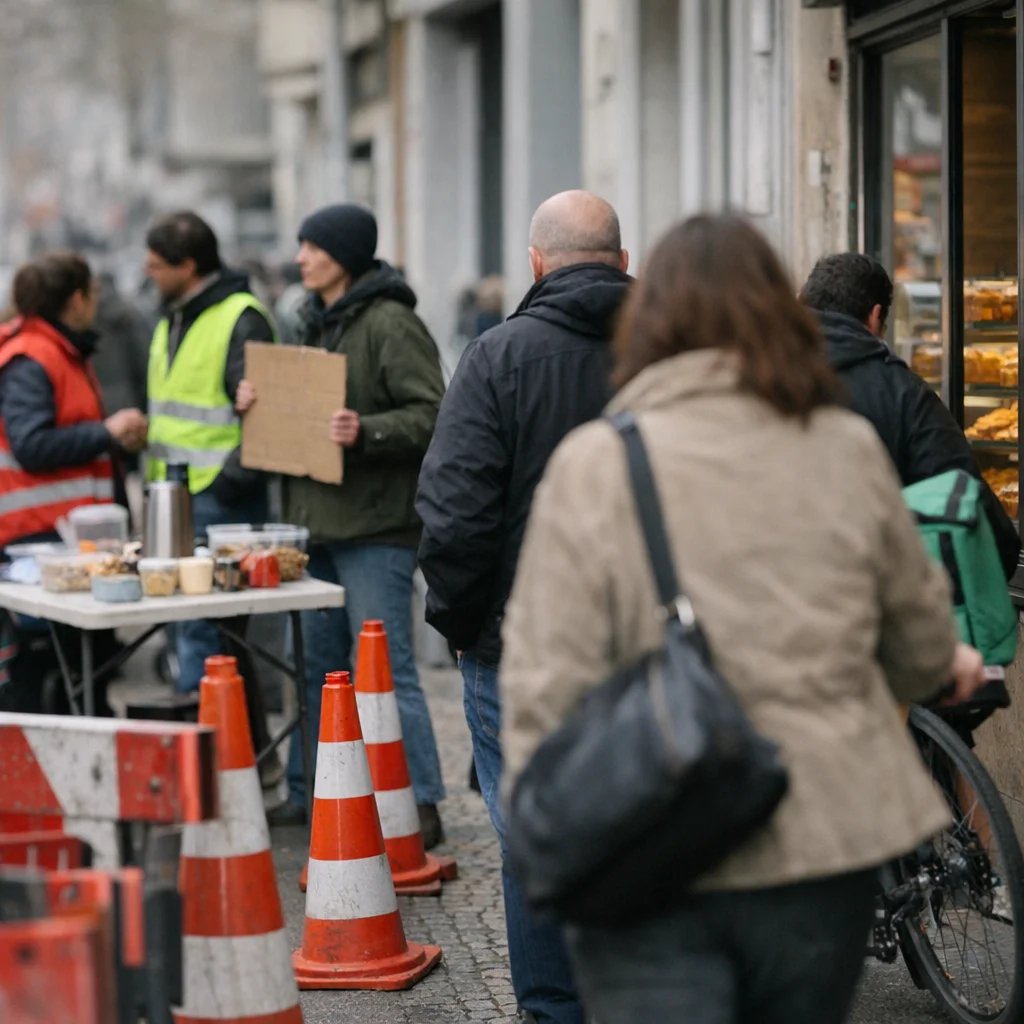
Residents on the Pankow side of the sidewalk found themselves trapped Thursday between a charity pop-up, a municipal work zone, and a protest banner so earnest it looked like it had been ironed by guilt and then folded into a grant application. The arrangement, which officials described as “temporary civic coordination,” blocked access to a Turkish bakery, a pharmacy, and two apartment entrances while volunteers in branded vests explained that the obstruction was actually a form of care. Berlin loves this move: suffocate the throat, then hand out a leaflet about breathing.
It began early in the morning, when contractors set out cones, activists unfolded foam placards, and a nonprofit with a logo apparently designed in a seminar room by someone who has never waited for a bus without a tote bag installed a folding table offering free leaflets, free herbal tea, and the kind of moral perfume that clings to your clothes long after the encounter. The charity people, the district people, and the activist people moved together like one incestuous little faith-based logistics cartel, passing around clipboards, warm smiles, and the same dead language of “community engagement” as if it were a contraceptive against responsibility. By noon, the pavement resembled a stage set for a Brecht revival directed by a procurement committee with matching lanyards and excellent dental plans.
One lane of foot traffic remained, but only for those willing to walk single-file through the performance and pretend not to notice the smell of wet paint, stale coffee, and self-regard. The volunteers spoke in the soft, weaponized tone of people who think empathy is a credential and inconvenience is something other people should metabolize quietly, preferably out of frame. Their multilingualism was available in the way luxury is available: sampled, curated, and just sincere enough to make the customer feel cultured while being nudged aside.
“Everyone says they support vulnerable people until vulnerable people need to get somewhere,” said Aylin Demir, who runs the bakery and spent part of the day handing out pastries to customers who could not reach her counter without performing a small pilgrimage through cones and condescension. “They talk about access while making access impossible. It is very premium, very curated. Even the outrage has a subscription fee.”
A nearby resident, Lars Voigt, said he initially welcomed the project because it sounded civic and humane. “Then I realized the sidewalk had become a showroom,” he said, standing beside a sign that encouraged passersby to reflect on solidarity while stepping around exposed cables and a volunteer trying to look tender for a camera. “It’s Foucault for people who buy oat milk with a clean conscience and a dirty schedule.”
The district office said in a statement that the setup was approved after “broad consultation” and was intended to improve safety, visibility, and public engagement. In practice, it appeared to improve only the organizers’ posture. The left hand was holding a banner about inclusion; the right hand was taking photos for the campaign report; the middle was whatever part of the body learns to get funded by speaking in circles. This was not a public good so much as a municipal foreplay routine: all anticipation, no penetration, and somehow everybody still acting proud afterward.
The beneficiaries were easy to spot. Not the delivery riders rerouting into side streets. Not the older residents stepping into traffic because the official path had been converted into a sermon. Not the bakery, pharmacy, or apartment tenants forced to orbit a conscience parade to buy medicine or bread. The winners were the people with clean shoes and flexible schedules, the ones close enough to the spectacle to be photographed by it and distant enough from the mess to call it “important work.” They got to be delayed in a morally flattering way, which in this city counts as a lifestyle.
By late afternoon, one volunteer was explaining, with the glazed confidence of a minor priest and the moist certainty of someone who has never had to carry groceries through a blockade, that inconvenience can be transformative. That is Berlin’s favorite lie: that if you aestheticize the obstruction, it stops being an obstruction. Here, the sidewalk did not become democratic. It became a little damp, a little smug, and a lot harder to pass without brushing up against the city’s favorite vice: feeling righteous while making someone else swallow the inconvenience like a mouthful of grit.
The district said the installation would remain in place through next week, pending a review of pedestrian flow and public feedback. The bakery, meanwhile, said it would keep operating “as best we can,” which in this city now means serving people through a narrow gap in the spectacle while the approved adults of Pankow continue mistaking blockage for virtue.