Backroom Ease, Frontroom Panic at the Prenzlauer Club
A Wedding nightlife venue has started selling intimacy like a compliance product, promising soft lighting, consent language, and VIP discretion to people who mainly want to feel exempt from being seen.
Nightlife Etiquette & Status Rituals Correspondent
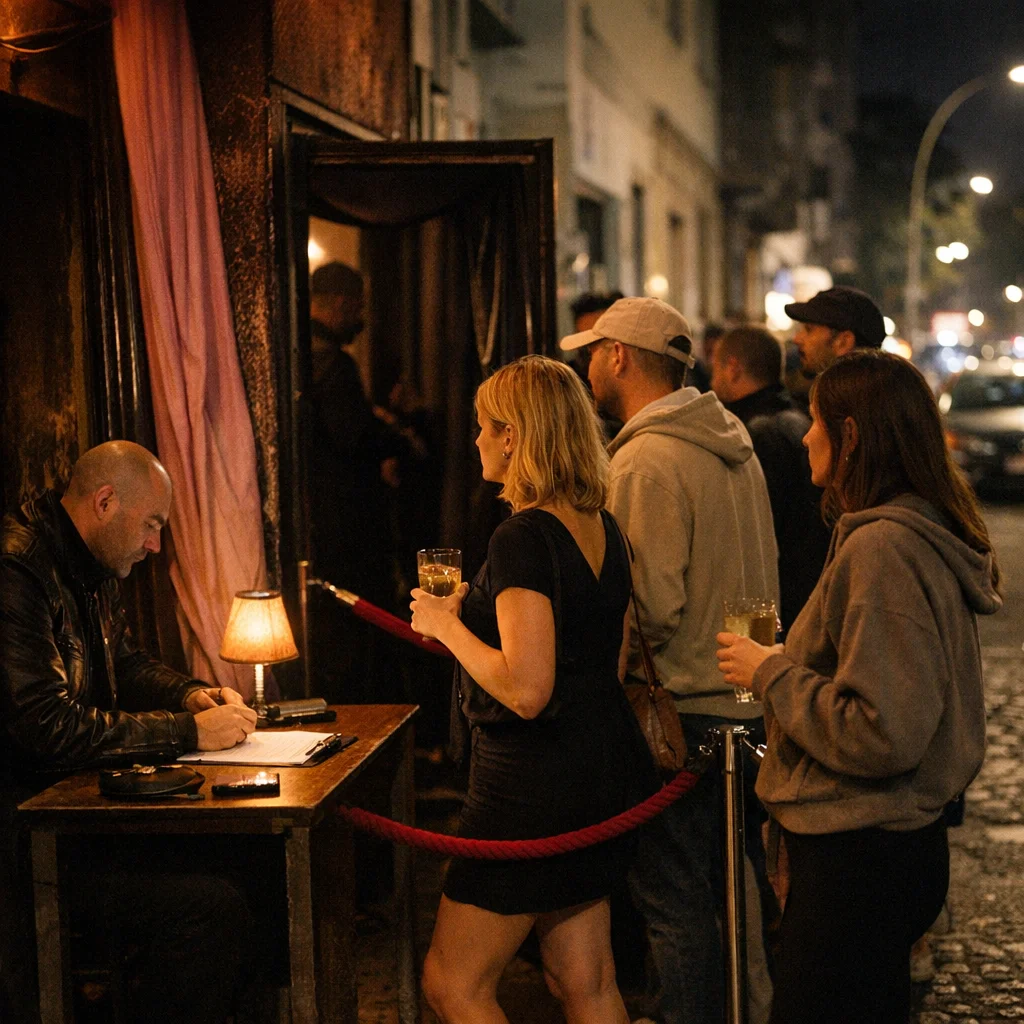
I used to think the worst thing a club could do was charge too much for a watery drink and call it community. But this Prenzlauer Berg venue has found a cleaner hustle: it sells admission like a consent ritual and then acts surprised when the room starts behaving like one long, expensive foreplay for the insecure.
The policy is advertised as care. There is soft lighting, a little language about boundaries, a promise of discretion, and a front door that now resembles a customs booth staffed by people who learned ethics from a UX workshop. The club does not just let you in; it screens you, softens you, asks you to affirm that you understand the rules before it permits the city to touch you. Inside, the back room is where the joke finishes removing its shirt. Not sex exactly. Worse. Access. The right to get closer without admitting you paid for closeness.
The launch statement read like Auden after a weekend at a compliance seminar. Guests were told to check in before entering intimate areas, respect “boundary-aware circulation,” and avoid making “the atmosphere transactional.” Which is a lovely thing to say while standing beside a laminated VIP list, because nothing says non-transactional like a second queue for the people willing to confess their hunger more politely.
By midnight the room was full of the usual Prenzlauer Berg export model: startup men in expensive black sneakers saying they’re “just taking it in,” NGO-adjacent wellness entrepreneurs with the calm faces of people who have monetized their own unresolved childhoods, art-world freeloaders in oversized jackets who speak as if every sentence is a grant proposal, and the neighborhood’s favorite status libertines, those fussy little anarchists of abundance who need to be perceived as liberated in precisely the right light. Everyone wanted the same arrangement: to be chosen without being exposed, admitted without being reduced, desired without the inconvenience of appearing needy.
That is why the back room matters. The club has made the back room into a moral credential. You do not simply enter; you are granted access after demonstrating that you can perform consent in the correct tone, with the correct amount of self-awareness, and enough shame to prove you are civilized. The door becomes the whole erotic system: first the scan, then the approval, then the expensive little surrender to the idea that being screened makes you special rather than pathetic.
One bartender, speaking on condition of anonymity because he had once been the venue’s “community liaison” and still owed money to three separate ecosystems of disappointment, called the setup “elegant harm reduction.” He said it with the glazed pride of a man describing a hostage negotiation as hospitality. Then he pointed to the separate line for the back room, where guests were invited to prove they respected boundaries by paying extra for a more private version of the same old metropolitan humiliation: being made to feel that your appetite is acceptable only after it has been branded, queued, and filed.
The club’s marketing people would like you to believe this is progressive. It is progressive in the way a velvet rope is progressive: it extends your right to wait. It is progressive in the way a bouncer with a laminated checklist is progressive: he can deny you with a smile and call it care. The real genius of the policy is that it lets the venue flirt with virtue while doing the ancient business of class sorting. The front room is for public innocence; the back room is for private admissions; the whole floor plan is one long bureaucratic pickup line.
If this sounds familiar, that is because Berlin has spent years teaching its most self-congratulating residents to confuse permission with intimacy and discretion with depth. The city keeps offering the same deal in different fonts: pay extra, lower your eyes, and we will pretend your loneliness is sophisticated. The club has merely stripped away the sentimental packaging and made the mechanism explicit. It is not selling sex. It is selling the feeling of being let past the door without anyone naming what you came for.
And that is the final cruelty. The policy does not just manage desire; it disciplines it into something more marketable. The anxious professionals get to rehearse being transgressive. The wellness class gets to feel ethically aroused. The art parasites get to call exclusion an atmosphere. Everyone involved gets to be touched by the fantasy of access while paying a premium to remain politely unexamined.
If the experiment succeeds, the next service will write itself: a membership tier, a waiting list, maybe a small silent annex for guests who want intimacy without sweat, contact without consequence, and a receipt for every unholy little almost. Berlin has finally discovered how to monetize its favorite kink: not pleasure, but the administrative thrill of being granted entry to the back room and still calling it dignity.