Bare Minimum Chic: Wedding’s New Modesty Panic Arrives Wearing Only Confidence
Residents demand standards; influencers demand lighting; everyone demands to be perceived.
Decadence & Public Morality Crash Reporter
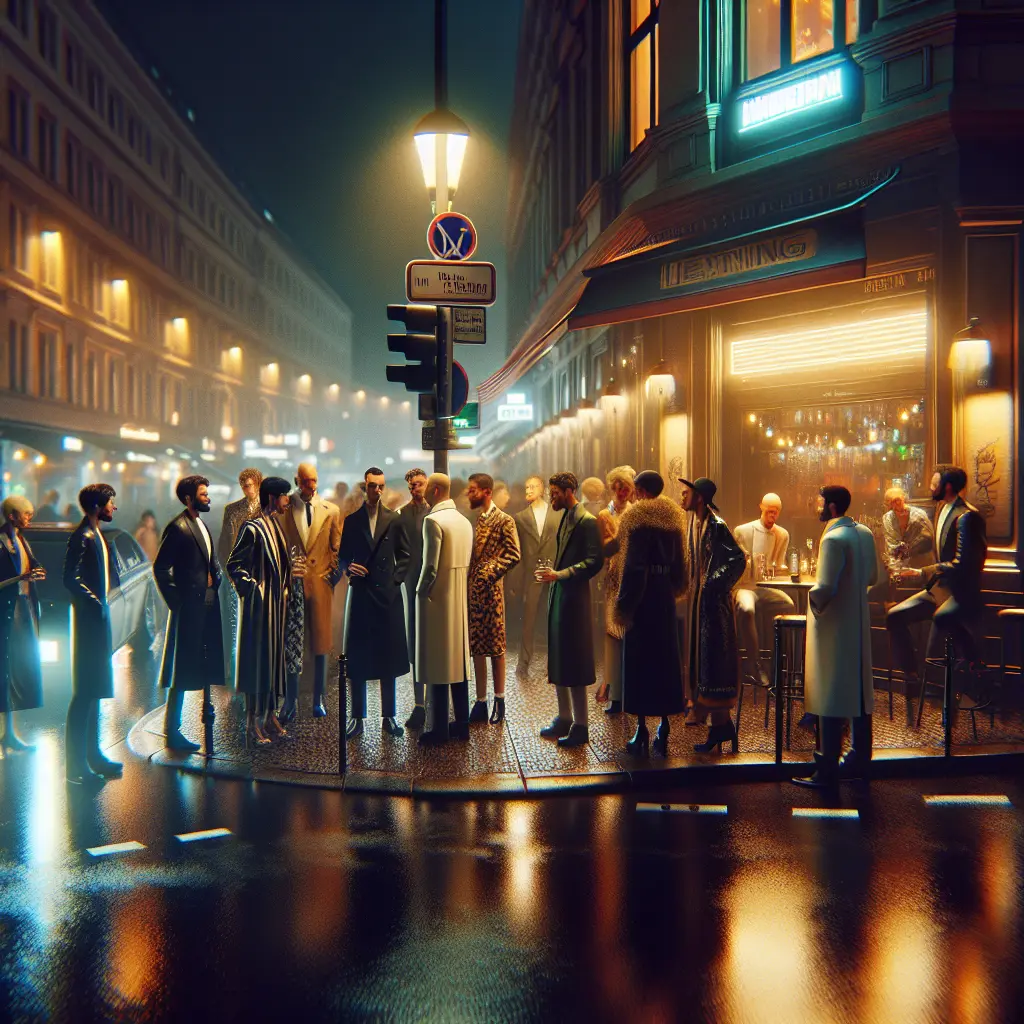
It started the way all great Berlin moral crises start: with someone saying, “I’m not judging,” and then judging so hard you could press it into vinyl.
Wedding has apparently entered its Modesty Panic Era, a thrilling local production where people who won’t make eye contact on the U8 suddenly become constitutional scholars about what counts as “appropriate.” The neighborhood that can’t agree on garbage sorting has found unity in a new cause: deciding whether strangers’ outfits are a personal attack.
The Nude-as-Identity Movement (Now With More Opinions Than Fabric)
Let’s be clear: this isn’t about nudity. Wedding has seen more exposed skin than a Bauhaus restoration project. This is about nudity as personality, which is a different genre entirely.
Some people have hobbies. Others have therapy. In 2026, a growing segment of the population has a body and has decided that’s the whole syllabus. It’s not “I’m going out.” It’s “I’m making a statement.” The statement, for the record, is usually: Please look at me, but only in the correct, politically literate way.
You can watch it happen in real time:
- A person steps out of a building dressed like a Derrida footnote: everything is deconstructed, nothing is stable, and you feel dumb for asking where the shirt went.
- Another person follows wearing the opposite: a full black outfit that screams Adorno, as if joy itself is gentrification.
- A third arrives in a “non-binary trench situation” that reads like Walter Benjamin wrote it during a nervous breakdown in a thrift store.
Meanwhile, the rest of Wedding is trying to buy tomatoes without accidentally joining a culture war.
Door Policies Move to the Sidewalk
Some venues in and around Wedding have started treating the sidewalk like a velvet rope. Not officially, of course. Officially, everyone is welcome. Unofficially, people are being hit with the classic Berlin soft-rejection:
“It’s not you. It’s the vibe.”
This is Foucault’s panopticon, but instead of guards in a tower, it’s three smokers outside a bar acting like unpaid curators of your dignity. You don’t need a bouncer when you’ve got a crowd trained to police each other’s hemlines and self-esteem.
And nothing says “liberation” like being quietly assessed by someone in mesh shorts who looks like they’ve read one sentence of Judith Butler and decided that’s basically a law degree.
Psychogeography, But Make It Thirsty
Guy Debord called it psychogeography—the way cities shape behavior through space and vibes. In Wedding, the vibe is now: Walk three blocks and your outfit becomes a referendum.
You can be fully clothed in Reinickendorfer Straße and somehow feel underdressed. Turn a corner and suddenly you’re overdressed. That’s not fashion; that’s urban planning by horny committee.
Residents report the situation is “hard to swallow,” especially when the same people demanding “radical freedom” also demand everyone clap on cue. The neighborhood has become a living Baudrillard simulacrum: not the body, but the image of the body, endlessly reproduced until it stops meaning anything—like a protest sign that’s also a selfie backdrop.
The Great Double Standard Olympics
The real sport isn’t what people wear. It’s who gets to wear it without consequences.
- If you’re hot, it’s “art.”
- If you’re average, it’s “attention-seeking.”
- If you’re old, it’s “a cry for help.”
- If you’re poor, it’s “public disorder.”
Wedding’s equality project remains consistent: everyone gets judged, but not equally.
One longtime resident told us, “I don’t care what people wear. I just want them to stop acting like being half-naked is a personality trait.” She paused, then added, “Also, could they not do it next to the bakery? The rolls are already overpriced. I don’t need extra performance.”
Another local described “stiff resistance” from a friend group after suggesting that maybe, just maybe, clothes can be comfortable without being a manifesto.
A Modest Proposal (Unfortunately)
Here’s my compromise, drafted with the seriousness of Kafka’s The Trial and the emotional warmth of a broken radiator:
- Wear what you want.
- Stop insisting it’s a brave political act unless you’re also brave enough to return shopping carts.
- If your entire personality is “skin,” fine—just don’t act surprised when the neighborhood gives you the same thing it gives everyone else: a long stare, a short temper, and absolutely no validation.
Wedding doesn’t need a dress code. It needs a hobby. Or better yet: a little less ideology, a little more fabric, and a lot less pretending this is all for the revolution.