Barrels, Bravado, and the Importer’s Shame
Wedding’s wine buyers have found a way to turn Spanish terroir into a status audition, where every bottle must prove it came from a hillside, a spreadsheet, and somebody’s private regret.
Moral Contradictions & Night-After Reporting
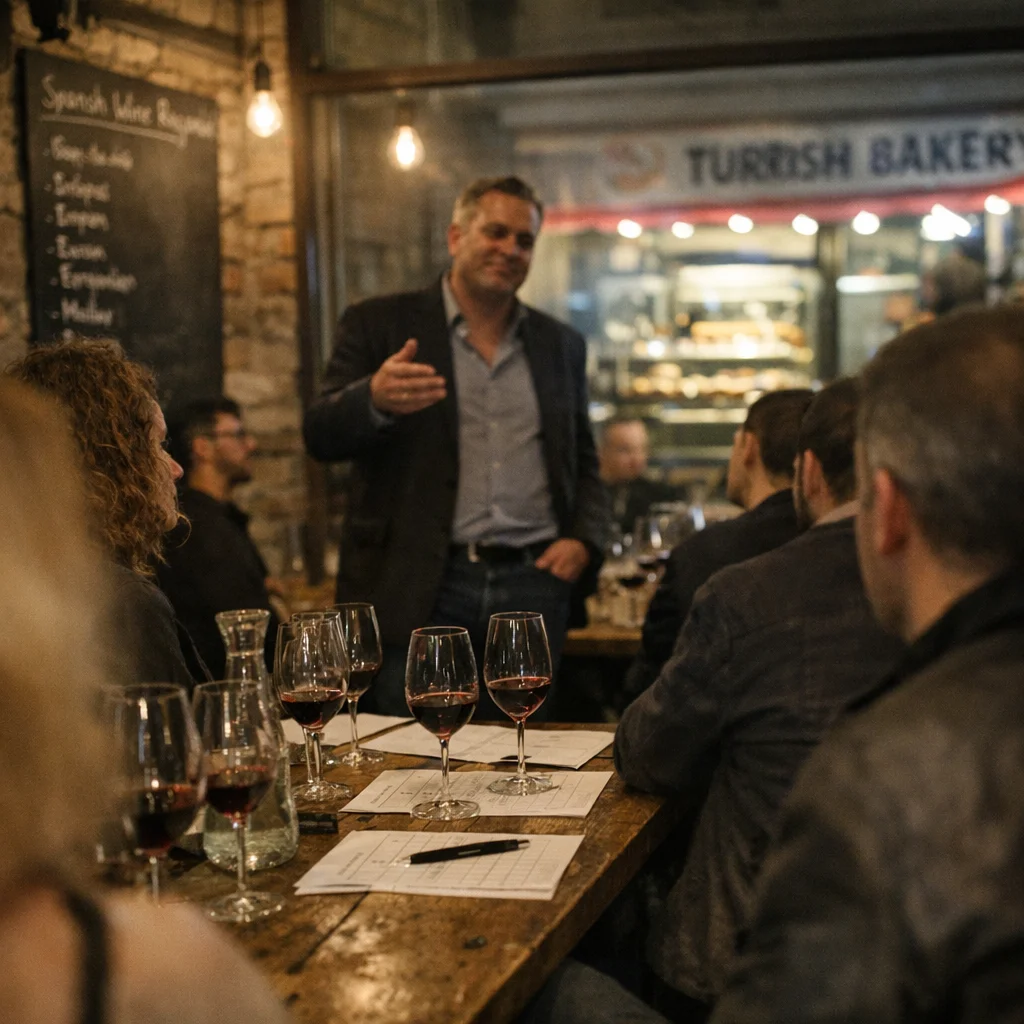
The altar of expensive humility
At a cramped tasting room near Leopoldplatz, Wedding’s wine hobbyists spent Thursday night pretending they were in a Castilian cellar and not a converted storefront with exposed bulbs, a brass sink, and a price list arranged like an extortion letter from someone who has learned to say “terroir” with a straight face. The event, built around Toro, Ribera del Duero, and a few other aristocratic Spanish regions, drew importers, sommeliers, startup refugees, and the usual devotional parasites who say “natural” like it excuses the rent.
The room was full of people trying to look unbothered by the fact that their little rebellion came with a bar tab and a receipt. They sniffed, swirled, and nodded with the solemnity of bureaucrats approving a sewer project. In Wedding, where landlords treat community life like a clearance sale, nothing is more Berlin than converting a working neighborhood into a confession booth for people who are terrified of actual work.
The importer as monk with a margin
The importer onstage, who asked not to be named because his last three allocations were “a family matter,” described the bottles in the language of martyrdom. He spoke of altitude, clay, and old vines the way a minor noble speaks about a failed inheritance and a tax shelter. His whole act was monkish austerity with a spreadsheet in his pocket: one hand blessing the soil, the other hand rifling through the boutique scarcity economy he feeds for a living.
He talked about small producers as if he personally rescued them from capitalism, while quietly charging Berlin enough markup to make the peasant blush and the accountant feel religious. This is the import business in its cleanest costume: buy the story cheap, bottle the suffering, sell the legend back to people who think exploitation tastes better when it has a foreign accent and a handwritten label.
Behind him, a chalkboard promised “rustic structure,” which is what the city calls aggression when it arrives chilled, polished, and priced at 18 euros a pour. The message was simple: here is your hardship, filtered through logistics, insurance, and the kind of smug logistics that let the well-fed feel spiritually underfed.
Sommelier theater for rentier guilt
Then came the sommeliers, performing peasant solidarity with the polished misery of actors who have read one page of Marx and one page of a farm catalog. They talked about labor, scarcity, and sun-burned hands while polishing glassware for customers whose biggest manual task was unlocking a courier package and then performing surprise at the invoice. Their humility was a costume tailored to the upper-middle classes: soft voice, sad eyebrow, selective outrage.
One guest, a brand strategist in a black turtleneck with the moral pulse of a scented candle, said he loved wines that were “honest and a little violent,” which is exactly the sort of thing men say when they want their masculinity pre-decanted and their conscience lightly sedated. Another nodded with the ferocious emptiness of someone trying to flirt with history while standing under a heat lamp.
The tasting room itself did what Berlin always does best: it turned class theater into décor. A neighborhood that still contains actual bakers, delivery riders, and people with sore backs was used as a backdrop for rentier cosplay. The guests praised the “authenticity” of the wine while living in the soft, overinsured comfort that allows them to fetishize strain without ever touching it.
The farm without the farmer
“People here don’t want fancy,” said Marta Seidel, who ran the tasting and has the steady expression of someone who has watched too many men confuse tannin with character. “They want a bottle that sounds rugged enough to excuse their cowardice.” She said the crowd praised the hillsides in Spain with the reverence of pilgrims, then immediately asked whether the wine could be softer, richer, and more forgiving. In other words: they wanted the farm without the farmer, the struggle without the sweat, and the finish to linger longer than their relationships.
That is the whole transaction, stripped of the artisanal eyelashes: moral tourism packaged as consumption. The customers want rustic violence as decoration, but only after it has been laundered through shipping, branding, and enough scarcity to make them feel clever instead of greedy. They want the smell of dirt without the dirt, the fantasy of labor without the body that did it, the “real” thing with all the inconvenient reality removed.
Wedding’s little cathedral of scarcity
The evening had the atmosphere of an Adorno footnote rewritten by a marketing department: authenticity as luxury, austerity as perfume, class guilt as a corkscrew. The importer’s margins and the sommelier’s sermonizing were not side effects; they were the point. In a city where every desirable neighborhood is being auctioned off by the inch, “craft” is just another way to make scarcity sound ethical.
Even the Turkish bakeries nearby, still doing the actual work of feeding the neighborhood, seemed to mock the room from the street. Outside, life continued with flour, grease, and delivery bags. Inside, a small congregation of aspirational drunks debated terroir like they were deciding which version of poverty looked best on their feeds. The contrast was obscene enough to be almost tender.
By the end of the night, the importer had sold almost everything except dignity. A follow-up tasting is already being planned, with one organizer promising a “more accessible” lineup, which in this city usually means the same ego in cheaper packaging, a slightly less embarrassing accent, and a markup that still believes it deserves applause.