Before Sunrise, a 5 a.m. Bakery on Malplaquetstraße Feeds Wedding—and Quietly Audits Everyone’s Life Choices
At 04:58, the line forms outside Ekin Ekmek. By 05:07, the neighborhood has confided its regrets into warm bread, while newer arrivals ask if the “early slot” is refundable.
Morning Economy & Cultural Friction Reporter
WEDDING —
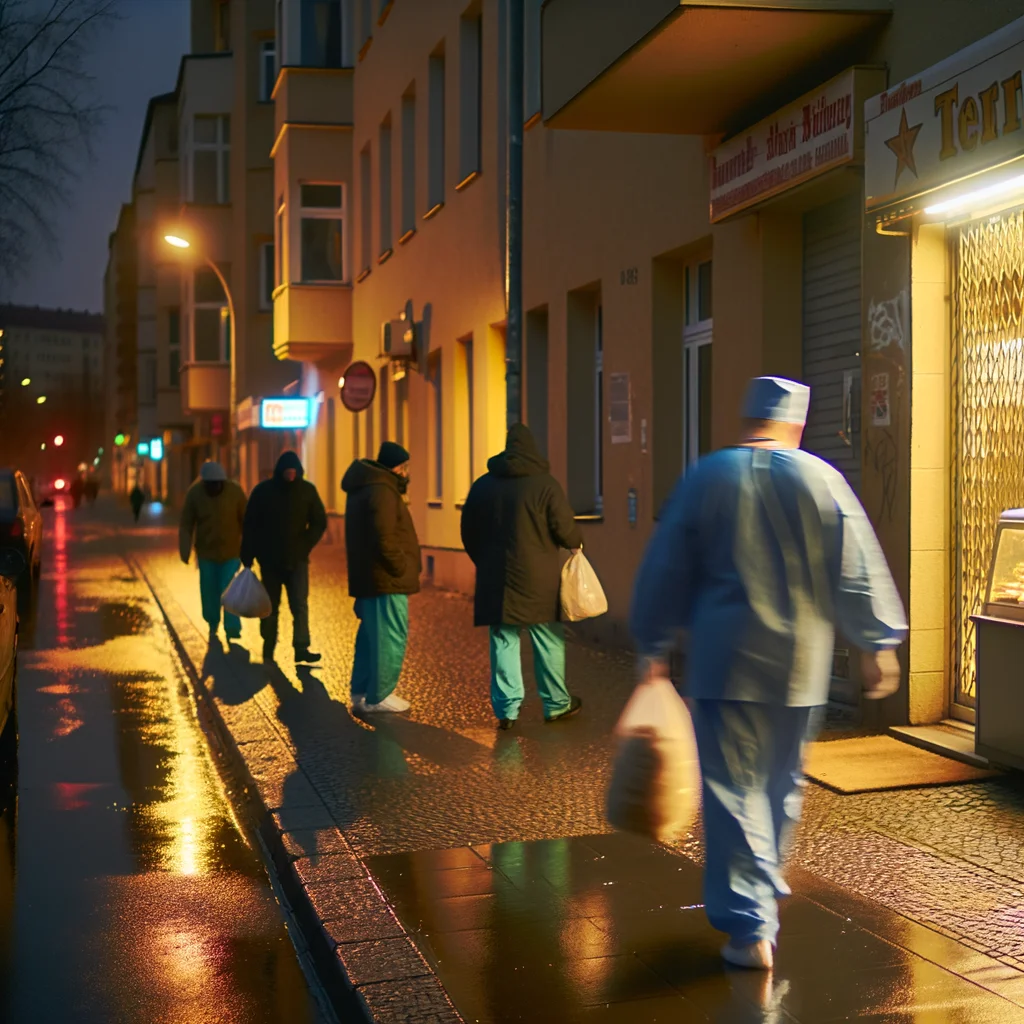
At 4:58 a.m. on Monday, the first person in line outside Ekin Ekmek on Malplaquetstraße 11 (13347 Berlin) arrived carrying a reusable linen tote and the kind of empty stare normally reserved for rent increases. By 5:02, eight more residents had assembled in near-silence, performing what anthropologists would call “a ritual,” and what regulars call “Tuesday.”
The bakery’s shutters rose at 5:00 sharp, and for the next 47 minutes—until the rest of Wedding decided to pretend morning is a personal insult—the neighborhood was served in a sequence that felt both orderly and faintly erotic in its efficiency. One man asked for “something light.” He left with two kilos of bread.
“People say the city never sleeps,” said bakery owner Ayhan Keleş, 52, tying an apron at 5:06 a.m. with practiced force. “That’s romantic. This street just doesn’t plan well. They show up hungry and morally disorganized.”
A line with two dialects: flour and English
Ekin Ekmek has operated on Malplaquetstraße since 1998, according to Keleş, long before the area started developing the suspicious new disease of menus written as if German were a hobby. The current 5 a.m. crowd includes delivery drivers, hospital staff from nearby Charité Campus Virchow-Klinikum, sanitation workers, and a growing group of freshly-arrived professionals treating bread like an app update.
At 5:12 a.m., Callum Price, 29, a product manager from “somewhere near London,” asked whether the bakery had “a seating concept.” Keleş did not look up.
“We have chairs at home,” said regular customer Semra Demir, 61, who has lived nearby since 1984 and considers modern café culture a form of tax fraud. “These new kids want everything to be a workshop. It’s bread, not an existential retreat.”
Price later told The Wedding Times he was “really into community” and found the lack of Wi‑Fi “bold.” He described the bread as “surprisingly high-performing,” then admitted he did not know how much cash he had because his wallet was “mostly feelings.”
Neighborhood consequences: calm, then chaos
By 5:22 a.m., local residents reported secondary effects. A nurse in scrubs was seen weeping softly into a paper bag “because it smelled like her childhood,” according to witness Lea Ronsdorf, 34, who was only outside because her upstairs neighbor’s alarm “hit like a philosophical argument.”
Meanwhile, a newly renovated short-term rental on nearby Limburger Straße reportedly posted a house rule requiring guests to “avoid strong smells before 8 a.m.” A neighbor, Mehmet Öztürk, 44, responded by leaning out his window at 5:31 a.m. and shouting, “Then don’t live above bread,” before closing the curtain with stiff finality.
An employee at the local district office, speaking on background because “no one wants to be quoted about flour,” confirmed receiving two email complaints this month about “pre-dawn queue acoustics,” including one that called the bakery “a civic disturbance in carbohydrates.”
Urban sociologist Dr. Hannelore Wendt (Humboldt University) compared the scene to “a Walter Benjamin passage with better lighting: a threshold space where commodities become memory, and everyone pretends they’re only here for one roll.” She noted that at 5 a.m., social hierarchies temporarily dissolve—until someone asks for oat milk.
By 5:47 a.m., the last early customers dispersed into Wedding’s damp streets with paper bags held close, like evidence. “We serve before the city wakes up,” Keleş said, stacking trays. “After that, people start telling stories. At 5 a.m., they still tell the truth.”