Behind the Energy Drinks, a Folding Chair Listens
At a corner shop near Leopoldplatz, customers say the line for cigarettes now comes with breathing exercises and a quiet question: “And how does that make you feel?”.
Neighborhood Features Reporter
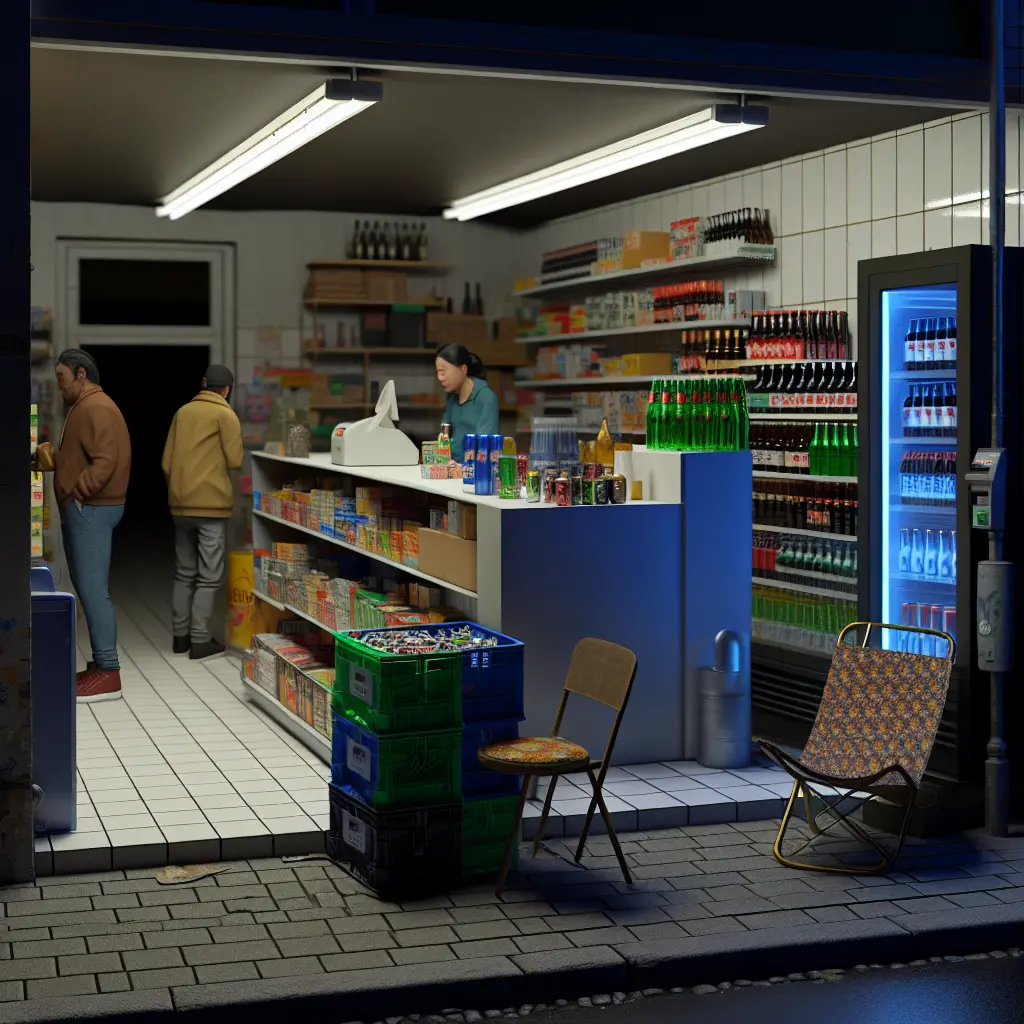
On Tuesday, Jan. 14, at 8:47 a.m., the first sign something had changed at Späti Kismet appeared in the usual place: the queue.
At the corner of Müllerstraße 52 and Antwerpener Straße in Wedding, customers waiting for cigarettes and a coffee-to-go found themselves being asked to “take one deep breath before you speak,” according to three witnesses and one man who said he “came for a lighter and left with boundaries.”
Späti Kismet, a narrow late-night shop known for cold beer and an ATM that charges like a payday lender with a grudge, has quietly become Wedding’s most consistent mental health provider—unofficially, and with no appointment system besides “whoever is crying least gets served next.”
The setup is simple. Between the Pfand crate stack and the refrigerator of energy drinks sits a folding chair with a floral cushion. A small plastic plant provides what one customer called “the illusion of care.” People take the chair. They talk. They pay. Sometimes in that order.
“Last week I asked for rolling papers,” said Jana Kroll, 34, a freelance set painter who lives on Gerichtstraße. “He handed me the papers and said, ‘You roll too tight. Same in life.’ I don’t know if he meant it metaphorically, but it was… accurate.”
The “he” is shop owner Faruk Demir, 46, who denied offering therapy while simultaneously practicing it.
“I am not therapist,” Demir said at 9:12 a.m., leaning on the counter and maintaining eye contact with the intensity of an airport security officer. “I sell things. People talk. Berlin is expensive. Talking is free. Except sometimes they buy cigarettes after. That is capitalism, not counseling.”
Demir said the practice began in late November after a regular, described only as “Sven with the scooter,” started coming in nightly to narrate his breakup “like a director’s cut.”
“It was 2:03 a.m.,” Demir recalled. “He says, ‘She left me on read.’ I say, ‘Maybe she is sleeping.’ He says, ‘No, she is living.’ Then he cried into the Haribo. I had to move the Haribo. Hygiene.”
Since then, customers say the chair has hosted confessions ranging from rent panic to family estrangement to a man in a puffer jacket admitting he “doesn’t actually like techno, he just likes being desired in line.”
“It’s like group therapy, but with more nicotine and less accountability,” said Orhan Yilmaz, 29, a delivery rider who stopped by at 6:58 p.m. Monday and ended up listening to a stranger explain their childhood using the language of real estate listings. “He said his father was ‘well-located but emotionally cold.’ That’s not normal. That’s Adorno with a key deposit.”
Not everyone is pleased. A neighbor, Claudia Reimann, 61, who lives above the shop, said the emotional spillover has become “audible infrastructure.”
“I can hear the crying through the ventilation,” Reimann said. “At 1:26 a.m. on Sunday, someone shouted, ‘I don’t want to be perceived anymore!’ and then bought a six-pack. I don’t know whether to call the police or a curator.”
The Mitte district office, reached by phone, said it had not received a formal complaint but offered a cautious statement.
“Retail establishments are not authorized to provide medical psychotherapy,” said a spokesperson, Maren Holz, adding that the office was “monitoring the situation” and reminding residents that “public emotional processing must not obstruct fire exits.”
Still, the chair remains.
At 10:41 p.m. Tuesday, a young man in a beanie sat down, stared at the fridge like it was judging him, and told Demir he felt “stuck in an endless loop.” Demir nodded, scanned a bottle of Club-Mate, and replied: “That’s Berlin. You want receipt?”
The man said yes.
“It helps,” he whispered, folding the paper carefully. “Proof I was here. Proof someone saw me. Also I need it for expenses.”