Berghain Bouncer Teaches “Rejection With Dignity” in Wedding, Charging Extra for the K-Hole Debrief
A former door worker now runs daytime coaching sessions near Müllerstraße, offering role-played refusal, eye-contact drills, and a stamp-shaped grief worksheet.
Door Policy & Daylight Shame Correspondent
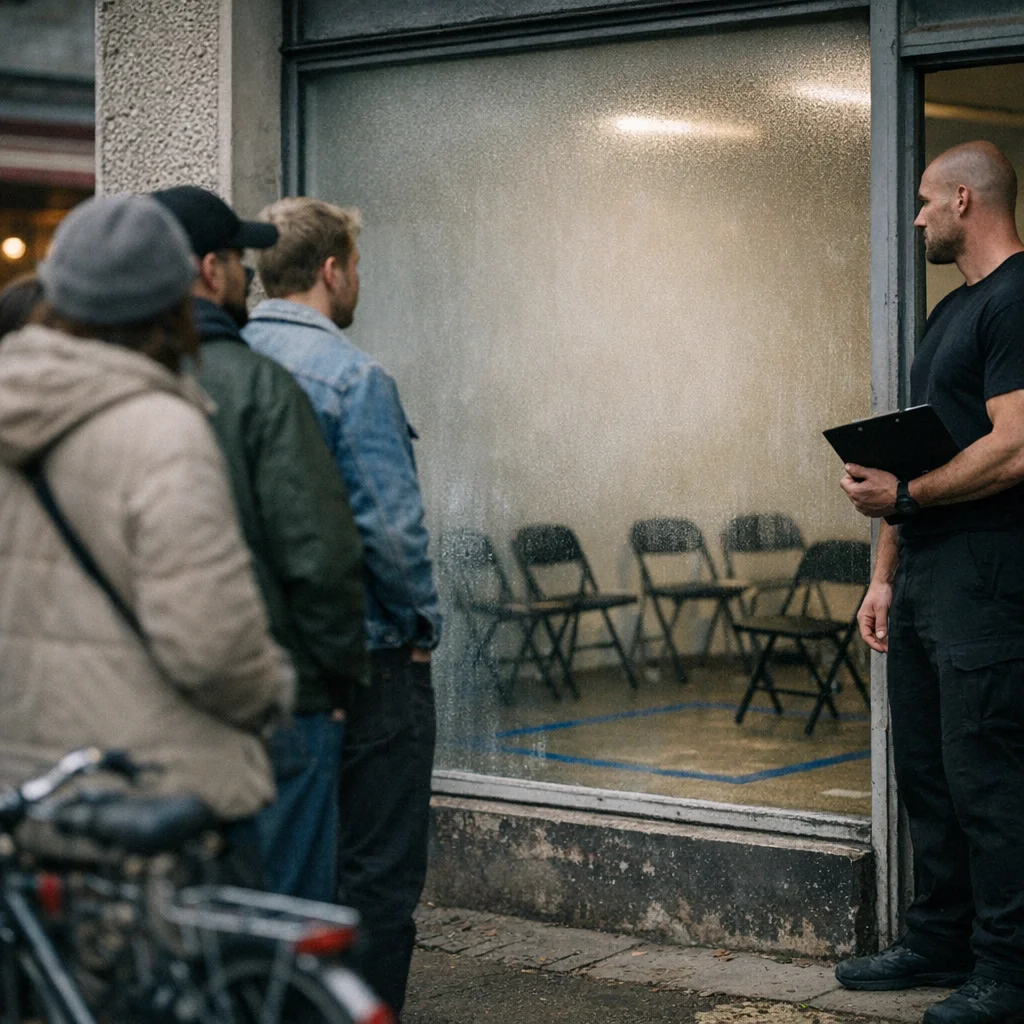
WEDDING — Door Skills Go Daytime
On Tuesday morning at 10:12 a.m., the ground-floor studio at Triftstraße 7 (a former alterations shop, briefly a "cold-plunge concept," now something between confession booth and corporate training) hosted an unusually Berlin form of self-improvement: paid lessons in being rejected.
The instructor, Sven “Sveno” Halberstadt, 44, says he worked “several years at Berghain’s door” before leaving nightlife in 2023 “for health reasons and also because people started filming their own humiliation like it’s wildlife.” His new business, NO ENTRY Coaching, runs three days a week in Wedding, teaching clients to absorb a hard "no" with posture, silence, and what Halberstadt calls “non-desperate neck alignment.”
A posted schedule seen by this paper listed:
- “Soft No, Hard Spine” (Tuesdays, 10:00–11:30)
- “Queue Trauma Integration” (Thursdays, 18:30–20:00)
- “K-Hole Debrief (Partner Exercise)” (Saturdays, 13:00–14:00)
The base rate is 65 euros per session; an additional 20 euros buys what Halberstadt calls the “wristband grief consultation,” involving a rubber stamp applied to a blank notecard “so the body understands it’s over.”
“Don’t Argue. Don’t Negotiate. Don’t Bleed in Public.”
Inside Tuesday’s workshop, participants stood in a taped rectangle on the floor marked “QUEUE,” practicing minimal conversation while a portable speaker played low techno “to recreate situational pressure.” At random intervals, Halberstadt approached individuals, studied them in silence, and said things like: “Not today,” or, more devastatingly, “Maybe later.”
“Watch the hands,” he told one attendee, 29-year-old content strategist Ethan P. from Prenzlauer Berg, after Ethan began explaining that he “totally gets the culture.”
“Your justification is coming out too fast,” Halberstadt added. “Nobody likes premature sincerity.”
Outside the studio at 11:07 a.m., a passerby, Fatma Yildiz, 51, who runs a small tailoring business two blocks away on Lindower Straße, watched a man in expensive sneakers practice saying “No problem, have a good night” into his own reflection.
“I’ve been told no by landlords for 18 years,” Yildiz said. “I didn’t know it was monetizable. Next week I teach ‘Rent Increase Acceptance With Cheek Muscles.’”
Causes: Gentrification, Status Hunger, and Door-Policy Tourism
Halberstadt said demand has grown alongside rising rents and the professionalization of insecurity.
“People moving to Wedding have degrees, startup jobs, and still want a stranger to say they belong,” he said. “They need rejection delivered cleanly. Like filtered water.”
A regular client, Larissa Meinhardt, 37, who described herself as “hybrid-employed,” said she signed up after “a humiliating loop” of being turned away at Tresor and later “rejected again by a brunch place.”
“This class gives me tools,” she said, holding a clipboard titled Refusal Journal. “When Sven says ‘not for you,’ I feel strangely held. It’s firm but supportive. Like boundaries with shoulders.”
The course’s language has attracted criticism from some longtime residents who view it as an imported performance of suffering.
“At my cousin’s shop on Seestraße, you get rejected when the grill breaks,” said Cem Arslan, 26, leaning outside a Turkish bakery on Müllerstraße at 12:23 p.m. “That’s free. You go home. You don’t call it a workshop.”
Consequences: New Micro-Industry of Humiliation Services
According to Halberstadt, he now leads referrals to related services, including “camera-lens sticker application coaching” and a photographer who “documents your rejection, tastefully.”
“We’re keeping it discreet,” Halberstadt said. “No selfies. This isn’t content. It’s discipline.”
In a city where denial has become both art form and economic sector, Halberstadt framed his work with a nod to critical theory. “People say it’s like a Kafka story,” he said, stacking folding chairs with quiet authority. “But Kafka’s problem was he never had a door person explaining the rules.”
As the Tuesday session ended at 11:42 a.m., participants practiced leaving without looking back. One woman wiped a tear, then corrected her posture.
“Dignity,” Halberstadt reminded them, “is walking away like you were the one who chose it. And don’t forget to breathe. Not loud.