Berghain Name-Checks in Health Report After Patients Insist a Dancefloor “Fixed” Their Depression
Clinics in Wedding say a growing number of residents are declining follow-up care while citing “Saturday night treatment plans,” some of which include earplugs and catastrophic optimism.
Social Safety-Net Mirage Reporter
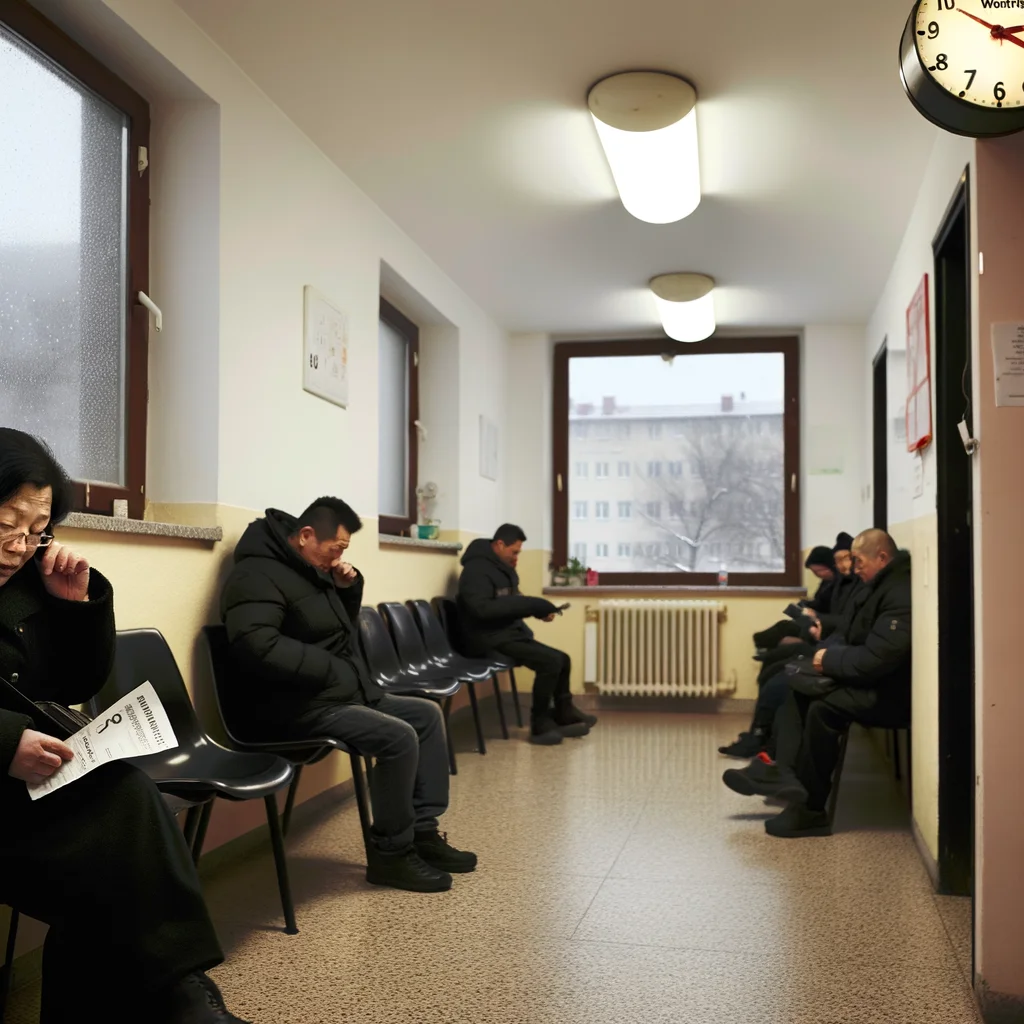
Wedding clinicians confront a new diagnosis: "Acute Miraculous Bass Relief"
On Tuesday, Jan. 14 at 9:06 a.m., public health spokesperson Dr. Annika Spreter stood at a lectern inside Charité’s Campus Virchow-Klinikum, Augustenburger Platz 1, and clarified what she described as a “fast-moving public misunderstanding.”
“We are not disputing that music and movement can improve mood,” Spreter said, pausing long enough to suggest she regretted saying “movement.” “We are disputing the claim that a weekend inside Berghain constitutes medical treatment. It does not. It is not recognized by any insurer. It is, at best, an unsupervised intervention with lighting.”
The warning follows a surge in patients who insist that rhythmic intensity cured their depression, according to an internal notice circulated Monday across outpatient clinics in Mitte and Wedding. In interviews, five health workers and eight patients described similar encounters: patients report having “fully recovered” immediately after a long night out, then abruptly discontinuing therapy or medication “because the bass went deeper than my father ever did.”
At 8:47 a.m. Monday, Lena Brackmann, a nurse at a practice on Müllerstraße 112, said a patient attempted to submit a screenshot of an event listing as evidence of treatment adherence.
“He said, ‘This was my group session,’” Brackmann said. “It was a blurry photo of a staircase, and he had circled the word ‘Awareness’ with an iPhone markup pen, like we’re in a Kafka seminar. Then he asked if the doctor could sign off that he had reached ‘emotional climax’ at 4:30 a.m.”
“It reset my brain” becomes “I can’t get out of bed” by Thursday
One patient, Nico Harms, 31, a freelance copyeditor living near Seestraße, said he stopped antidepressants after what he called a “clear result” during a Saturday-night dance event.
“Look, I went in hollow, I came out whole,” Harms told The Wedding Times outside a pharmacy on Gerichtstraße at 2:13 p.m. Tuesday. “When the kick drum hit, it penetrated all the garbage in my head. Therapy is good, sure, but this was a real breakthrough—like Wittgenstein, but with better speakers.”
Asked what happened on Monday morning, Harms stared at the pavement and said: “I called in sick and ate crackers. But that’s just integration work.”
Dr. Leyla Yildirim, a psychiatrist who sees patients near Pankstraße, described the pattern as “mood-whiplash dressed as wellness.”
“The patients aren’t lying. They feel temporarily powerful,” she said. “Then the neurochemical bill shows up. Their confidence gets stiff resistance from daylight, routine, and the deeply unsexy logistics of life.”
Consequences: DIY treatment plans, informal ‘medical letters,’ and a therapist’s fax line melting
Health officials said the new problem is not partying itself but patients drafting their own “clinical” documentation. A counselor at a private practice on Luxemburger Straße, who asked to be identified only as “Marion” due to patient confidentiality, said her office fax received a three-page manifesto titled “BEATS-BASED RECOVERY PROTOCOL.”
“It had dosage language,” she said. “Not about substances—about ‘drops,’ ‘builds,’ and ‘decompression.’ There was even a section called ‘Aftercare: Kumpir + Silence.’ I’ve read Adorno. Even I wanted to prescribe ear protection.”
At Tazefırın bakery on Badstraße 26, shop owner Emre Karaca said he’s seen regulars pacing in for sesame rings while explaining they’ve “graduated from sadness.”
“Two days later, they come back looking like a charcoal drawing and whisper, ‘Do you have something plain?’” Karaca said. “It’s not a graduation. It’s a revolving door.”
In response, the city’s health department is preparing a leaflet, expected by early February, titled “Mood Support vs. Miracle Claims,” emphasizing that “loud music and social contact may help, but they are not a treatment plan.”
Spreter, the spokesperson, tried for empathy at the briefing before reverting to a tone associated with canceled dreams.
“We understand people are desperate,” she said. “But depression is not something you can outdance indefinitely. Eventually the song ends, the lights come up, and Monday morning collects.”