Berghain’s ‘Safer Use’ Tent Turns Ketamine into a Queue Management System
The club’s official harm-reduction face says it’s about care; the under-read handout makes clear the real priority is keeping the beautiful corpses of club culture upright, hydrated, and away from the door staff.
Nightlife Contradictions Reporter
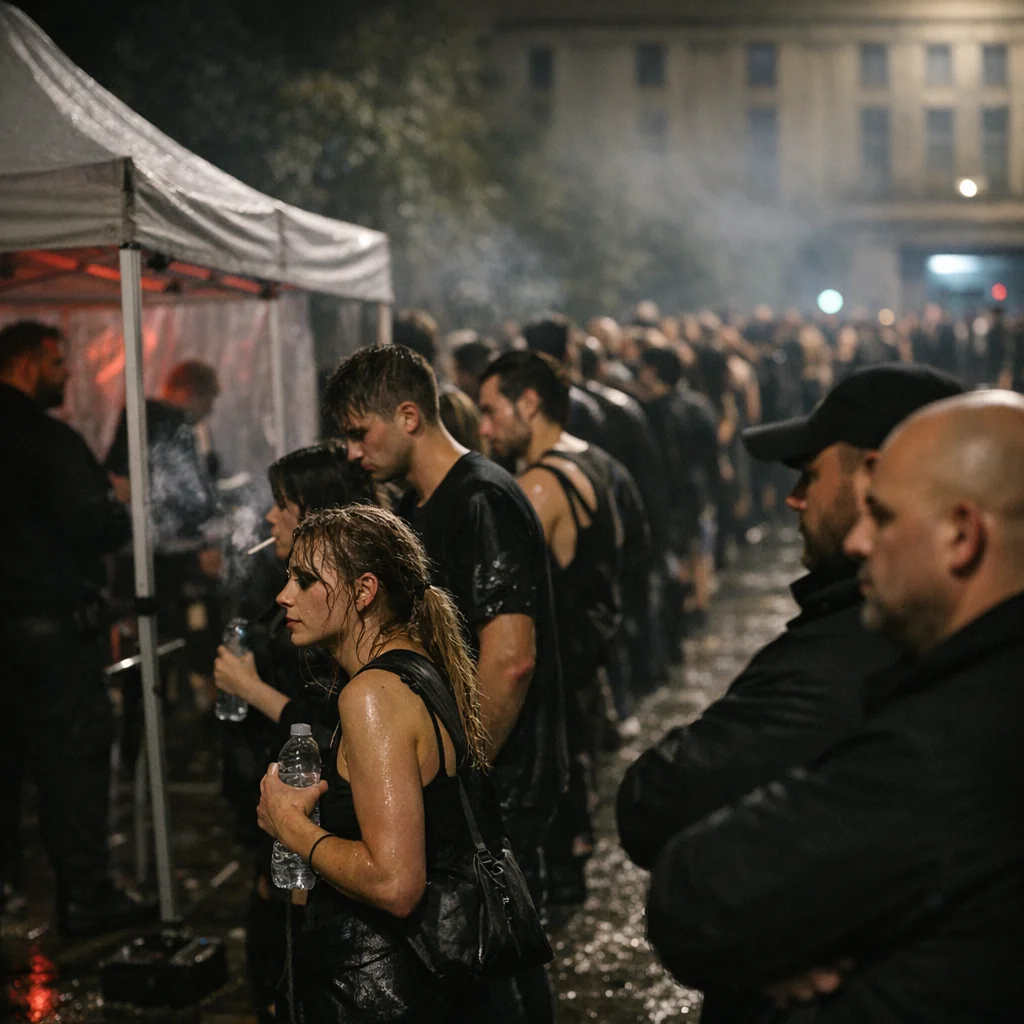
Berghain’s new “Safer Use” tent is being sold as a humane gesture for ravers who need water, air, and a private moment to stop leaking into the pavement before the door staff decide their face is a policy issue. In practice, the glossy leaflet looks like it was drafted by a management consultant with a ketamine hangover and a fetish for control.
The instructions are as warm as a security camera. Pace yourself. Drink water. Leave if you look wrecked. Don’t arrive in a condition that makes the bouncers notice your pupils, your sweat, your mascara, your inability to remember your own name. This is not public health. This is operations. This is a nightclub teaching its customers how to be broken in the right order.
The tent is positioned like a charitable organ on the body of a machine that profits from exhaustion. Inside, the atmosphere is all soft concern and hard edges: folded pamphlets, plastic cups, bored volunteers trying to look nonjudgmental while the queue outside performs its usual humiliating caste system. The rich-looking ones are trembling elegantly. The techno pilgrims are trying to seem spiritually feral without actually seeming lost. The tourists are dressed like they were radicalized by a mood board. Everybody wants the same thing: entrance, absolution, and the right to call their self-erasure “community.”
A clubgoer named Mara Weiss, 31, said the whole setup felt “comforting, in the way a luxury hotel feels comforting after it has already overcharged you.” She had the correct Berlin uniform — black jeans, black coat, the dead-eyed confidence of someone who has made emotional austerity look fashionable. “They tell you to hydrate like they’re your mother,” she said, “but it’s really just a nicer way of saying: don’t collapse where we have to witness it.”
That is the trick, of course. The tent is not there to save nightlife from drugs; it is there to save nightlife from looking like it takes drugs. The handout does not ask people to be safe so much as presentable. Keep your breathing even. Keep your pupils polite. Keep your panic folded small enough to fit in a pocket and carry it inside like contraband. Berlin’s favorite lie is that liberation is just discipline with a better soundtrack.
A Berghain spokesperson, asked about the leaflet, said the tent supports “responsible nightlife” and relieves pressure on door staff and emergency services. Which is adorable, in the way a locked bathroom is adorable. The district office, naturally, praised the initiative for promoting “safer behavior,” because bureaucracy will always applaud anything that makes danger less visible without making it less profitable. Everyone gets to call this care while the same old ritual continues: the rope, the scan, the waiting, the quiet sexualized panic of being inspected by people paid to look unimpressed.
The leaflet’s most honest instruction is the one about leaving if you are not in control. That is not harm reduction; that is brand management with a pulse. Berghain does not merely want you sober enough to survive the night. It wants you coherent enough to be rejected with grace, and sexy enough to feel grateful for the privilege. The club’s true genius is that it turns vulnerability into queue etiquette, then launders the whole arrangement through the language of wellness.
By morning, the tent will have done its job: fewer visible wrecks, fewer scenes, fewer bodies embarrassing the myth. Another little chapel of regulated collapse for people desperate to be told that being handled by the system is the same thing as being cared for.