Berghain’s Wardrobe Economy Has Finally Turned Berlin into a Toll Booth for Cool People
The scene that spent years bragging about openness now runs on locked coat checks, cash-only “special access,” and door politics so petty they make the club look like a hostage negotiation with better lighting.
Nightlife Identity & Self-Deception Correspondent
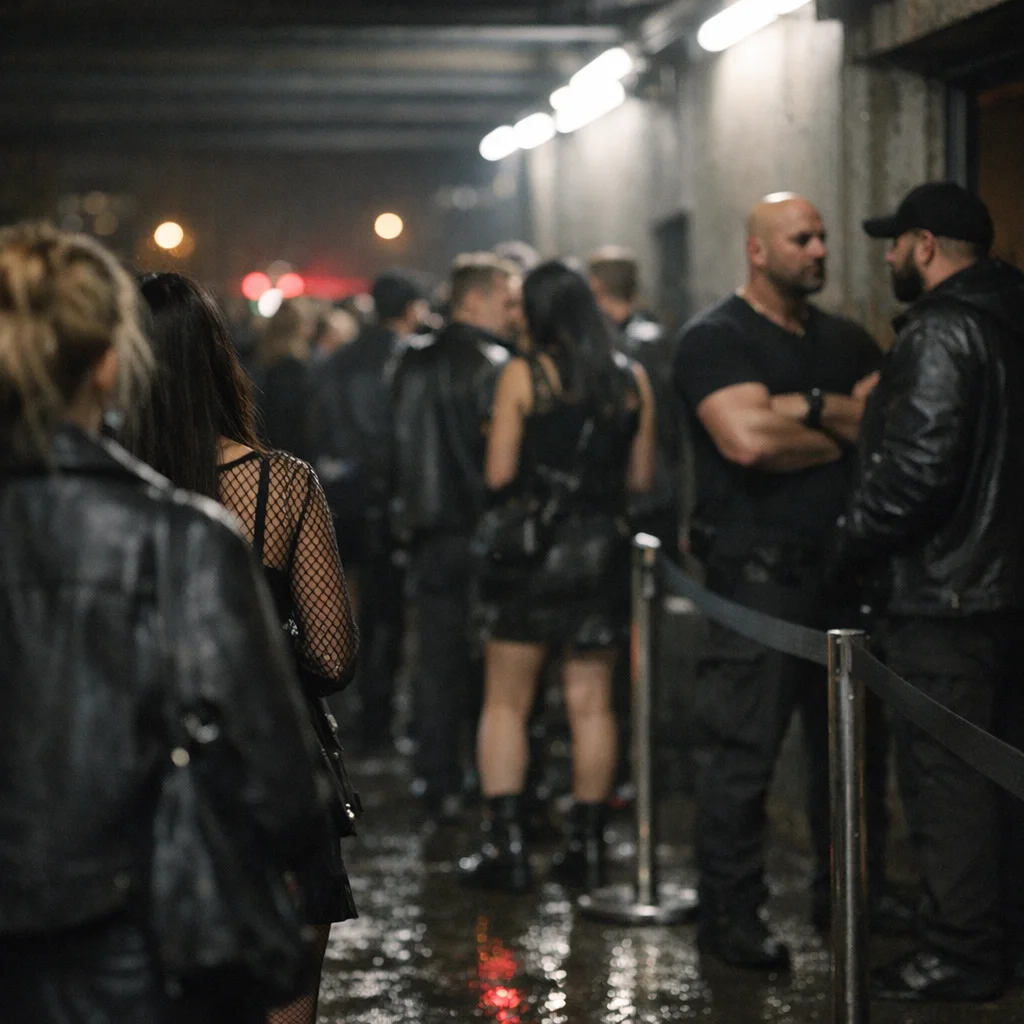
By the time the line outside Berghain started curving like a guilty confession, the real dress code was already clear: not black, not leather, not mesh — desperation. On Saturday night, the club’s outer ring of hopefuls looked less like a nightlife crowd than a seminar on insecurity, each person dressed as if they had hired themselves for the role of “someone who definitely knows a guy.”
The outfit logic was merciless. The man in pristine tactical black was not “minimalist”; he was pleading for admission as if the bouncer were a customs officer and his charisma had expired. The woman in theatrical latex was not liberated; she was auditioning for approval from people who think humiliation is a personality. A pair of finance interns in distressed denim and vintage sunglasses, speaking in the soft, overcooked tones of people who say “I found this place before the algorithm,” appeared to have mistaken clubbing for a thesis defense in Roland Barthes. They were trying so hard their jackets looked exhausted.
Inside the queue, a promoter with a face like a collapsed drawbridge told this paper, “The outfit is never just the outfit. It’s a bribe made of fabric.” He requested anonymity because he still owes three DJs money and once got rejected from the door while carrying a guest list that had his own name misspelled on it. “People think they’re expressing themselves,” he said. “Mostly they’re just begging the room not to notice they are spiritually underdressed for their own fantasy.”
That is the true anthropology of Berlin nightlife: everyone arrives claiming freedom, then stands there performing obedience to a code they pretend not to need. The left-wing crowd wants to look anti-bourgeois while wearing clothes that required a mood board and a tax bracket. The right-wing tourist lads want to look dangerous but end up dressed like sublet managers on a coke run. Even the ostensibly effortless ones — the weathered black tees, the battered boots, the looked-thru-face masks — are doing costume drama with cleaner editing than a Fassbinder montage.
A club spokesperson said the venue does not comment on individual outfits, only on “entry standards and respectful behavior.” That is adorable. Respectful behavior in this city means accepting that you may be evaluated by a man in sunglasses before dawn for whether your jeans are sincere enough to survive four hours of bass.
By midnight, the line had thinned, the hopefuls had grown colder, and the self-styled icons of underground taste were still outside polishing their identities like cheap silverware. The club did not need to say a word. The clothes had already confessed everything.