Berlin Debuts New ‘Self-Emptying’ Trash System That Simply Waits for Someone Else to Blink First
City officials confirm the plan is working: garbage is now confidently leaving bins, exploring sidewalks, and forming meaningful relationships with rats.
By Hans Muller
Kiez Reporter
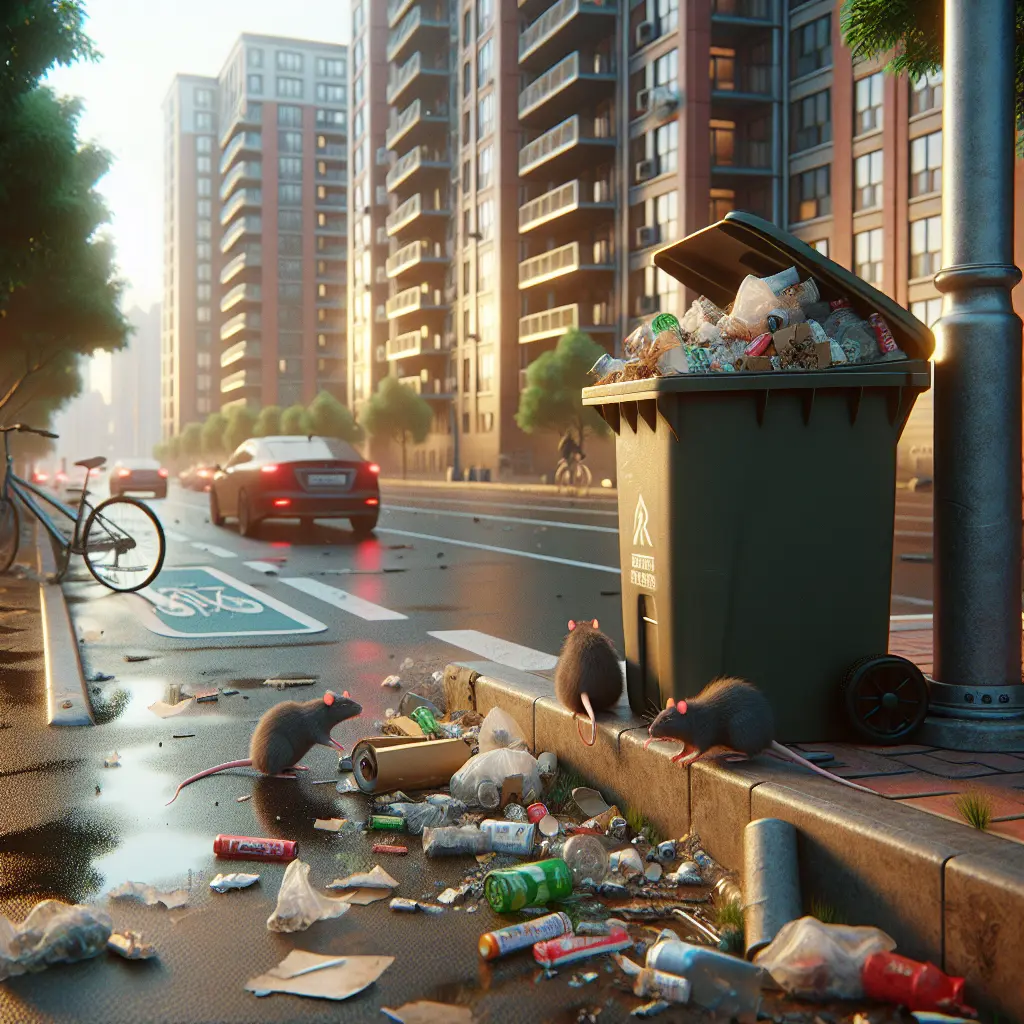
BERLIN — A CITY THAT LETS TRASH LIVE ITS TRUTH
Berlin has unveiled what experts are calling a “bold, hands-off approach” to sanitation: waiting.
Not waiting in the sense of “until tomorrow morning when the street-cleaning truck arrives,” but waiting in the deeper, more Berlin sense—like a performance art piece that lasts three months and ends with a rat carrying a croissant into a storm drain.
Residents report that trash bins across the city are no longer containers, but suggestions. The garbage, inspired by Berlin’s famously independent spirit, has begun “overflowing,” which is a polite word for “moving out and starting a sidewalk life.”
THE NEW URBAN WILDLIFE: RATS WITH OPINIONS
Sightings of rats have increased, though “sightings” implies surprise. At this point, it’s more like scheduling.
Locals describe rats as:
- Confident (they cross the street like they pay rent)
- Discerning (they’ll ignore your artisanal compost and go straight for a doner box)
- Community-oriented (seen in groups large enough to qualify as a pop-up coworking space)
One resident said a rat made eye contact while dragging a slice of pizza and “somehow looked disappointed in me personally.”
STREET CLEANING: NOW A MYTHOLOGY
Berlin’s street cleaning schedule has entered the realm of folklore, alongside dragons, affordable apartments, and a U-Bahn line that arrives when it says it will.
On some streets, the only thing being “swept” is public hope.
In neighborhoods with heavy foot traffic, trash has achieved a kind of layered geology:
- Fresh takeaway packaging (optimistic, glossy)
- Weathered cardboard (resilient, philosophical)
- The mysterious bottom layer (ancient, moist, probably voting)
Tourists often interpret the piles as “edgy authenticity,” which is convenient, because it means no one has to admit it’s just filth.
THE BIN OVERFLOW ECONOMY
In a move praised by absolutely no one, overflowing bins are now functioning as micro hubs of urban activity. People gather around them to:
- balance their coffee cups while stepping over banana peels
- argue about bike lanes while standing in a pile of cigarette butts
- take photos of graffiti that is slowly being reclaimed by yogurt lids
The trash itself appears to be networking, with plastic bags clustering together in what scientists believe may be “the beginning of a startup.”
A CITY UNITED BY A SINGLE QUESTION
Berliners remain divided on many issues, but are increasingly united by one shared thought when they see a trash pile the size of a small couch:
“Is this… normal now?”
The answer, according to the street, the bins, and the rats holding what looks like a committee meeting near the playground, is yes.
Berlin is not dirty, residents insist. It’s just participating in an ambitious long-term experiment:
What if we did nothing and called it culture?