Berlin’s Hairdressers Have Discovered the Last Safe Place for Punishment Humor
In Wedding, salon names have become a public display of middle-class desperation, where every “cut” pun is supposed to signal warmth, irony, and taste while the owner quietly charges tourist prices for a blunt bob.
By Clara Brook
Imported Outrage & Kiez Satirist
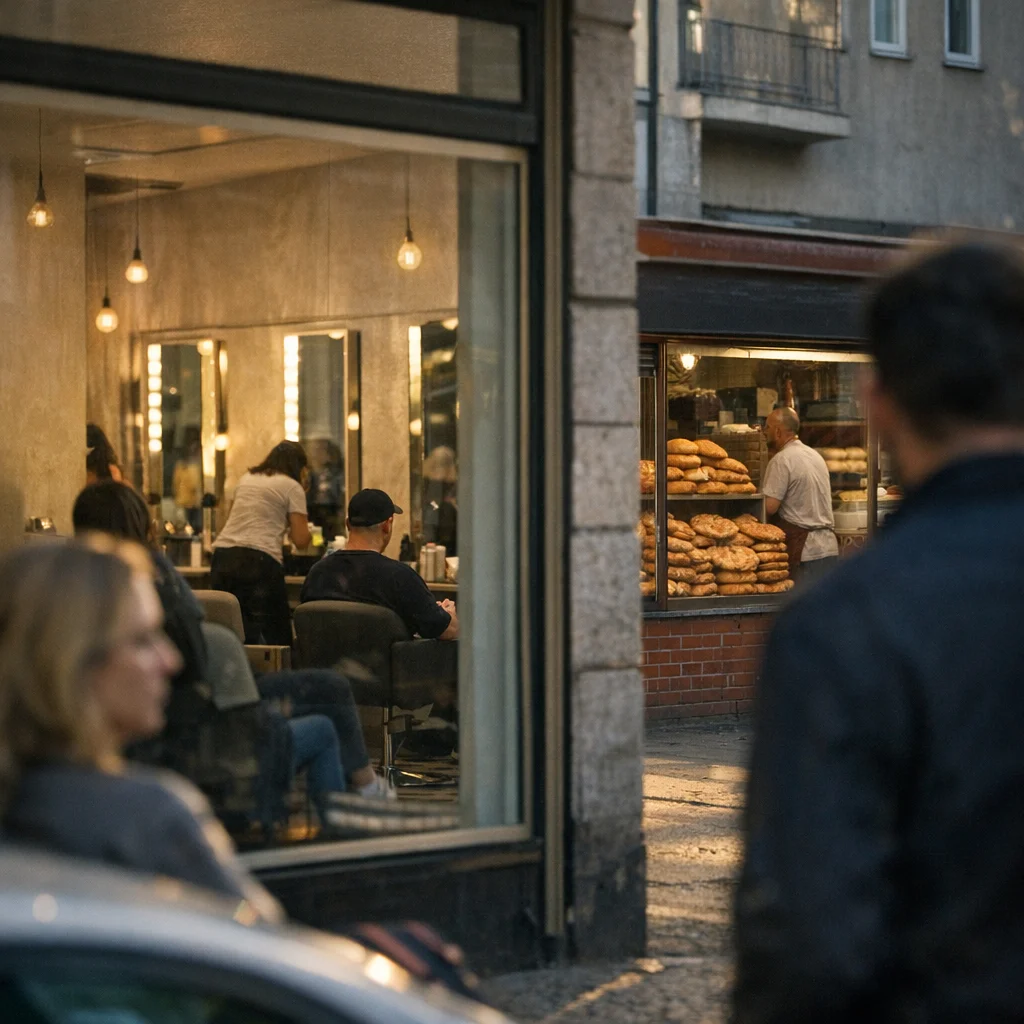
Hair Salons: Gentrification's Confessional Booths
Wedding’s salons have long sold more than hair. Now they offer absolution in daylight, charging tourist prices for the privilege. On Müllerstraße, new shopfronts look like they were designed by creative directors and boutique liberals who think a “raw” neighborhood means one with dirt under its nails.
The result is a row of cosmetic tribunals: gold mirrors, beige walls, and names that sound like a Slack channel for those confusing irony with ethics. Every cut pun, minimalist logo, and “community” statement is a tiny orgasm of self-congratulation. Owners stage a theater of self-forgiveness, where the audience pays cash and leaves feeling heroic for sitting near working people.
Karim, a barber for 18 years, says the new names aren’t for him. “They’re for people wanting to feel progressive while getting fleeced,” he said, sweeping hair with the dead-eyed discipline of a man who’s seen the city dress up extraction as aesthetics. “They want authenticity, the smell, the story, the little scar of the neighborhood. Then they complain if the coffee isn’t almond or the cut makes them look human instead of a brand asset.”
The first wave was stylists: underpaid apostles of taste, fluent in anti-capitalist language, charging enough for a trim to choke a pensioner. The second wave? Startup men with soft jaws and hard opinions about “quality of life.” Wellness landlords who speak in breathy tones about “space” while extracting half the city’s wages from a one-bedroom. Women in expensive linen perform humility like a boudoir trick, all curated roughness and strategic underdressing, as if a chipped nail could cancel out a trust fund.
By midday, one waiting area looked like a seminar on gentrification with better skin care. A receptionist named Lea said the shop was designed for “warmth” and “holding space,” the kind of sentence people use to sound emotionally literate while arranging a commercial squeeze. She added that the owner insisted on a layout that made clients feel “held.” Held by whom? By the neighborhood? By their vanity? By the invisible hand of rent extraction?
Then came customers with their rituals of fetishized multiculturalism. One man in a black cap asked Karim where he was “originally from,” then smiled like he’d just donated blood. A woman with an art fair tote said she loved that Wedding was “still real,” a sentence that should be punishable by public shame. They ask for humility like men ask for blow jobs: with entitlement disguised as appreciation, expecting someone else to make them feel sophisticated.
Outside, the Turkish bakery still sells bread to those who need it, not narratives. Inside, salons sell bangs as moral cleansing and beard trims as urban redemption. The district is colonized by those wanting grit as décor while paying to avoid its consequences. They arrive with €18 oat milk lattes, then act moved by the “texture” of the street, as if poverty were a curated scent.
The district office, as ever, responded with the emotional depth of a printer error. One official said commercial language reflects “broader market developments,” bureaucracy’s favorite way of saying the wolves have arrived with conditioner, a POS terminal, and a speech about inclusivity. The city will call this diversity until the rent notice lands.
For now, the scissors keep moving. The puns will worsen. Prices will rise. And Wedding will continue being nibbled to death by those who think exploitation is kinder with good lighting and a soft voice. They don’t come to belong; they come to purchase the sensation of having survived contact with it.