Berlin’s Medical Examiner Is Chasing a Killer, and the Paperwork Is Winning
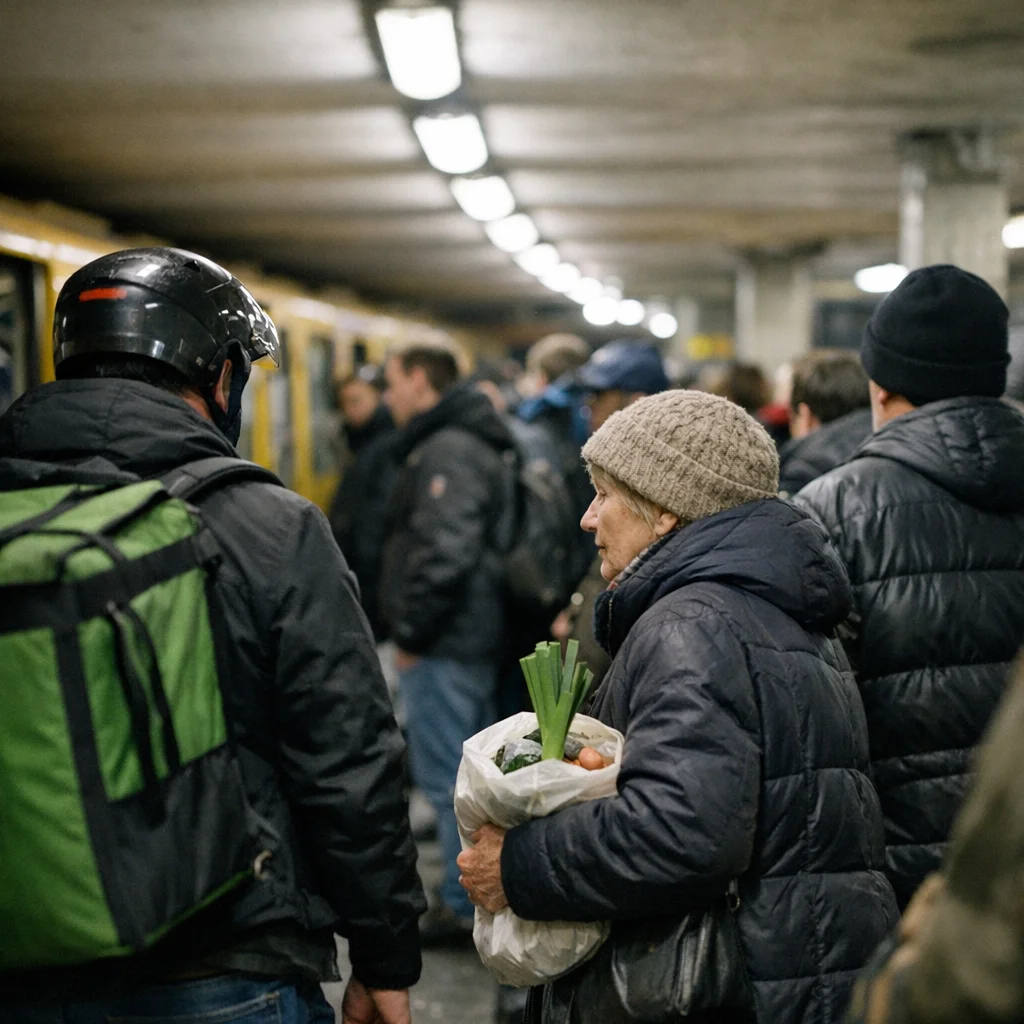
In Wedding, especially around Leopoldplatz, the transport fantasy arrives damp. Platforms are full of people with groceries, construction dust, and the expression of someone who knows the next train will come when it feels ready. Berlin calls this access. The rest of us call it a queue with doors.
Civic Amnesia & Lifestyle Compliance Correspondent
The city’s favorite lie has a station name
In Wedding, especially around Leopoldplatz, the transport fantasy arrives damp. Platforms are full of people with groceries, construction dust, and the expression of someone who knows the next train will come when it feels ready. Berlin calls this access. The rest of us call it a queue with doors.
The Senate’s transport sermons sound cleaner in conference rooms. On paper, cheap fares are climate policy, social justice, and proof that the city has discovered the public good without needing to be beaten over the head with it. In practice, the 49-euro ticket turned the U6 into a rolling demonstration of how little the state understands the bodies it asks to absorb its ideology. People were not transported so much as stacked.
At Leopoldplatz, where the square is half transit node, half open-air stress test, you can watch the policy in its natural habitat: office workers with dead eyes, delivery riders checking their phones like they’re waiting for a lover who never texts back, pensioners gripping the pole with the grim intimacy of people in a bad marriage. Everyone is invited. Everyone is equally inconvenienced. That is what passes for equality when the people writing the press release have never had to stand in a corridor smelling of wet wool, frying onions, and the stale breath of administrative optimism.
The beneficiaries are never the ones sweating
The city’s progressive class loves this arrangement because it lets them perform sacrifice at a safe distance. They post about degrowth from warm apartments in Prenzlauer Berg, then descend into Wedding with the expression of anthropologists visiting a swamp. They call the train “shared space” as long as the sharing happens on schedule and the crowd doesn’t include anyone with a lunchbox, a laborer’s shoulders, or the kind of face that has seen the inside of a waiting room too often.
That is the whole scam: mobility for the many, dignity for the few, and moral applause for everyone who can pretend a packed carriage is an ethical achievement instead of evidence that the system has been cost-cut to the bone. Berlin’s transport policy is full of this kind of soft indecency. It squeezes bodies together, then congratulates itself for creating community.
A BVG official will tell you the network is being improved, expanded, modernized. A Senate spokesperson will say the city is investing in resilience. Both phrases mean roughly the same thing: please admire the architecture of our delay while we continue to underfund the mechanism that keeps your ribs pressed against a stranger’s backpack.
Wedding knows the difference between access and mercy
Wedding, unlike the city’s more self-conscious districts, does not confuse inconvenience with enlightenment. Around Müllerstraße, Seestraße, and the grim little retail strip near Leopoldplatz, people know exactly what the infrastructure is for: getting to work, getting home, carrying the kid, carrying the shift, carrying the bill. Nobody is writing a manifesto on the platform. They are trying not to get shoved into a closing door by a man who smells like mint gum and entitlement.
That is why the official rhetoric lands here like a wet leaflet. “Affordable mobility” sounds lovely until you are the one stuck in a carriage while some policy enthusiast explains that overcrowding is actually a sign of success. Berlin’s ruling mood loves this trick: rebrand neglect as inclusion, then act offended when the public notices the stink.
The most obscene part is how intimate the whole thing becomes. There is always a moment on the train when everyone is too close, too warm, too trapped to keep pretending this is civic virtue. Shoulders touch. Bags grind into hips. Someone’s perfume collides with somebody else’s sweat. The carriage becomes a little moving confession of class: who gets to be comfortable, who gets to endure, and who gets to call endurance a progressive value because they have never had to earn their own inconvenience with a shift and a child and a deadline.
The system is not failing. It is being itself.
The transport bureaucracy does not collapse; it performs. It stages crisis in a way that protects the people who designed it. Delays become weather. Overcrowding becomes culture. Underinvestment becomes a talking point with nicer lighting.
And in Wedding, where the neighborhood has long been expected to absorb the city’s ugly leftovers, that performance is especially insulting. The stations are crowded, the sidewalks are busy, the kiosks are open late, and the whole district keeps doing the work of being functional while the state poses as if it invented patience. Nothing says modern governance like forcing the public to rub shoulders in a metal tube and then praising them for their resilience, as if humiliation were a form of participation.
The trains keep coming. Sometimes.
So do the excuses, polished and fragrant, dragged out by people who will never have to wait in the doorway with their groceries digging into their wrist while a transport official smiles about sustainability. In Berlin, that is what passes for reform: a crowded carriage, a clean conscience, and the usual order of who gets pressed against the glass.