Berlin’s Newest Memory Museum Is a Street Sign That Won’t Admit It’s Nostalgic
After Brandenburg proudly preserves DDR history via street names, Wedding decides its own signage should double as therapy, tourism, and a low-budget ideology fight—mounted on a pole.
Neighborhood Features & Domestic Security Correspondent
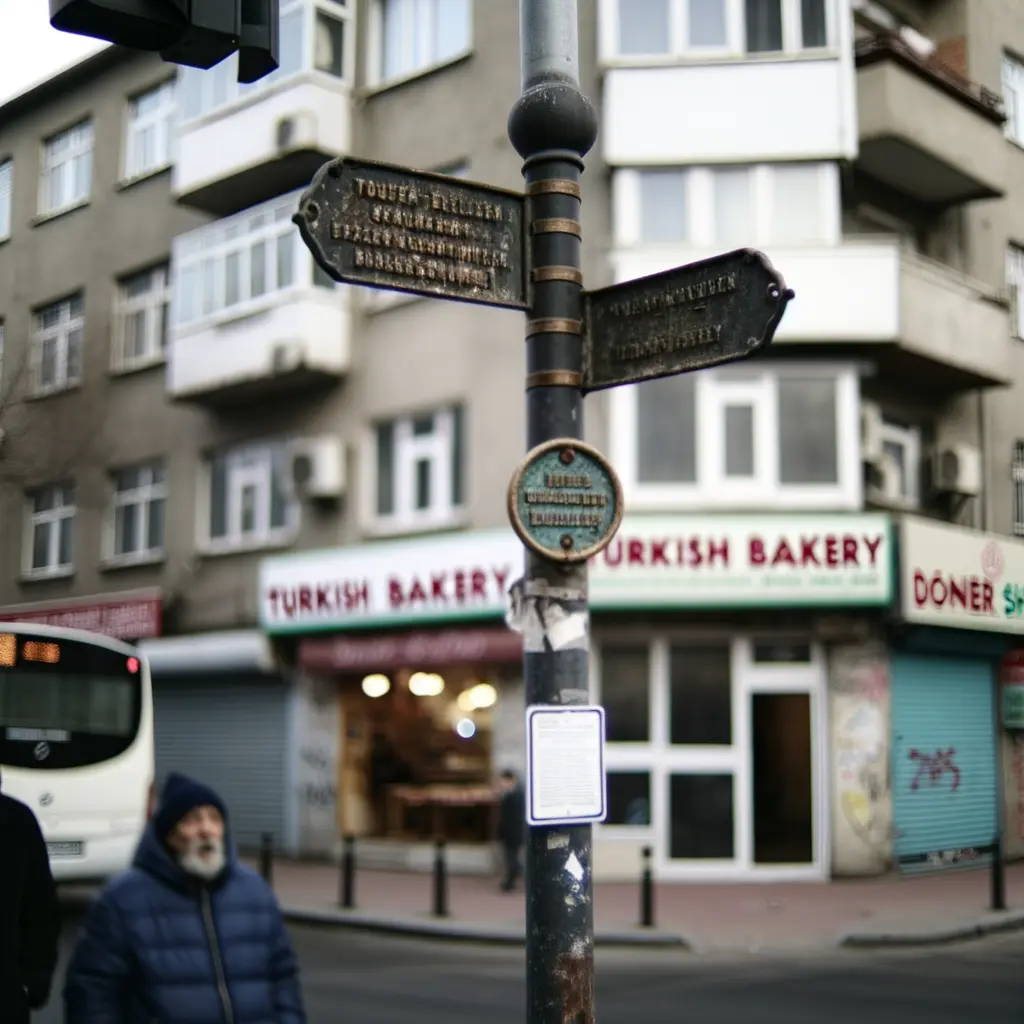
Brandenburg is out there preserving DDR history the old-fashioned way: by leaving street names alone and letting them slowly ferment into a time capsule. A quiet, dignified approach—like a library book that still smells like 1986 and disapproval.
Wedding, naturally, saw this and thought: Why should Brandenburg get all the retro authoritarian charm? We have plenty of our own, and we can preserve it with less money, more yelling, and a working group that meets exclusively in drafty rooms.
The neighborhood’s latest hobby: memory, but make it passive-aggressive
If you think street signs are neutral, congratulations: you are either new here, or your frontal lobe is being sublet.
In Wedding, a street name isn’t a label. It’s a fully loaded op-ed bolted into the sidewalk. A square meter of metal that wants to penetrate the public conscience while insisting it’s “just an administrative necessity.” Sure.
A coalition of residents—some who grew up with state socialism, some who grew up with a podcast subscription—has started arguing about how Berlin should “handle history” in the built environment. The plan is to use street names as a kind of outdoor museum where everyone can trip over meaning on the way to the pharmacy.
And because this is Berlin, the proposal meets stiff resistance the moment someone suggests the streets should communicate anything other than “you are not from here.”
“Conserving history” in Wedding means curating a fight
Brandenburg preserves; Wedding curates. Brandenburg keeps old names like a bruise you don’t poke. Wedding keeps old names like a tattoo you re-litigate every time someone sees it.
The usual factions emerged:
- The Archive Types (wearing tote bags heavy with Walter Benjamin quotes): “A street name is a document of barbarism and urban planning.”
- The Practical Types (carrying a screw): “We just need the postman to find the door.”
- The Moral Purity Types (powered by indignation): “Rename everything, including the air.”
- The Nostalgia Types (pretending they aren’t): “Back then the rents were lower and the disappointment had structure.”
If Kafka had written about street naming instead of courtrooms, the novel would be called The Sign and it would end with someone being executed by a committee after forgetting the exact spelling of “solidarity.”
Wedding’s proposed solution: a “memory corridor” nobody asked for
Inspired by the Brandenburg headline—“Look, history in the street names!”—Wedding activists proposed a pilot: a so-called Memory Corridor, where every street sign gets a second plaque explaining “the context.”
Which is Berlin for: a new object to ignore.
The plaque ideas range from charming to deranged:
- A minimalist Bauhaus-style sign with an aggressively tidy timeline (because nothing says “complex history” like the aesthetic of a dentist’s waiting room).
- A QR code linking to a 19-minute audio essay where a graduate student tries to deconstruct asphalt through Derrida while you’re holding two bags of groceries.
- A “live” plaque that changes monthly, like a gallery wall label—Guy Debord but with maintenance fees.
A local conceptual artist has already pitched a companion performance piece titled Simulacra of the Roundabout, in which actors silently rearrange street signs at 3 a.m. until tourists understand Baudrillard the way God intended: confused and slightly angry.
The Turkish businesses have better things to do (and still get dragged into it)
Meanwhile, on Müllerstraße, Turkish shop owners continue doing the most radical thing imaginable: running businesses that operate in reality.
One bakery owner told us—while efficiently slicing pastries and dodging a stroller—that if the city wants to honor history, it should start by honoring the present: fix the sidewalk, fix the lighting, and stop naming committees as if they’re medieval guilds.
At a döner counter nearby, a customer tried to start an argument about “memory culture” while waiting for sauce. The staff stared at him the way Adorno would stare at an EDM remix of Beethoven: not outraged, just disappointed.
The customer found the situation hard to swallow, which was funny because the sandwich was literally right there.
The real Berlin question: who gets a plaque, and who gets forgotten?
This is where the satire stops pretending it’s only satire.
Street names decide what gets remembered casually—like wallpaper—versus what gets remembered only when someone gives a lecture about it. Preserving DDR-era names in Brandenburg might be honest, or lazy, or both. Preserving any name in Berlin tends to be less about history and more about who has the energy to show up to the meeting.
Wedding’s paradox is that everyone demands “reckoning” until the reckoning requires:
- reading something longer than a menu,
- admitting their favorite era had problems,
- or attending a public hearing sober.
In the end, the neighborhood will do what it always does: fight for six months, install one plaque crookedly, call it a victory for democracy, and then wander off to argue about something new—probably a bike lane that functions as an experimental novel.
Because in Wedding, the past isn’t behind us. It’s mounted on a pole, slightly tilted, and silently judging your outfit.