Berlin’s Techno Harm-Reduction Boom Is Mostly a Career Path for People Who Missed Out on Therapy
The city’s drug-safety vocabulary has become the perfect costume for club consultants, NGO climbers, and art-school skeptics who want to look compassionate while quietly running a social sorting machine.
Nightlife Protocol & Public Embarrassment Reporter
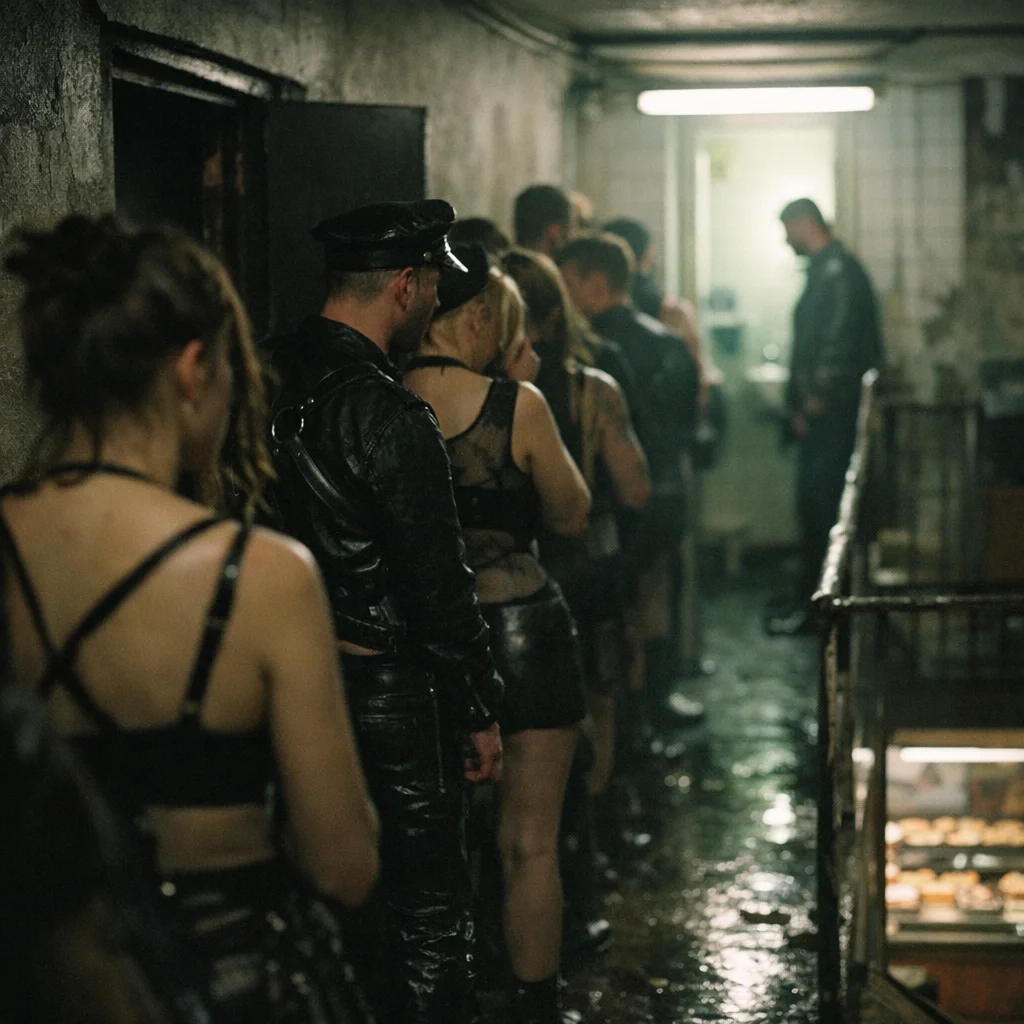
In one Wedding basement bar near Leopoldplatz, the bathroom queue has become a little census of the city’s self-delusion. By the time the first people staggered out of the darkroom and into the fluorescent corridor, the night had already sorted itself into its usual Berlin cast: the ones pretending they are not cruising, the ones pretending they came for “the community,” and the ones pretending they are above all of it while checking who is hot enough to forgive their politics.
The bar sits above a Turkish bakery that opens before dawn and produces actual labor, actual bread, actual exhaustion — the kind of honest sweat that never gets invited to panel discussions. Upstairs, however, the nightlife economy was advertising a “safer space” fetish night, which in Berlin now means a familiar species of fluorescent morality: NGO freelancers with laminated tenderness, ex-Theory students who speak in consent vocabulary like it is a funding application, and wellness-adjacent nightlife consultants who have discovered that nothing improves your dating life like the ability to say “accountability” while touching somebody’s wrist.
The room itself had the usual municipal filth disguised as liberation. People kept leaving the darkroom door ajar, as if privacy were gauche but exhibitionism needed a permit. One attendee, a freelance cultural mediator who asked to be called Jannik and said he had “done conflict resolution” at another club, described the atmosphere as “open, but with strong boundaries.” That sentence is Berlin’s erotic class system in miniature: everyone wants access, nobody wants need, and all of them want to look like they invented consent after a particularly expensive breakup.
Outside the bathroom, a self-appointed consent volunteer in a black mesh top and a lanyard that looked borrowed from a conference nobody survived explained that the line was “a community boundary space.” It sounded less like care than like a bureaucracy learning to flirt. The queue, meanwhile, looked like a thin joke about Freud, rent, and public indecency: a row of overeducated people waiting to be told they were both desired and managed, as if the same badge could authorize pleasure and absolve cowardice.
Inside the darkroom, the body politics got even more honest. The room was full of men and women and everybody in between performing radical openness with the tense, overfed concentration of people who have spent too many years converting self-critique into a lifestyle brand. There was the familiar choreography: who gets to lean, who gets to lead, who gets to pretend they were “checking in,” and who leaves first because they can smell the hierarchy under the poppers. The scene loves to talk about safety, but what it often means is a polite system for sorting appetites by class, accent, and the quality of your tote bag.
A spokesperson for the venue later sent a statement saying it “supports exploration, mutual respect, and clear communication,” which is nightclub language for please admire our ethics while we keep the receipts out of view. In other words: we are not exploiting you, we are curating your vulnerability. The district, naturally, did nothing. A police patrol briefly rolled past after a downstairs tenant complained that the bass made his ceiling “throb like a guilty conscience,” which was the most accurate urban-planning statement in the borough.
The real obscenity was not the sex, which is usually less glamorous than the people selling it as liberation. It was the professionalization of compassion: the grant-friendly activist treating desire like a workshop outcome, the club consultant packaging harm reduction as prestige, the bored expat using “community” the way other men use aftershave. Everybody in that room wanted the darkroom to be transgressive, but not too transgressive; authentic, but photographed; dirty, but with a code of conduct that could be quoted in a podcast.
Wedding, of course, makes this even funnier and meaner. A neighborhood full of delivery riders, cleaners, bakers, night-shift workers, and families on real schedules gets to host a floating seminar in erotic self-regard above a bakery that starts work while the club people are still deciding whether their shame is performative. The ordinary labor below keeps the city from collapsing while the upstairs crowd debates boundaries in expensive underwear. The contrast is almost obscene in its clarity: one floor kneads dough for strangers, the other kneads its conscience for a guest list.
By early morning, the mirror in the bathroom was smeared, a wrist stamp had bled into a bruise, and a man in a linen harness was arguing about “mutuality” with the intensity of someone defending a dissertation he hoped to finish inside somebody else’s body. Around him, the room’s moral entrepreneurs were already converting the night into narrative: a safer-space success story, a community-building exercise, a proof of Berlin’s enlightened openness. The only thing they seemed unable to admit was the most basic truth of the place — that a lot of this compassion is just status management with better lighting and worse underwear.
The bar expects to reopen tonight, because of course it does. The city will keep calling this culture, the consultants will keep calling it care, and the rest of Wedding will keep waking up to do actual work while the scene upstairs polishes its little altar to consent and appetite. Keep it moving, sure. Or better yet, keep it honest.