Berlin Unveils New Bahnhof Homeless Strategy: Move the Problem Three Meters and Call It “Urban Mobility”
Officials celebrate a breakthrough in non-solutions, featuring more benches you can’t lie on and fewer eyes that have to see anything.
Bureaucratic Whisperer
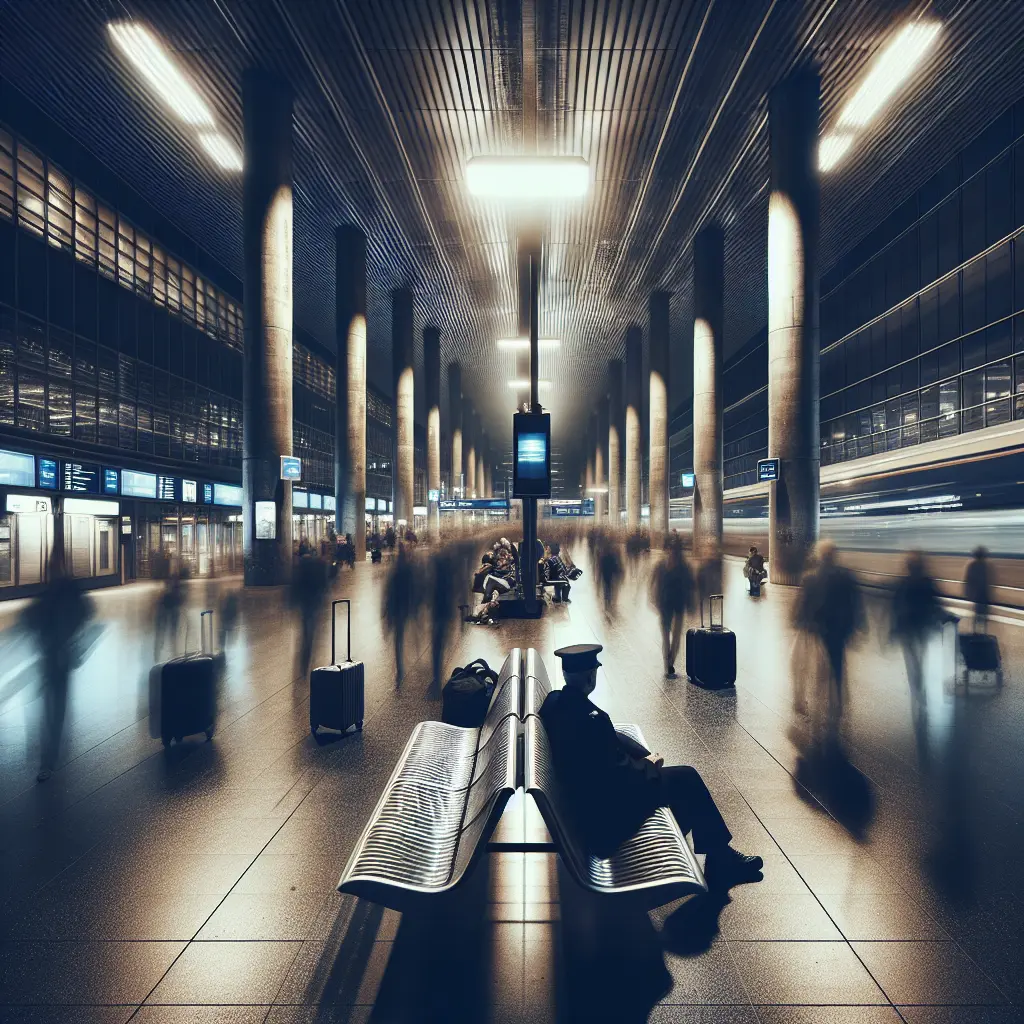
Welcome to Berlin Hauptbahnhof, Now With Added Hostility
Berlin’s main stations have always been a kind of civic group project: tourists dragging suitcases, commuters sprinting for trains, and a visible homeless population everyone pretends is an “unexpected pop-up experience.”
This week, the city announced it’s taking decisive action—meaning it will do the exact same stuff again, but with new buzzwords and a slightly different font in the PowerPoint.
The plan, as always, is simple:
- Make it harder to exist in public.
- Call that “safety.”
- Act shocked when it doesn’t fix addiction, mental illness, or poverty.
The Core Policy: Architectural Gaslighting
Berlin’s brightest minds have once again gathered to invent a bench that punishes the human spine for having dreams. The logic is flawless: if you prevent someone from sleeping at a station, they will simply stop being homeless, like a kid who stops crying because you removed their face.
New station upgrades reportedly include:
- Seating designed by a committee of sore-backed vampires
- Lighting bright enough to interrogate a molecule
- More security patrols, trained to say “You can’t be here” in eight languages, because this is still Berlin and we respect internationalism
If you’re wondering whether any of this includes housing, treatment, or actual services: don’t be ridiculous. This is Germany. We don’t “solve” problems. We laminate them.
“We Want Everyone to Feel Safe” (Except the People Who Aren’t)
Officials insist the station should be “a place for travelers.” Which is a beautiful sentiment if you ignore that many homeless people are also, technically, travelers—just with fewer receipts and a more honest relationship with despair.
The city’s definition of safety remains consistent:
- Tourists should feel safe spending €6 on a sad pretzel.
- Commuters should feel safe ignoring a human crisis.
- Investors should feel safe that poverty won’t lower the vibes.
Meanwhile, the people sleeping rough are treated like a stain on the marble: not a life, just a maintenance issue.
The Berlin Solution: Create a Triangle of Responsibility Nobody Can Escape
A Berlin station is run by an unholy alliance of institutions whose favorite hobby is pointing at each other like Spider-Man in a panic attack:
- The rail company says it’s a social problem.
- The city says it’s a property issue.
- The police say it’s a presence problem.
And the public says it’s a “why can’t they just” problem, which is the official language of people who have never tried to access services in Berlin without accidentally applying for the wrong century.
Outreach, But Make It Performance Art
Every so often, the city sends outreach workers to offer help—usually in the form of pamphlets, a warm beverage, and the spiritual equivalent of “Have you tried not being poor?”
Outreach staff are doing real work in an environment that seems specifically designed to make their work impossible. It’s like sending a lifeguard to a pool where the management keeps replacing the water with bureaucracy.
And when someone refuses help—because they’re terrified, psychotic, traumatized, addicted, or simply exhausted—Berlin treats that as proof the help never needed to be there in the first place.
Commuters: The Moral Gymnastics Olympics
The average commuter’s relationship with station homelessness is a delicate dance:
- Make eye contact.
- Immediately regret making eye contact.
- Pretend to be fascinated by a timetable app.
Some people complain about “aggressive begging,” which is fair. It can be uncomfortable. So can untreated mental illness, poverty, and living outdoors in winter. But only one of those things gets a policy response, and it’s the one that mildly inconveniences someone with a monthly transit pass.
The Real Plan: Keep It Visible Enough to Scold, Invisible Enough to Ignore
Berlin can’t fully remove homeless people from stations, because then the city would have to admit they exist somewhere else—like sidewalks, parks, stairwells, and the little gaps in society where compassion goes to die.
So instead, the goal is constant displacement:
- Move people out of the entrance.
- Move them out of the corridors.
- Move them out of the bathrooms.
- Move them out of your line of sight.
It’s not housing policy. It’s hide-and-seek with human beings.
A Modest Proposal Berlin Will Absolutely Love
If Berlin really wants to “solve” station homelessness the way it solves everything else, it should create a new office:
The Central Authority for Non-Resolution and Visible Order (CANVO).
CANVO would:
- Issue appointment slots in 2031
- Provide a 19-page form titled “Request to Exist in Public Space (Temporary)”
- Offer a pilot program where people can apply for shelter but only if they already have shelter
It would be expensive, confusing, and totally ineffective—so, perfect.
Final Stop: Reality
Here’s the part that ruins everyone’s day: stations aren’t the problem. They’re the mirror.
Berlin’s current strategy is not to end homelessness, but to make it less photogenic.
And if you think that’s harsh, spend ten minutes in a station at 2 a.m. and tell me which is worse: the suffering, or the civic commitment to pretending it’s not happening.