Berlin Unveils New ‘Compassion Curtain’ to Hide the Station’s Human Misery From Tourists With Feelings
City officials say the fabric is “breathable, inclusive, and easy to ignore,” like the entire housing policy.
Public Relations Disaster Correspondent
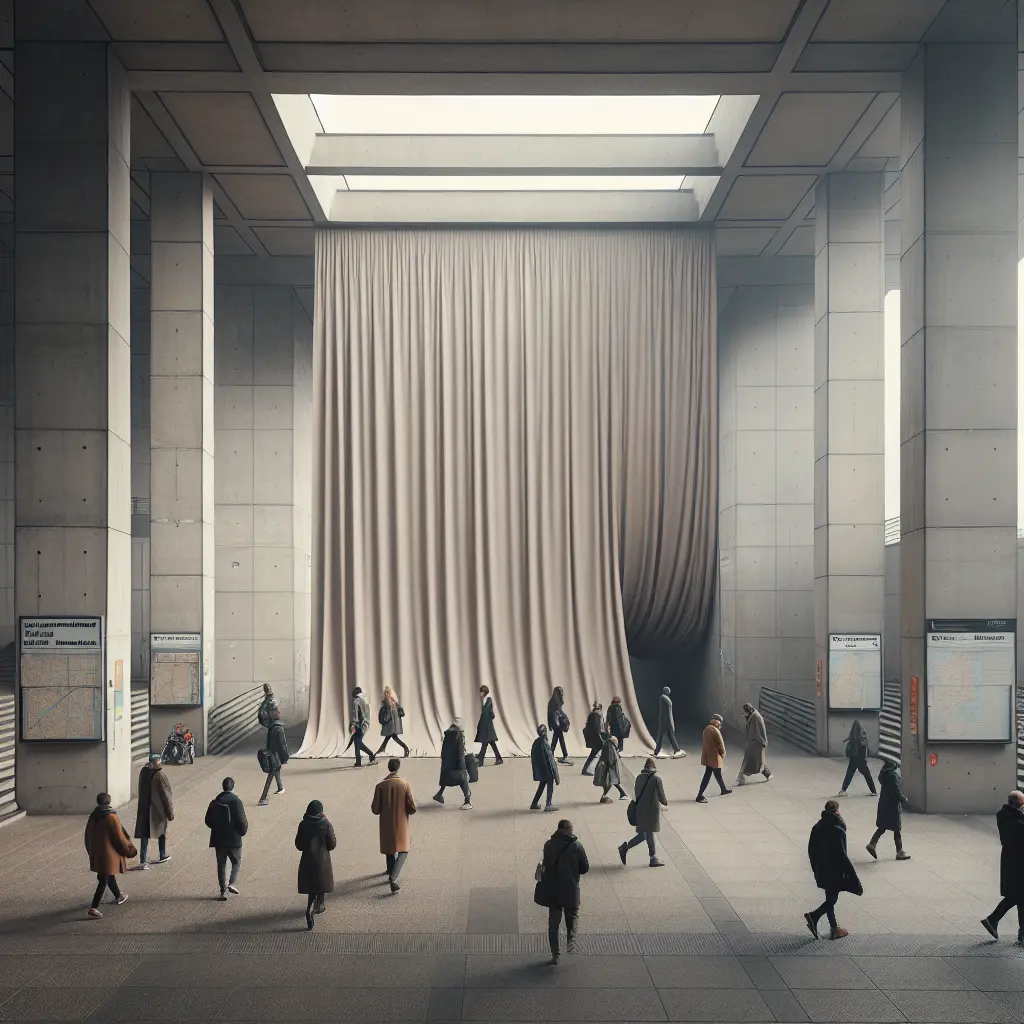
BERLIN — In a stunning display of innovation, Berlin has announced the Compassion Curtain Initiative, a bold new plan to address visible poverty at major transit hubs by strategically blocking the view.
Officials insist it’s not “hiding homelessness,” it’s “curating the public realm.” Which is politician-speak for: We’d like the city to look like an ad for itself again.
The plan is simple: install tasteful, wind-resistant curtains around the problem areas—station entrances, platform corridors, and that one corner where everyone pretends they’re checking messages while speed-walking past a person having the kind of day that makes your oat milk taste like guilt.
A Solution That’s Literally Just Fabric
According to internal documents leaked by someone who still has a conscience and therefore won’t last long here, the curtains will be:
- “Warm-toned” to complement the city’s signature palette of wet concrete and disappointment
- “Acoustically soft” so you can’t hear the part where someone asks for help
- “Graffiti-friendly” to preserve Berlin’s commitment to art, even when it’s scrawled on a taxpayer-funded emotional blindfold
The city is also exploring optional add-ons, including a “Mindfulness Mist” that sprays lavender whenever a commuter accidentally makes eye contact with reality.
The Official Statement: A Masterclass in Saying Nothing
A spokesperson explained the program is designed to create “a safer, more welcoming environment for all Berliners.”
Which is incredible, because Berlin has never once created a welcoming environment for anyone, including Berliners.
When asked if the city would rather invest in housing, addiction services, mental health care, or long-term support, the spokesperson clarified that those options were “complex,” “expensive,” and “likely to produce measurable outcomes,” which are all apparently frowned upon.
Tourists Relieved; Locals Return to Pretending This Is Normal
The tourism board praised the curtains as a “major step toward a more authentic Berlin experience,” because nothing says authenticity like a government-installed filter.
Several locals also expressed support.
One commuter said, “Look, I’m not a bad person. I just don’t want my morning to include the moral consequences of society.”
A nearby expat added, “I moved here for the freedom. Not, like, that kind.”
Phase Two: ‘Audible Poverty Reduction’
If the pilot succeeds, the city plans to expand the initiative with additional measures, including:
- Noise-canceling announcements that replace “Please mind the gap” with “Please mind your own business”
- A pop-up ‘empathy checkpoint’ where volunteers hand out pamphlets titled Have You Tried Not Looking?
- A new BVG ticket option: the “Day Pass + Denial,” which includes unlimited rides and a small coupon for emotional detachment
What Happens to the People Behind the Curtain?
The city emphasized that the program is not meant to “displace anyone.”
It’s just meant to “reimagine spatial visibility.”
So yes, it’s displacement, but with better branding and a grant application.
And in Berlin, that’s basically the same thing as love.
Closing Thoughts From a City That Can’t Stop Performing
Berlin’s greatest talent is taking a crisis, refusing to solve it, and then inventing a new aesthetic around the refusal.
The Compassion Curtain isn’t policy. It’s stage design.
And the show must go on—preferably without anyone noticing who’s been left in the wings.