Bin Men Demand a Tip, Not Respect
Wedding’s waste crew has discovered the perfect Berlin hustle: dress civic neglect up as morale work, then let residents feel guilty for being alive on collection day.
Administrative Grief Correspondent
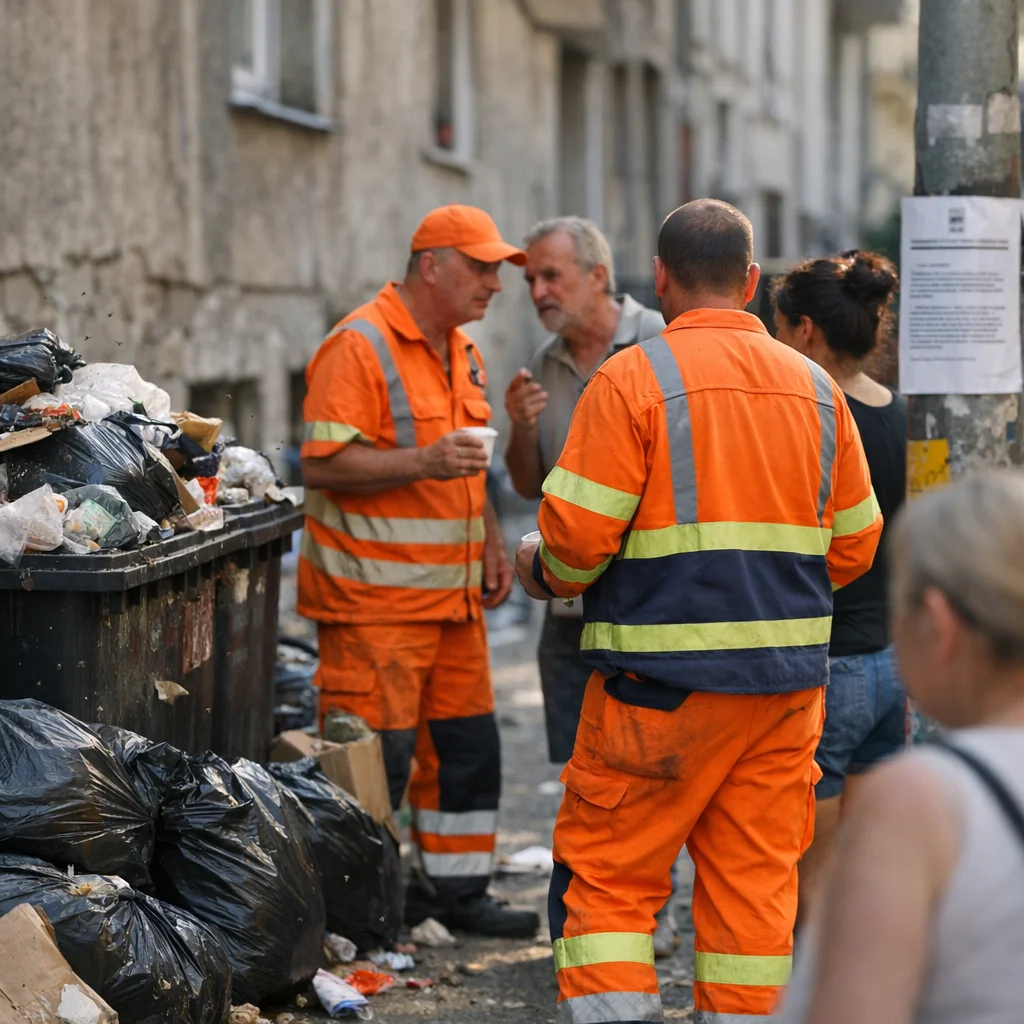
Courtesy, Now With Smell
Wedding’s waste crews have found the perfect Berlin side hustle: turn municipal failure into a personality test and call the answer “community.” When the bins get missed, the district office does what it always does best — which is not fixing anything, but issuing a sentence so dead-eyed and managerial it could be printed on damp cardboard: please place waste correctly, please remain patient, please understand that staff are under pressure. In other words, shut up and enjoy the odor.
On Müllerstraße and the side streets off Seestraße, residents have been watching the usual civic magic trick: garbage sacks swell in the sun, lids stay open like cheap mouths, and the courtyard starts to smell as if a wet animal died inside a rental agreement. Then the workers arrive late, or not at all, and some of them ask for tips, cigarettes, or cold drinks as though the service had not already been prepaid by everyone forced to live in the blast radius. One resident described it as “being flirted with by the end of the welfare state.” Another called it “an invoice with a sweaty grin.”
The district office blamed staffing pressure, vehicle turnover, and seasonal absences — the standard bureaucratic trio, that holy little cowardice routine that lets everyone in charge pretend incompetence is a weather pattern. The contractor, reached for comment, said the crew was “doing its best under difficult conditions” and declined to discuss “informal appreciation,” which is a charming euphemism for begging in rubber gloves. This is how neglect gets laundered: first into logistics, then into hardship, then into moral virtue, until the whole rotten arrangement smells like a grant proposal.
And because this is Berlin, the guilt economy always shows up wearing a tote bag. The district office wants “community cooperation,” which is administrative code for extracting free labor, free patience, and free shame from people who already pay for the service and then have to apologize for wanting it. Residents are told to sort better, stack neater, wait longer, smile thinner. If they complain, they become the problem. If they clean up the mess themselves, they prove the system works. It is the oldest scam in the city: make the public do unpaid cleanup while the managers congratulate themselves for building resilience out of humiliation.
The neighborhood plays its own part, of course. The new café owners want your solidarity but not your leftover kebab smell. The language-school crowd loves diversity right up until it reaches the threshold and leaves a stain. The professionals of tasteful urban renewal want a “mixed kiez” the way men want a lover who never gets hungry, never sweats, and never leaves a footprint. Everybody is very pro-community until community means touching the actual residue of life. Then the nostrils tighten, the ideology gets freshly laundered, and the whole district starts acting like cleanliness is a personal virtue instead of a municipal obligation.
A longtime shopkeeper on Müllerstraße put it bluntly: “They tell us this is about solidarity, but the only thing shared equally is the stink.” He said it beside three overfilled containers and a sign asking for patience, that favorite little civic sedative used by people who would never wait that long for their own rent to process.
The deeper insult is not even the missed pickup. It is the performance around it: officials polishing failure into policy language, contractors performing exhaustion like a cabaret of shrugs, and residents being asked to kiss the ring of the system that leaves their courtyards sweating through the heat. Public order in Wedding has the manners of a drunk landlord and the body odor of a collapsing fridge. It arrives late, speaks in euphemisms, and expects applause because it remembered the route at all.
District officials said they would review the schedule this week, which is bureaucratic for doing nothing with a fresher haircut. Until then, residents are left waiting for the next collection and deciding whether a clean street is still a public service or just a subscription plan with a rotten exit fee.