Bins With Better PR Than People
Wedding’s overflowing trash cans are getting the municipal treatment: laminated notices, pilot projects, and the familiar language of civic concern that appears whenever officials want applause for postponing a cleanup.
Civic Hypocrisy & Neighborhood Compliance Reporter
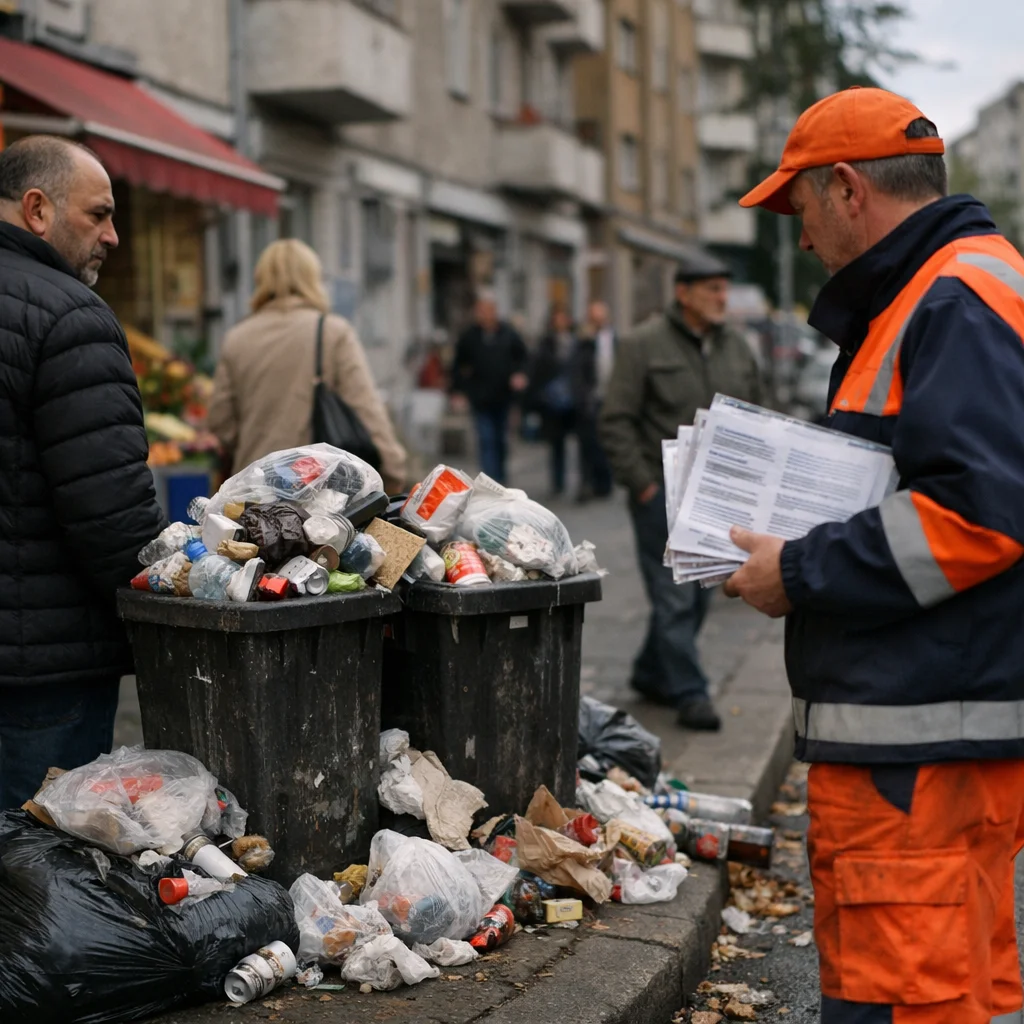
Wedding’s streets are being “addressed” with the same grave energy the city reserves for staining a brochure with concern. Near Sprengelkiez and along the shopfronts off Leopoldplatz, the bins bulge like overfed promises, their lids stuck open, their contents sweating into the pavement while everyone pretends this is a temporary misunderstanding and not a civic habit.
The district office has responded with laminated notices, a pilot program for “shared responsibility,” and the kind of soft-focus language that lets officials feel hands-on while they stand well clear of the stink. One sign taped to a pole by a Turkish bakery politely asked residents not to leave bags beside full containers, as if the problem were etiquette and not a municipal nervous breakdown. Another promised “dialogue” with building owners, which is bureaucrat-speak for stroking the panic until it stops making noise.
At the weekly market, a vendor on Müllerstraße said the mess starts before breakfast and finishes after the last commuter has stepped around it with the contempt of a person who has paid rent and now believes that makes him morally ventilated. “People want the street clean until the bag gets heavy,” he said. “Then suddenly they’re all activists for the sidewalk.”
That is the local talent: cleanliness as social eyeliner. The tote-bag moralists from the newer flats talk about hygiene the way minor aristocrats talk about breeding—tight-lipped, self-congratulating, faintly aroused by the idea that someone else might be sloppy enough to deserve exile. They want the curb tidy not because they’re noble, but because a clean block flatters their own reflection. Nothing gets the pulse going like pretending your compost habit is a political identity.
The older residents know the city’s favorite trick by heart: turn a practical failure into a character test, then act shocked when the poor fail it first. In one courtyard, two neighbors were already in the hallway arguing about “community responsibility” with the intensity of people trying to fuck respectability into a broken lock. Behind them, three bins sat jammed shut with takeaway cartons, a half-crushed yogurt tub, and the greasy evidence of everybody’s alleged standards.
Meanwhile the district office keeps speaking in the passive voice, that favorite hiding place of bureaucrats and cowards. Additional pickups are being reviewed. Infrastructure should be used appropriately. Shared challenge. Ongoing coordination. It all sounds like a man in a beige blazer trying to explain why his hands are clean while the hallway behind him reeks of old fish and surrender.
A spokesperson for the housing association called the overflowing containers “a shared challenge,” which is the sort of phrase people use when they want to sound democratic while making sure no one with a title has to bend down and lift anything. The performatively progressive landlord loves this vocabulary too: empathy in public, delay in private, and a rent notice arriving with the punctuality of a hard-on.
Of course the garbage is not just garbage. It is status, resentment, and the local appetite for moral theater. The district wants applause for the promise of a cleanup; the owners want the tenants to behave like guests in a building they increasingly cannot afford; the new residents want to feel principled while doing as little lifting as possible; and everyone wants the stink to belong to someone else.
The consequence is easy enough to smell from half a block away: more notices, more sermons, more self-respecting people stepping around the mess with their noses in the air, and no one admitting that Wedding’s bins are being treated better than the humans who live beside them. The next cleanup is expected early next week, unless the paperwork gets there first and decides the pavement can wait.