‘Bitte Warten Sie Draußen’ at the Hospital
Wedding’s emergency room has perfected the city’s favorite public service: making terrified people feel guilty for needing it.
Administrative Grief Correspondent
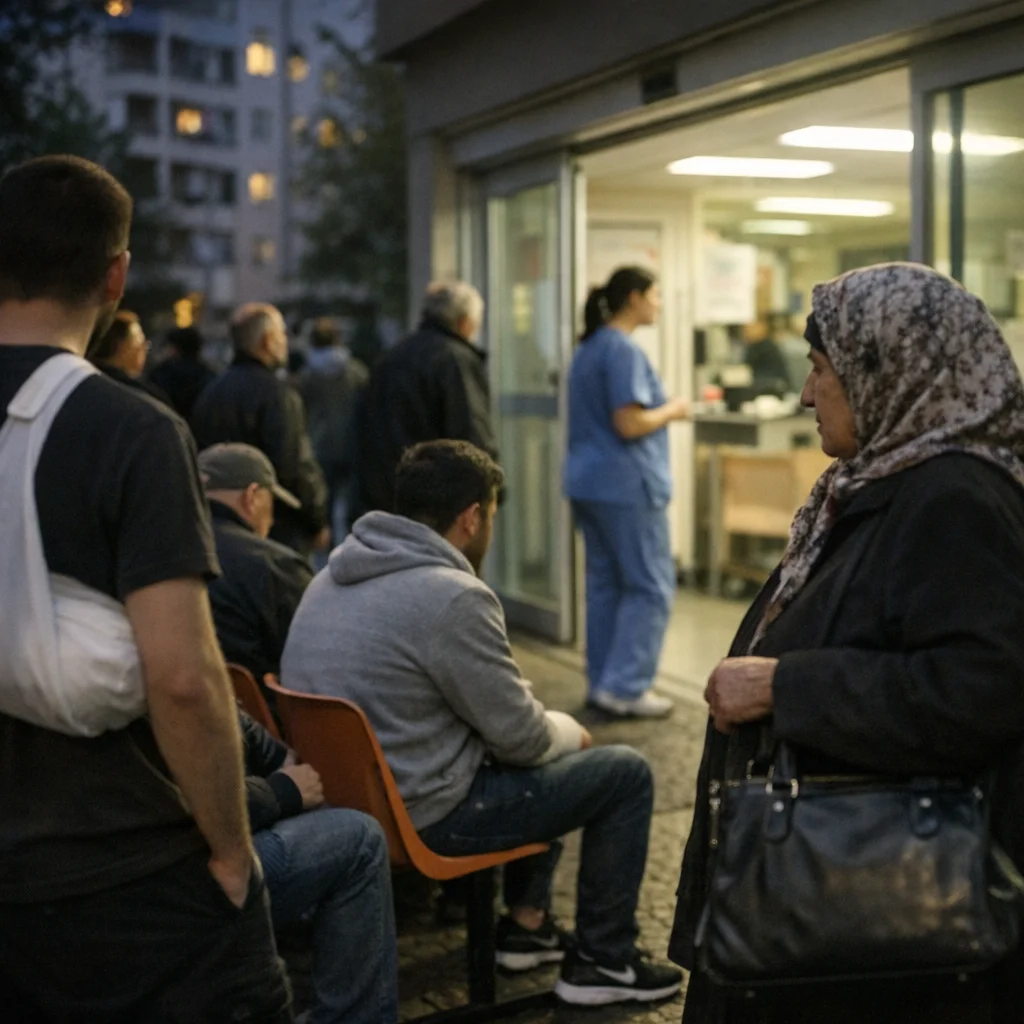
The municipal cult of polite suffering
The emergency room at a Wedding hospital spent another evening doing what Berlin’s public services do best: staging their own martyrdom while the sick stood outside like badly dressed extras in a civic morality play. By early evening, the entrance was packed with people clutching paper slips, receipts, damp jackets, and the kind of dignity that gets handled roughly by fluorescent light and bad admin. Inside, nurses moved with the brisk, haunted efficiency of people who have been assigned six jobs, three impossible targets, and one laminated poster about teamwork.
A man in a blood-specked hoodie said he had been waiting since about 9:40 a.m. after losing a fight with a staircase and a doorframe that, in his words, “looked proud of itself.” He was still not allowed to sit down properly because the intake area was “temporarily full,” which in Berlin means the same thing as: please continue bleeding quietly until the paperwork develops a conscience. A woman with a swollen wrist was told to wait for her number, then told again to wait because the number system had gone into one of those ritualistic freezes that city institutions adopt when they want to feel important while doing nothing useful.
The waiting room itself had the emotional temperature of a tax office at the end of the world: plastic chairs with the structural ambition of punishment, a water cooler that tasted faintly of old coins, a television muttering to nobody, and a triage desk arranged like a shrine to controlled indifference. Every patient was asked the same questions in the tone of people checking whether a nuisance could be made to disappear by being sufficiently polite. Even the clipboards seemed to have opinions.
“It’s not that nobody is trying,” said Miriam K., a nurse who agreed to speak on condition of anonymity because she had already signed one form saying she could not complain and another admitting she would anyway. “But this place is run like a moral seminar for exhausted adults. If you move too calmly, management thinks you’re idle. If you move too fast, they panic and call it a quality issue. So we perform emergency like it’s a small-bourgeois tragedy in sensible shoes.”
That is Berlin’s civic style in miniature: administrators who speak in the soothing dialect of humanitarian burnout while hiding behind process like teenagers behind a locker door. Their favorite move is to call collapse “demand,” as if the sick had arrived wearing cheap cologne and asking for trouble. The hospital administration said it was dealing with “exceptional seasonal demand,” which is bureaucratic perfume for a room full of human bodies being asked to blush for existing. The statement praised staff dedication and urged patients to remain “patient,” a request so richly stupid it might have been drafted by a committee of upholstered chairs.
Outside, the queue developed the social texture of Wedding itself: a courier with a cracked phone screen, a Turkish grandmother with the sour grace of someone who has survived enough state offices to distrust any smile with a logo, a night-shift cleaner still in work trousers, and a startup employee in spotless sneakers complaining that the wait was “not scalable,” which is the sort of sentence that should require immediate confiscation of a lanyard. He kept saying “the flow” as if blood loss were a logistics problem and not a minor collapse of the body’s consent.
The hospital’s real specialty was not medicine but humiliation by atmosphere. Patients were expected to prove they deserved attention by being quiet, tidy, and grateful. Those who asked questions were treated like amateur litigants. Those who looked angry were handled as if rage were a contagious rash. The moral lesson was clear enough to hang above the reception desk: if you need care, try to need less of it. If you are already cracking open, do it discreetly.
That is the city’s favorite sexual fantasy of public service, really: a provider that teases access, delays release, and insists the whole arrangement is for your own good. Everyone inside wants to be seen as caring, competent, and overburdened; nobody wants to be the person who says the obvious out loud, namely that the hospital is not merely short on beds. It is drowning in ceremony, and the sick are expected to queue up, keep their chins up, and offer the state a clean, obedient wound.
By the next morning, staff said the backlog would still be there, along with the forms, the apologetic shrugs, the paper cups, and the same exhausted theater with fresher coffee stains and the same managerial innocence. In Berlin, that counts as continuity of care.