Blockfranchise: Rent as a Royalty in the Brand-Block Economy
A startup modules neighborhoods into franchises; tenants pay 'brand royalties' to rent, with rent adjusted by a living-brand score that rewards sponsored events and penalizes complaints.
By Lena Veneer
Gentrification & Cultural Displacement Correspondent
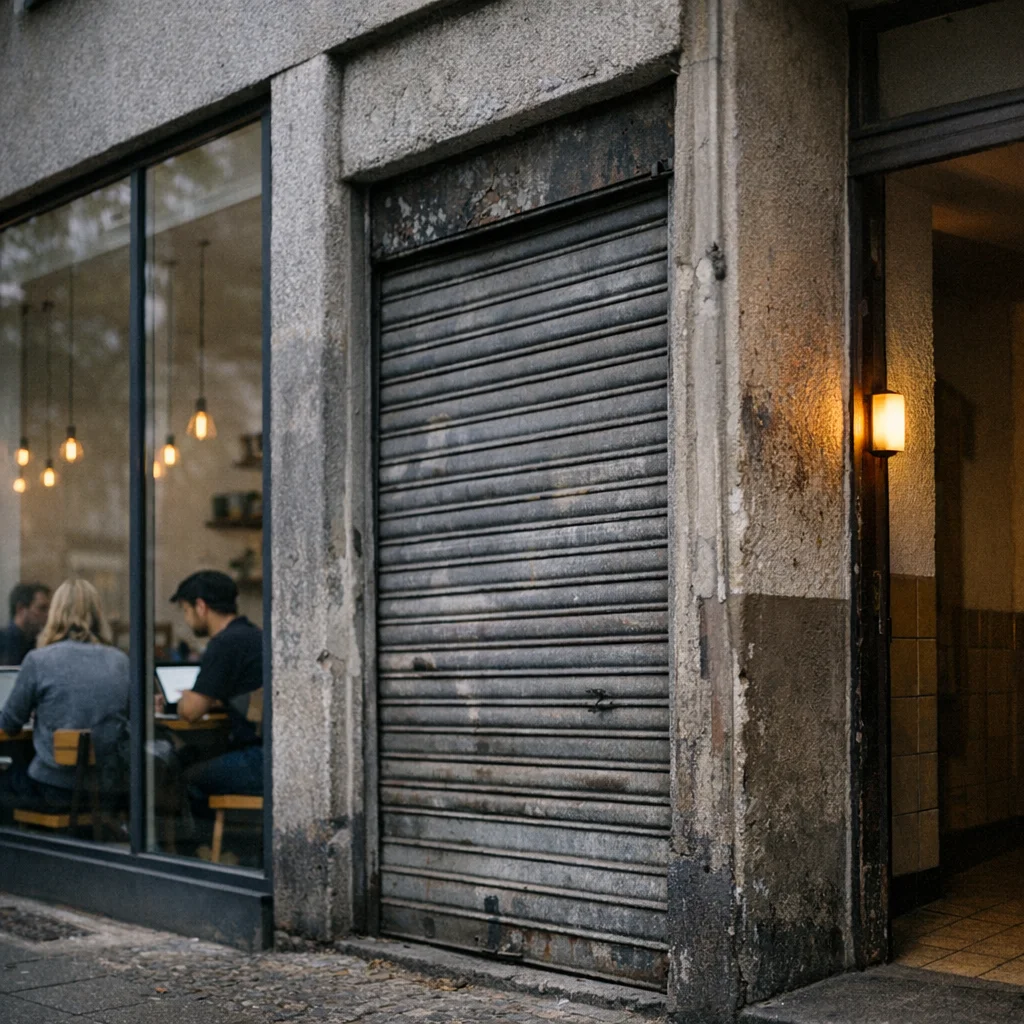
The block used to have a bakery that knew your face and a barber who knew your secrets. Now it has a soft-opening café with a “values wall” and a QR code that requests your pronouns before it admits you’ve just come for caffeine and moral absolution.
The new scheme is called Blockfranchise, and it treats a street like a chain restaurant: same fonts, same playlists, same “community energy,” different victims. The pitch is simple: every building joins a “block identity,” and every tenant pays a royalty on top of rent—because apparently shelter is now intellectual property.
A representative in a clean hoodie explained that the royalty funds “curation,” which is how adults say “peer pressure.” If the block hosts sponsored pop-ups, influencer latte tastings, and “accidentally political” tote-bag launches, the living-brand score goes up. If residents complain about noise, trash, or the fact that their hallway smells like burnt oat milk and ambition, the score drops—triggering a “reputation adjustment.” That adjustment just happens to land on your rent like a firm hand on your throat.
The closest thing to consent is the onboarding workshop, where tenants learn to “activate their frontage.” Longtime residents who run Turkish groceries, tailors, and repair shops were invited to “align,” which is corporate for: please become a prop in someone else’s photos. One shop owner told me the consultant suggested replacing his hand-written price tags with “minimal typography.” Minimal, like his margin.
Landlords love it because it’s rent with a second revenue stream and none of the shame. New arrivals love it because it turns community into a dashboard they can rub until it purrs. The block’s group chat now reads like Discipline and Punish with better lighting: everyone surveils everyone, not to stop harm, but to keep the score high enough to attract the next pop-up that will “stimulate local foot traffic” and, somehow, their self-esteem.
The surreal part is how the score is displayed: a small light in each building’s entryway that glows warmer when the block is “performing” and goes cold when someone files a complaint. Residents have started hosting “apology mixers” in the courtyard to bring the light back up, the way medieval towns rang bells to ward off plague—except now the plague has a loyalty program.
Around midweek, a co-working-café hybrid opened where the stationery shop used to be. It offers a “deep roast” and a deeper dive into your willingness to live inside someone else’s content calendar. Everyone calls it progress because the espresso is good. That’s the genius: the boot is softer now, and people line up to kiss it—then rate it five stars.