Blue Gloves at the Döner Window
The neighborhood’s hygiene campaign now treats every late-night kebab order like a consent form with sauce on it.
By Arda Kismet
Kiez Mischief & Access Economy Correspondent
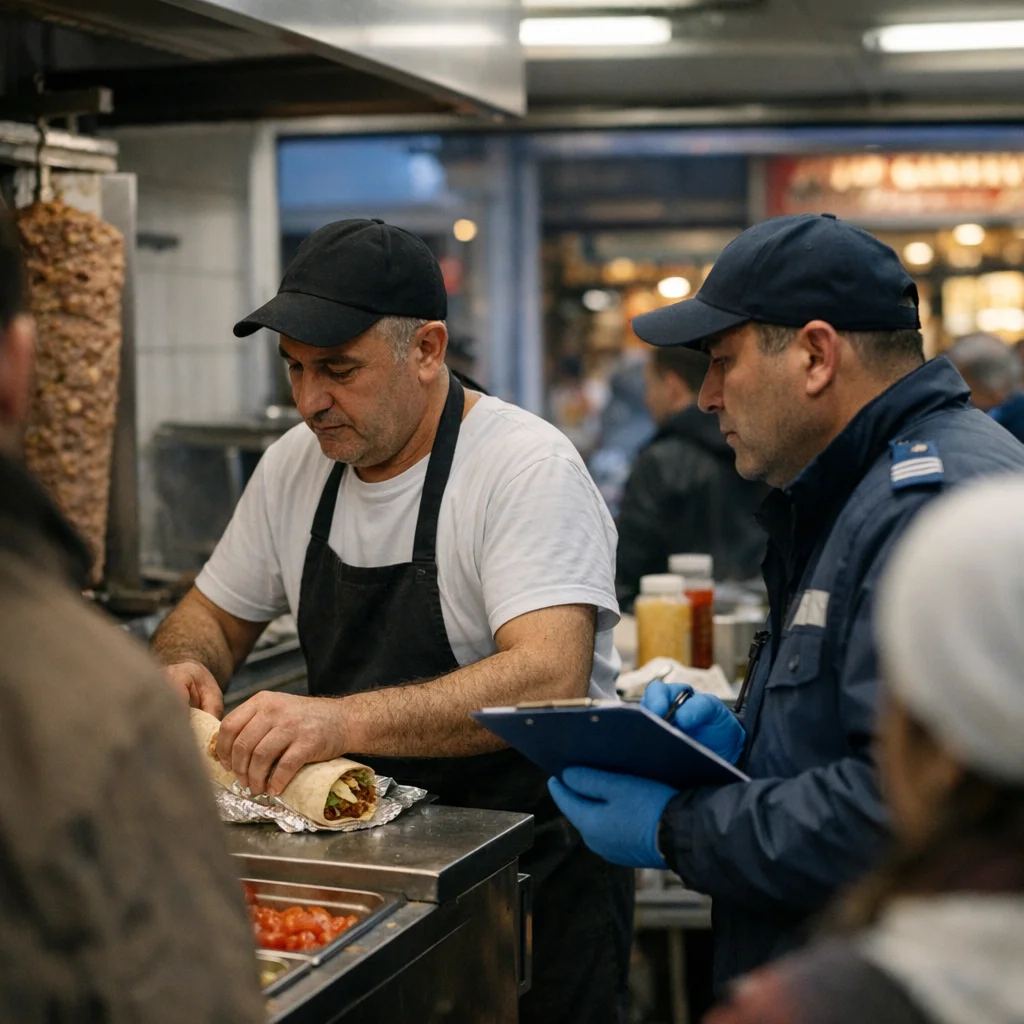
By Tuesday afternoon, the blue gloves had already made themselves at home on Müllerstraße, sliding into the döner shops the way civic power slides into any room where people still make money from hunger. Under a new district program, stalls in Wedding can earn a “family-friendly” seal only by letting compliance officers stand at the counter, watch the wrapping, and decide whether the meat has been handled with enough restraint to satisfy parents, prudish retirees, and the city’s professional mood-police.
The rule was sold as hygiene. It behaves more like a dress rehearsal for obedience. Every order now has to pass through the same little ritual: hands visible, foil folded correctly, sauce applied without looking eager, customer watched as if appetite were a minor indecency that might spread if left alone too long. The inspector leans in with the dead expression of someone checking a bedroom for signs of passion and calling it sanitation.
At Özcan Grill, owner Mehmet Kaya said the seal did not make business cleaner so much as more embarrassed. “They want the meat wrapped like it’s evidence and the customer treated like a risk assessment,” he said, while a district worker in blue gloves hovered at the counter and studied the foil seam like a marriage counselor with a clipboard. “If I ran my life with this much supervision, I’d still be on my mother’s couch and paying rent to the state.”
The district office said the program was meant to reward “visible standards” and discourage what one official called “informal intimacy at the point of sale.” The phrase landed with the sour confidence of someone who has spent too long mistaking surveillance for ethics. Another official, speaking on condition of anonymity because she had already been identified by two bakers and one man outside the lottery shop, said the goal was to reassure “families, seniors, and anyone who feels garlic sauce should come with a warning label.”
The humiliation is selective. The new cafés on the side streets, with their sourdough, matcha, and inherited debt, have been welcomed as “transparent,” which in district language means expensive enough to be forgiven for existing. The old shops, which have fed the neighborhood through every phase of its self-congratulation and decline, are being asked to perform chastity with tongs. They must prove they can give pleasure without appearing to want it. They must serve appetite while pretending not to have one.
One Turkish grandmother waiting for lunch called the seal “a condom for bureaucracy,” then looked at the inspector and added, “All this for a sandwich.” The inspector did not laugh. He was busy checking whether the paper wrap had been tucked in with sufficient modesty, as if a sloppy fold might invite a scandal.
By evening, several owners had started keeping their blue gloves on between orders, not because it improved hygiene, but because it made the whole display look submissive enough for the district to relax. The line outside the best stands only got longer. Nothing draws a crowd like a city making people prove, over and over, that it can touch what it wants without admitting hunger.