Bluebeard at the U-Bahn Lost and Found
Berlin’s forgotten property office says it is helping riders recover what they left behind.
Administrative Grief Correspondent
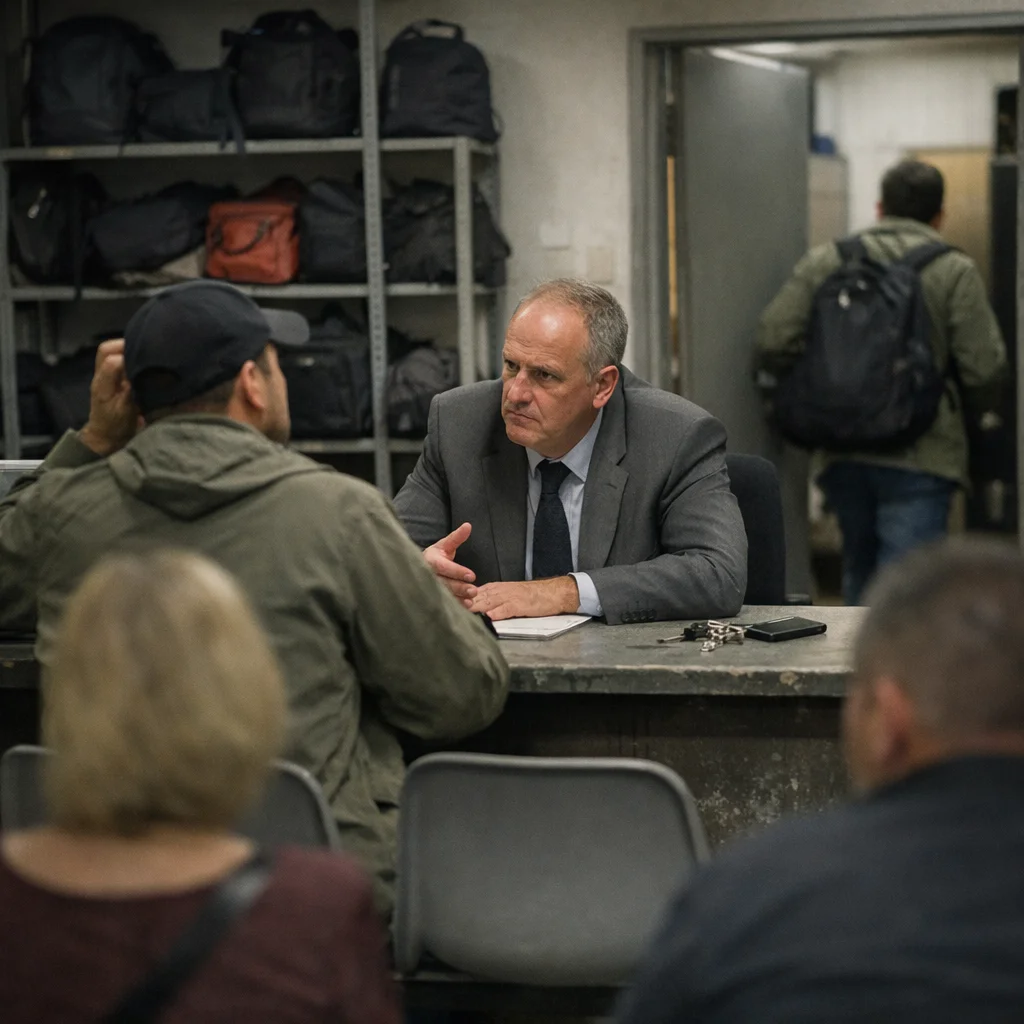
U-Bahn lost-and-found clerks in Berlin are not, by their own account, in the business of keeping people’s things. They are in the business of deciding who gets to come back for them, who gets made to wait, and who leaves with the humiliating sense that the office has already looked them over and found them insufficiently convincing.
At the depot near the network’s administrative edge, riders who misplaced handbags, school satchels, laptops, and the occasional too-confident tote describe the intake desk as a kind of bureaucratic undressing. The questions arrive in layers: serial numbers, transit receipts, photos, lining color, zipper brand, a scar on the strap, a scratch on the clasp, the exact contents of the side pocket. The clerk at the front counter — a narrow, gray-suited man with the air of someone who has made suspicion into a pension plan — keeps the same mild expression while making every claimant rehearse the private details of their own property as if confessing to an affair.
The office likes to call this verification. Riders call it something closer to being made to prove you know your own body by candlelight to a stranger who has already decided to enjoy the process.
Then comes the back room.
It is always the back room, the little municipal stage where the performance stops pretending to be neutral. Some items are taken through the rear door with a speed that feels less like sorting than selection. Bags with expensive headphones, designer gym kits, and immaculate office carryalls disappear behind the partition before their owners have finished spelling the brand name. A woman who asked not to be named said she watched a clerk run a hand along the seam of a leather backpack, nod as if appreciating the fit, and carry it through the door without writing down the claim number. When she asked what happened to it, the clerk told her to wait her turn and stop making a scene in the receiving area.
The room’s choreography is the insult. The claimant stands at the counter, exposed, while the object is handled elsewhere, out of sight, where the real decisions are made. A man in a puffer jacket said he was asked for “something only the owner would know,” then told his answer was too generic to count. “It was like they wanted intimacy on demand,” he said. “Not proof. Submission.”
“I had to describe my own backpack like I was identifying a lover’s body after a blackout,” said Deniz Kaya, who came to retrieve a bag near Leopoldplatz after missing a train. “They wanted the lock brand, the lining color, and what was in the side pocket. It felt less like lost property and more like they were checking whether I deserved access to my own life.”
The BVG said lost-and-found procedures are designed to protect customers and prevent theft, not to stage emotional hazing. A spokesperson said staff are instructed to verify ownership “carefully and consistently,” though the consistency appears to include a practiced little theater of doubt reserved for people who look tired, poor, or otherwise easy to make grateful. The district office, which oversees the process in part, said it had not received formal complaints but would review the handling of unclaimed items if the volume of questions keeps rising.
What emerges is not a system for returning belongings, but a municipal dressing room for power, where the office decides who may be touched by their own property and who must remain on the other side of the counter, sweating under fluorescent lights while someone else checks the fit. The most desirable objects vanish quickest into the back, as if status itself gets a private audience. The rest are left in the waiting area long enough to teach the same lesson every day: the state is very eager to inspect you, less eager to hand you back whole.