“Border Security” Meeting in Wedding Ends After Translator Refuses to Work Without a Safe Word
Inspired by Washington’s shutdown melodrama, locals attempt their own grand bargain: fewer arrivals, more empathy, and absolutely no paperwork.
By Clara Brook
Imported Outrage & Kiez Satirist
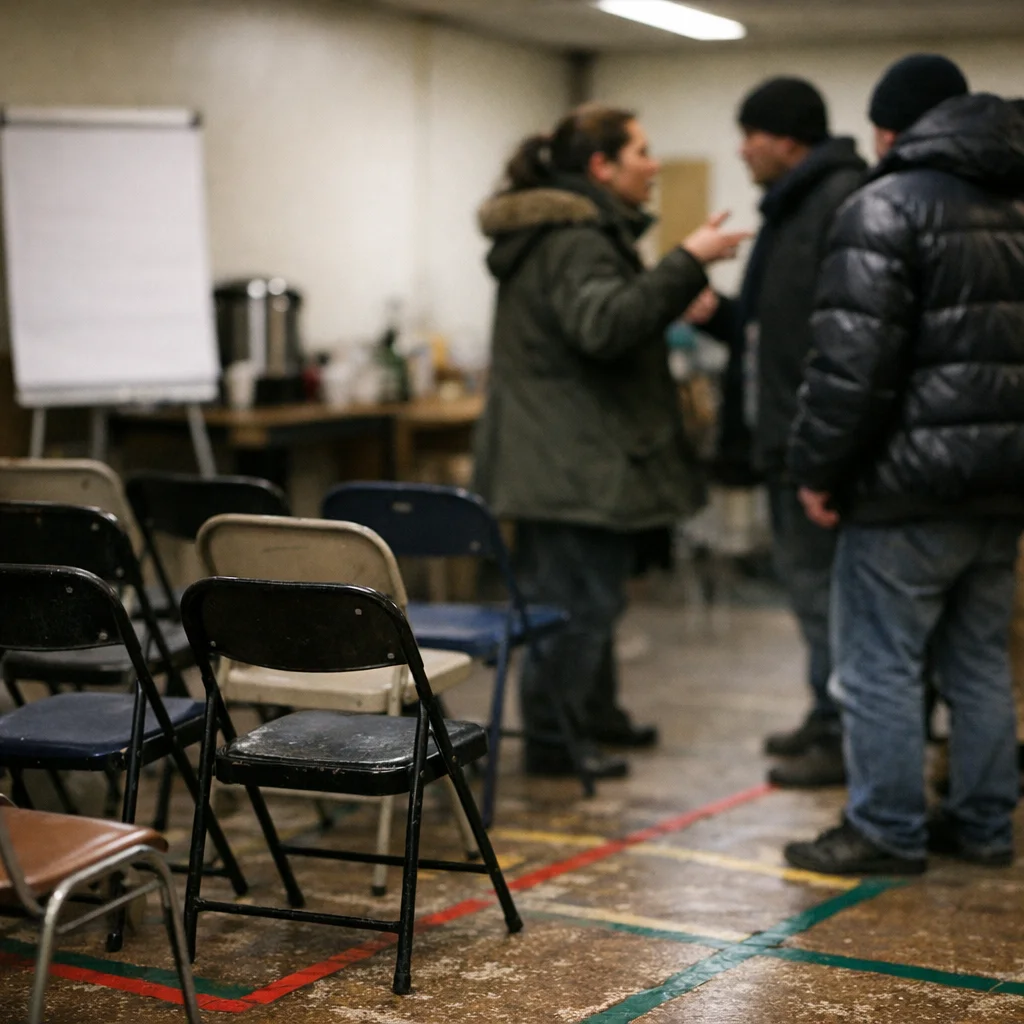
WEDDING — With the US government reportedly inching toward a shutdown over an immigration enforcement deal, Wedding decided it would be irresponsible not to do the same thing: import the argument, misunderstand it, and then turn it into a meeting with bad acoustics.
The “Emergency Neighborhood Summit on Border Security (Local Edition)” took place in a community room off Müllerstraße that still smells faintly of floor cleaner and unresolved resentment. The invite promised a “historic compromise” between longtime residents, newly arrived expats, and the one guy who insists every topic is secretly about “incentives.”
The plan was simple: replicate the American standoff, but with Berlin sincerity. On one side, a coalition of anxious newcomers demanded “order” in a neighborhood they moved to specifically because it felt disorderly in a curated way. On the other, longtime residents—many of them Turkish families who actually built the daily rhythm here—asked why the city suddenly develops a firm grip on enforcement only when it’s trendy to be afraid.
By the second round of speeches, the atmosphere had shifted from civic engagement to reality TV audition. A freelance mediator (paid in grant money and moral superiority) encouraged participants to “name their boundaries.” That was when the event’s only truly functional employee—a tired translator—announced they would not interpret another sentence unless the room agreed on a safe word.
“Every time someone says ‘humanitarian’ and then immediately tries to slip a backdoor arrangement into the discussion, I feel used,” the translator said, staring at a flip chart labeled ‘COMPASSION’ with the dead eyes of a Beckett character waiting for meaning.
Attendees then attempted a “deal,” echoing Washington: more enforcement in exchange for more funding. Unfortunately, Berlin’s version of funding is a PDF that can’t be opened unless you already have the document it’s requesting.
The only concrete outcome was a draft policy to install symbolic “micro-borders” at random doorways—purely educational, organizers insisted. The surreal twist: the tape lines began slowly migrating across the floor, a few centimeters each hour, until they neatly fenced off the coffee urn and half the chairs.
No one moved them back. Not because they agreed with them, but because in Berlin, paralysis isn’t a crisis. It’s tradition. Like Kant, but with worse seating.